

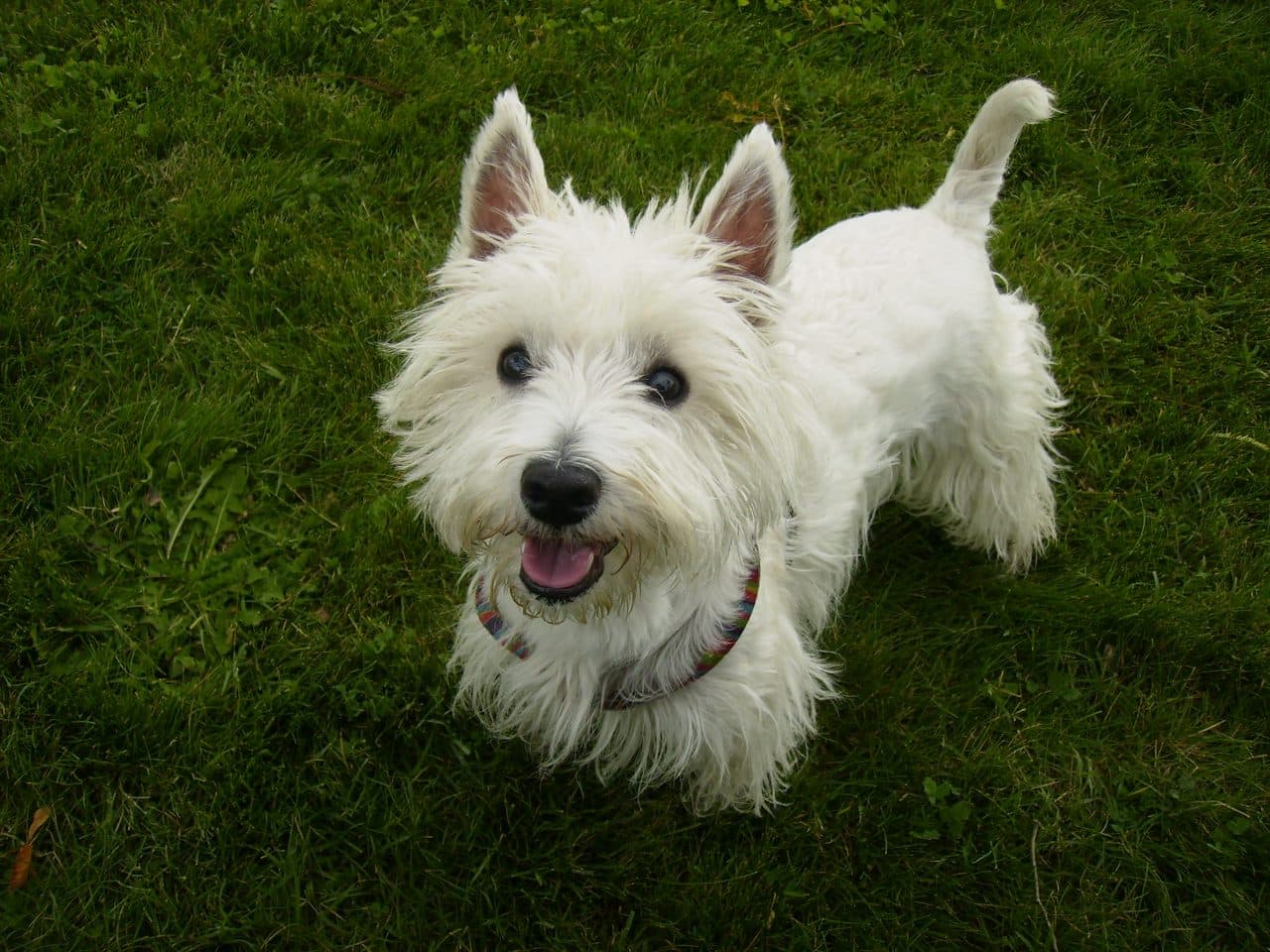
West Highland White Terrier
Scottish white terrier. Energetic, brave, "big attitude in a small body". An excellent urban family dog. Distinctive white coat. Historic vermin hunter.
Foto: Wikipedia Commons · CC BY-SA
Ideal for
- ✓Active families
- ✓Flats with regular walks
- ✓Anyone wanting a cheerful, lively dog
Reconsider if
- ×Anyone who cannot tolerate barking
- ×Homes with no time for walks
Notify me when a West Highland White Terrier is up for adoption
We'll only email you when a verified rescue posts one available. No spam, unsubscribe in 1 click.
We'll only use your email for this alert. More info in our privacy policy.
Is the West Highland White Terrier a good match for you?
Indicative rating from 1 (low) to 5 (high).
💶 Estimated cost of ownership
55-95 €/month
Food 18-30 €, grooming/hand-stripping 20-35 €, vet provision 15-25 € (dermatology), shampoos and skin care 5-10 €.
History and origin
Emerged in Scotland in the 19th century from white cairn terriers selected by Colonel Malcolm of Poltalloch after a hunting accident in which a dark terrier was mistaken for a fox.
Recognised by the FCI within group 9 (companion dogs). Its small size makes flat living easy, but "small" is not a synonym for "needs no training": small dog syndrome (excessive barking, fear, reactivity) is common when the same routine as for a large dog is not applied.
Temperament and character
Cheerful, alert, brave. Terrier independence but more sociable. A barker. Intelligent. Affectionate with the family. Needs daily mental stimulation — scent games, food kongs and short tricks channel its energy better than physical exercise alone. Responds best to positive reinforcement: physical punishment creates fear, anxiety and reactivity — coercive methods are NOT recommended by behavioural vets. Sensitive to its family's mood: it detects tension and catches it.
Living together
Children: good with older children. Other dogs: variable. Cats/rodents: hunting instinct.
Life stages of the West Highland White Terrier
Each stage has its own care priorities. Life expectancy: 12-16 años.
Puppy
0-10 months
Socialisation, vaccination and early monitoring of atopic skin.
Junior
10 months-2 years
Channelling terrier energy, anti-allergy diet and care of the white coat.
Adult
2-8 years
Management of atopic dermatitis, recurrent otitis and Malassezia control.
Senior
8+ years
Joint and dental control and continued dermatological follow-up.
Care
Exercise: 60-90 min/day split into at least 2 sessions. Off-lead time in a safe area is essential for high-energy breeds.
Brushing: 2-3 times/week; intensive during the moults (spring and autumn).
Feeding: quality food matched to life stage (puppy/adult/senior) and size. Weight control: obesity is the main preventable cause of joint problems.
Vet: annual check-up with preventive blood work from age 5 (7 in giant breeds); twice a year from age 8.
Exercise 1 h/day. Brushing 3 times/week plus a trim every 8 weeks (traditional hand-stripping or scissoring). Ear cleaning. Skin care (allergies).
Care in detail
🍽️ Nutrition
Quality food; in atopic individuals, hypoallergenic diets prescribed by the vet. Weight control.
✂️ Grooming
Brushing 3 times a week and grooming every 8 weeks (traditional hand-stripping or scissoring). Ear cleaning and dermatological skin care.
🎓 Training
Cheerful and brave, with the typical terrier independence but sociable. Positive reinforcement and work on barking. It retains a hunting instinct towards rodents.
🏃 Exercise
60-90 min/day in two sessions, with off-lead time in a safe area. It is energetic despite its size.
Breed-specific health
Atopic dermatitis (genetic). Westie fibrosing lung disease. Femoral head necrosis. Deafness. Life expectancy 12-16 years. Life expectancy 12-16 years with proper care. Pre-breeding tests recommended in responsible kennels (dysplasia + cardiac + ophthalmology according to the breed's conditions). When adopting, ask the shelter for a vet report on the current condition.
🩺 Health predispositions of this breed
Conditions this breed is more predisposed to. Knowing about them helps with prevention and early detection. A predisposition does not mean the animal will develop them.
Common diseases in dogs
Learn the symptoms, prevention and when to see the vet. Reviewed indicative information that does not replace a veterinary consultation.
Screening and prevention for the West Highland White Terrier
Recommended tests and screenings
- ✓Dermatological assessment (atopic dermatitis)
- ✓Auscultation/respiratory assessment (Westie pulmonary fibrosis)
- ✓Hip radiograph (femoral head necrosis, Legg-Calvé-Perthes)
- ✓Hearing test (deafness)
- ✓Full blood work
Prevention
Skin care with specific shampoos and allergy control, careful drying of the ears, and respiratory monitoring in adults. Atopic dermatitis is genetic and chronic: ongoing veterinary management.
Check-up schedule
Annual check-up with dermatological assessment; every six months from age 8 or if there is skin disease.
Warning signs
- !Intense itching, redness or hair loss
- !Dry cough and progressive breathing difficulty (pulmonary fibrosis)
- !Lameness or muscle wasting in one hind leg
- !Odour or discharge in the ears (recurrent otitis)
West Highland White Terrier gallery

Frequently asked questions about the West Highland White Terrier
- How long does a West Highland White Terrier live? ▾
- The life expectancy of the West Highland White Terrier is 12-16 años. A good diet, adequate exercise, annual veterinary check-ups and preventive care can help reach the upper end of that range.
- How much does a West Highland White Terrier weigh? ▾
- An adult West Highland White Terrier weighs between 7-10 kg, depending on its sex, genetics and condition. It is pequeño.
- Where does the West Highland White Terrier breed come from? ▾
- The West Highland White Terrier originates from Escocia. Emerged in Scotland in the 19th century from white cairn terriers selected by Colonel Malcolm of Poltalloch after a hunting accident in which a dark terrier was mistaken for a fox.
- How much exercise does a West Highland White Terrier need? ▾
- The West Highland White Terrier has alta energy. **Exercise:** 60-90 min/day split into at least 2 sessions. Off-lead time in a safe area is essential for high-energy breeds.
- Is the West Highland White Terrier good with children? ▾
- Children: good with older children. Other dogs: variable. Cats/rodents: hunting instinct.
- Who is the West Highland White Terrier NOT recommended for? ▾
- It isn't the right breed for: Anyone who cannot tolerate barking. Homes with no time for walks. It's important to choose a breed that's compatible with your lifestyle.
- What health problems does the West Highland White Terrier have? ▾
- Atopic dermatitis (genetic). Westie fibrosing lung disease. Femoral head necrosis. Deafness. Life expectancy 12-16 years. Life expectancy 12-16 years with proper care. Pre-breeding tests recommended in responsible kennels (dysplasia + cardiac + ophthalmology according to the breed's conditions). When adopting, ask the shelter for a vet report on the current condition.
- Why does it have so many skin problems? ▾
- Atopic dermatitis is hereditary in the breed. It causes chronic itching and requires specific shampoos, allergy control and lifelong veterinary follow-up. It cannot be cured, but it can be managed.
- Does it need grooming? ▾
- Yes. Although it sheds little, its coat needs grooming every 8 weeks by hand-stripping (plucking) or scissoring, plus brushing 3 times a week to prevent matting.
- Can it live with cats or rodents? ▾
- With caution. It retains its vermin-hunting instinct, so with hamsters or rabbits it is not recommended, and with cats it depends on early socialisation.
- Is it a quiet flat dog? ▾
- It adapts to a flat, but it is energetic and a barker. It needs an hour of exercise a day and training against barking to live well in a community.
Related and similar breeds
Learn more about dogs
Practical veterinary guides to support your West Highland White Terrier.
Sources and references
Content compiled from official breed standards and leading veterinary sources.
Want to adopt a west highland white terrier?
There are west highland white terriers in rescue shelters looking for a family. Filter by breed in the catalogue.