

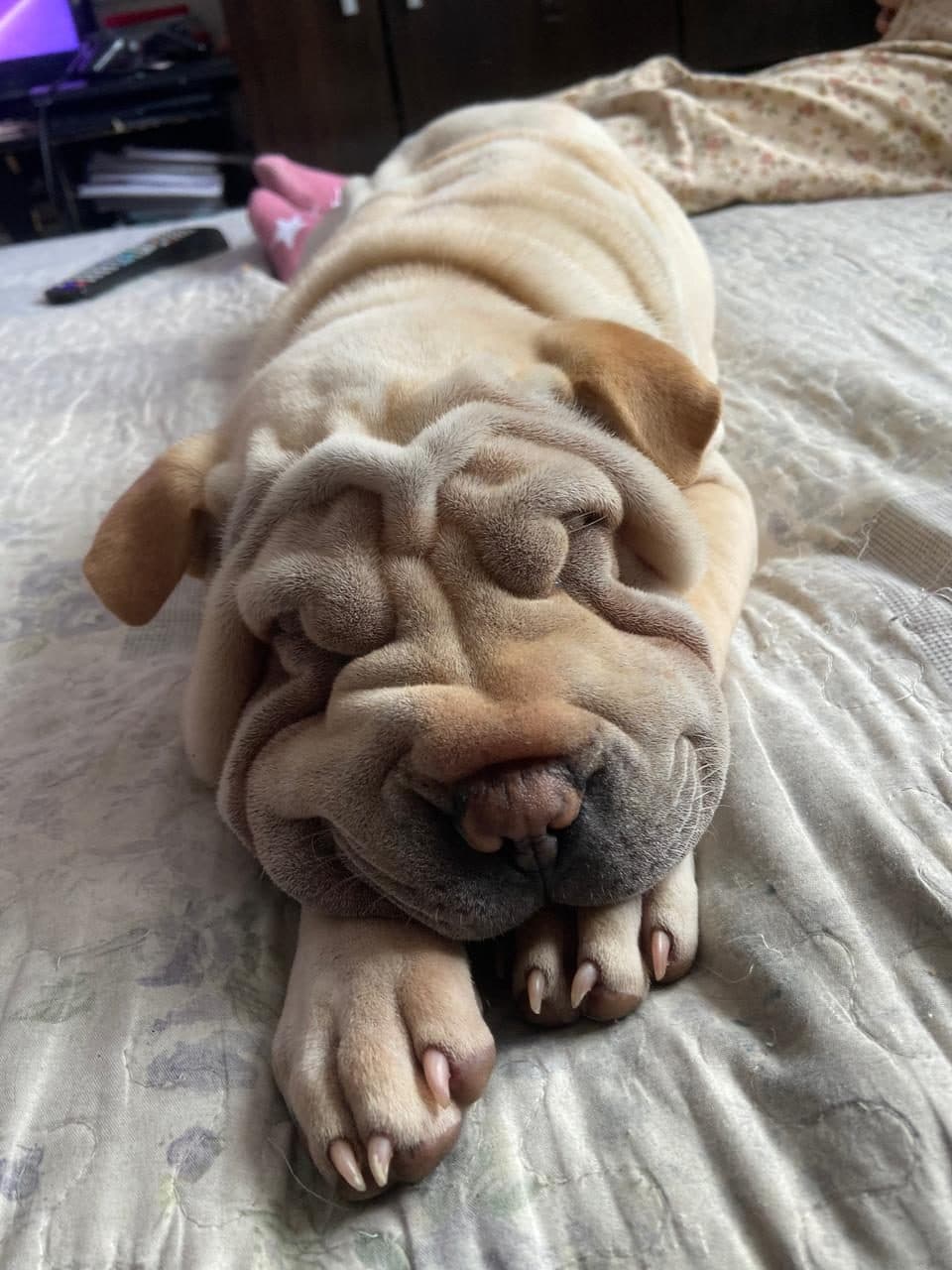
Shar Pei
Distinctive deep wrinkles, blue tongue. Independent, loyal character. Reserved with strangers. Skin and eye problems caused by excessive folds.
Foto: Wikipedia Commons · CC BY-SA
Ideal for
- ✓Experienced homes
- ✓Quiet flats
- ✓Cool climates
Reconsider if
- ×Very warm climates
- ×Anyone unwilling to take on high veterinary costs
Notify me when a Shar Pei is up for adoption
We'll only email you when a verified rescue posts one available. No spam, unsubscribe in 1 click.
We'll only use your email for this alert. More info in our privacy policy.
Is the Shar Pei a good match for you?
Indicative rating from 1 (low) to 5 (high).
💶 Estimated cost of ownership
80-130 €/month
Food (often a specific diet) 28-45 €, high prorated veterinary costs (dermatology, ophthalmology, renal function, familial fever) 30-50 €, insurance and unforeseen costs 12-22 €, hygiene of folds and ears/products 8-15 €, accessories 4-10 €. It is a breed with high healthcare costs.
History and origin
An ancient Chinese breed, a farm dog in Guangdong province: hunting, herding, guarding. Almost extinct during the Cultural Revolution; revived from Hong Kong by Matgo Law.
Adults live up to 8-12 years in good conditions. Recognised by the FCI (Fédération Cynologique Internationale).
Temperament and character
Serene, dignified, loyal. Independent. Reserved with strangers. Forms an intense bond with its family. Needs daily mental stimulation — scent games, food-stuffed Kongs and short trick sessions channel its energy better than physical exercise alone. Responds best to positive reinforcement: physical punishment breeds fear, anxiety and reactivity — coercive methods are NOT recommended by veterinary behaviourists. Sensitive to its family's mood: it picks up on tension and takes it on.
Living together
Children: with its own, respectful ones. Other dogs: dominant. Cats: coexists if socialised.
Life stages of the Shar Pei
Each stage has its own care priorities. Life expectancy: 8-12 años.
Puppy
0-1 year
Monitoring of the eyelids (entropion requiring early correction) and hygiene of the skin folds from the start.
Young
1-2 years
Monitoring of familial Shar Pei fever and renal function (amyloidosis); cleaning of the narrow ear canals.
Adult
2-7 years
Management of fold dermatitis and Malassezia dermatitis; recurrent otitis; periodic renal blood work.
Senior
7+ years
Close renal monitoring; control of skin, ears and weight.
Care
Exercise: 30-45 min/day split into at least 2 sessions. Calm walks + mental play.
Brushing: 2-3 times a week; intensive during the moulting seasons (spring and autumn).
Feeding: quality food appropriate to life stage (puppy/adult/senior) and size. Weight control: obesity is the leading preventable cause of joint problems.
Vet: annual check-up with preventive blood work from age 5 (7 in giant breeds); twice a year from age 8.
Weekly brushing. Daily cleaning of the folds is CRITICAL (infections). Weight control. Eye cleaning.
Care in detail
🍽️ Nutrition
Quality food in 2 meals; many tolerate protein-controlled or hypoallergenic diets better because of their tendency towards skin and digestive allergies. Weight control so as not to aggravate the folds or joints; consult about a renal diet if there is amyloidosis.
✂️ Grooming
Short, harsh coat (hence 'sandpaper skin'), but the key is not brushing but the folds: clean and dry them daily to prevent infections. Frequent ear cleaning (very narrow canal) and eye checks. Bathe only as needed and dry thoroughly.
🎓 Training
Serene, dignified and independent, loyal to its family and reserved or wary with strangers. It needs intensive early socialisation and positive reinforcement; it is stubborn and not suited to first-time owners without guidance. Work on tolerance to handling (ears, eyes, folds) from puppyhood.
🏃 Exercise
30-45 min of calm walking daily, avoiding the hottest hours: it tolerates high temperatures very poorly. Low energy; moderate activity and mental play are enough. It is not a dog for great physical effort.
Breed-specific health
Familial Shar Pei fever (genetic). Severe entropion. Fold dermatitis. Skin cancer. Chronic otitis. Life expectancy 8-12 years. Life expectancy of 8-12 years with proper care. Pre-breeding testing is recommended in responsible kennels (dysplasia + cardiac + ophthalmology according to the breed's conditions). When adopting, ask the rescue for a vet report on the current state of health.
🩺 Health predispositions of this breed
Conditions this breed is more predisposed to. Knowing about them helps with prevention and early detection. A predisposition does not mean the animal will develop them.
Common diseases in dogs
Learn the symptoms, prevention and when to see the vet. Reviewed indicative information that does not replace a veterinary consultation.
Screening and prevention for the Shar Pei
Recommended tests and screenings
- ✓Genetic test for familial Shar Pei fever (FSF) and assessment for renal amyloidosis
- ✓Ophthalmological examination and assessment for entropion (eyelids that roll inward)
- ✓Culture and cytology of skin and folds (dermatitis, infections)
- ✓Renal and hepatic function (proteinuria, amyloidosis)
Prevention
DAILY cleaning and drying of the folds to prevent skin infections. Monitoring for entropion from puppyhood (may require surgery). Control of familial fever and of renal function. Frequent cleaning of the ears (narrow canal) and avoidance of heat.
Check-up schedule
Frequent dermatological and ophthalmological review; blood work with renal function annually, and every six months if familial fever is present. Close veterinary monitoring for life (a breed with high healthcare costs).
Warning signs
- !Episodes of high fever and painful swelling of the hocks (familial Shar Pei fever)
- !Squinting eyes, watering and rubbing (entropion)
- !Bad smell, redness or moisture in the folds (dermatitis)
- !Excessive thirst and urination, lethargy (renal involvement/amyloidosis)
Shar Pei gallery

Frequently asked questions about the Shar Pei
- How long does a Shar Pei live? ▾
- The life expectancy of the Shar Pei is 8-12 años. A good diet, adequate exercise, annual veterinary check-ups and preventive care can help reach the upper end of that range.
- How much does a Shar Pei weigh? ▾
- An adult Shar Pei weighs between 18-30 kg, depending on its sex, genetics and condition. It is mediano.
- Where does the Shar Pei breed come from? ▾
- The Shar Pei originates from China. An ancient Chinese breed, a farm dog in Guangdong province: hunting, herding, guarding. Almost extinct during the Cultural Revolution; revived from Hong Kong by Matgo Law.
- How much exercise does a Shar Pei need? ▾
- The Shar Pei has baja energy. **Exercise:** 30-45 min/day split into at least 2 sessions. Calm walks + mental play.
- Is the Shar Pei good with children? ▾
- Children: with its own, respectful ones. Other dogs: dominant. Cats: coexists if socialised.
- Who is the Shar Pei NOT recommended for? ▾
- It isn't the right breed for: Very warm climates. Anyone unwilling to take on high veterinary costs. It's important to choose a breed that's compatible with your lifestyle.
- What health problems does the Shar Pei have? ▾
- Familial Shar Pei fever (genetic). Severe entropion. Fold dermatitis. Skin cancer. Chronic otitis. Life expectancy 8-12 years. Life expectancy of 8-12 years with proper care. Pre-breeding testing is recommended in responsible kennels (dysplasia + cardiac + ophthalmology according to the breed's conditions). When adopting, ask the rescue for a vet report on the current state of health.
- Why does it have so many health problems? ▾
- Its wrinkles and extreme features, selected for looks, bring skin, eye (entropion) and ear problems, as well as familial fever and renal amyloidosis. It is a breed with high veterinary costs; it is best to accept this and choose responsible breeding.
- Do the wrinkles need cleaning? ▾
- Yes, daily. The folds trap moisture, sweat and dirt and become infected easily. They must be cleaned and, above all, dried well every day. The deeper the wrinkles, the more care they need.
- What is familial Shar Pei fever? ▾
- It is a hereditary disease of the breed with episodes of high fever and painful swelling of the joints, especially the hocks. It is managed with veterinary treatment and monitoring, because it can be associated with kidney damage (amyloidosis).
- Can it cope with heat? ▾
- Poorly. Its thick skin and folds make it very sensitive to heat and prone to heatstroke. In summer it needs shade, fresh water, well-ventilated spots and walks only during the cooler hours.
- Is it a good breed for first-time owners? ▾
- It is not the most advisable. Its independent, reserved character, the need for intensive socialisation and, above all, the constant healthcare make it demanding. With guidance and commitment, it is a loyal and calm companion.
Related and similar breeds
Learn more about dogs
Practical veterinary guides to support your Shar Pei.
Sources and references
Content compiled from official breed standards and leading veterinary sources.
Want to adopt a shar pei?
There are shar peis in rescue shelters looking for a family. Filter by breed in the catalogue.