

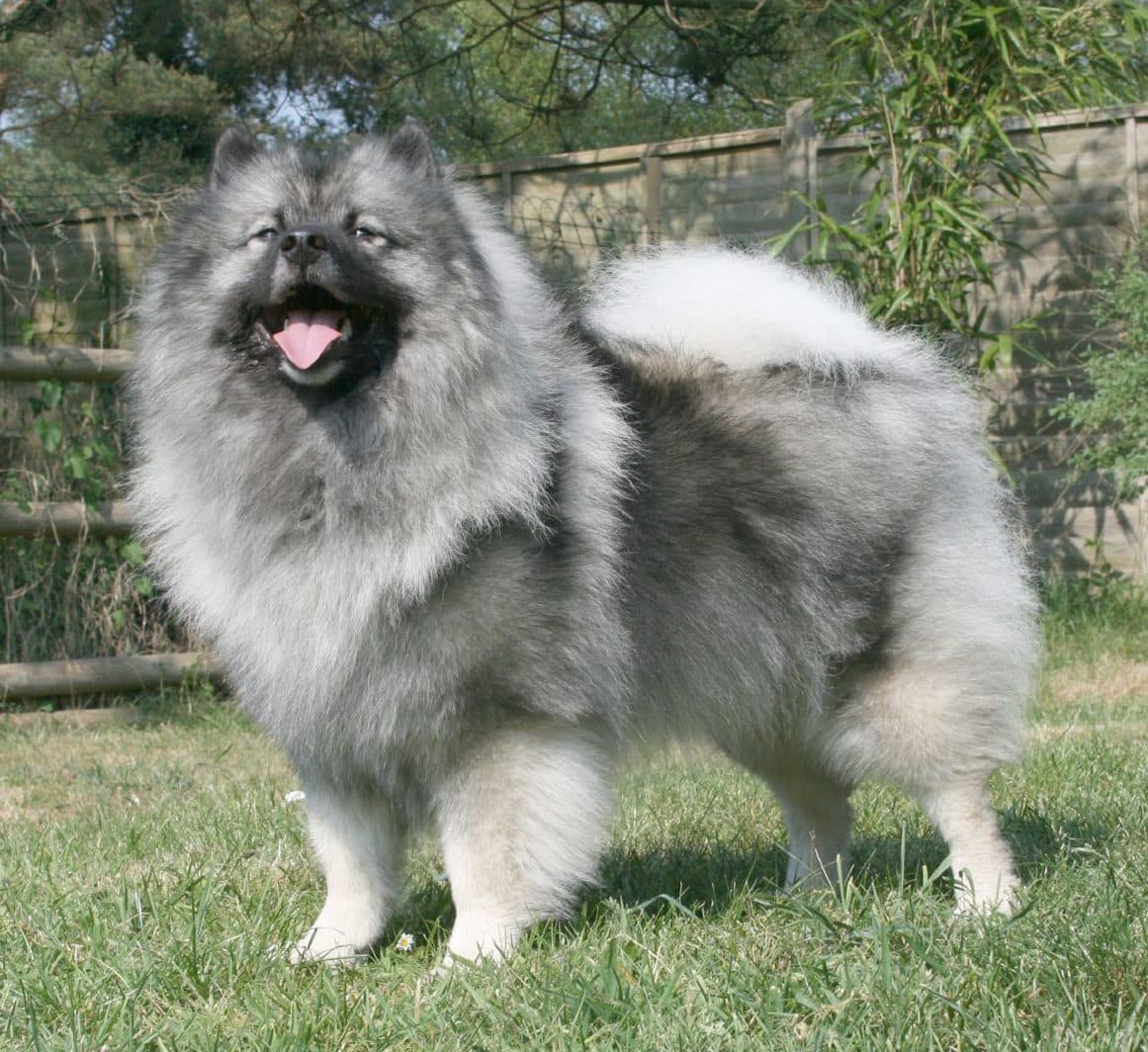
Keeshond
Dutch spitz. The traditional "barge dog". Symbol of the Dutch patriot party in the 18th century. Spectacular silver-grey coat. Cheerful, watchful character, a great barker.
Foto: Wikipedia Commons · CC BY-SA
Ideal for
- ✓Very active families
- ✓Homes with a garden
- ✓Canine sports (agility, obedience)
Reconsider if
- ×Sedentary families
- ×Homes with no daily exercise
- ×Homes where it is left alone for many hours (it suffers)
Notify me when a Keeshond is up for adoption
We'll only email you when a verified rescue posts one available. No spam, unsubscribe in 1 click.
We'll only use your email for this alert. More info in our privacy policy.
Is the Keeshond a good match for you?
Indicative rating from 1 (low) to 5 (high).
💶 Estimated cost of ownership
55-90 €/month
Quality food (25-40 €), vet and prevention (15-30 €), grooming/intensive brushing during moults or equipment at home (10-25 €), insurance and antiparasitics (5-15 €). Managing the moult (grooming or many hours of brushing) is the characteristic cost.
History and origin
Recognised by the FCI. Native to the Netherlands. Dutch spitz.
Temperament and character
Intelligent, hard-working, loyal to its family. It needs mental AND physical stimulation — boredom is the main cause of behavioural problems. Excellent with positive training.
Living together
Children: good with its own family. **Other dogs:** sociable with socialisation. **Other animals:** with early socialisation.
Life stages of the Keeshond
Each stage has its own care priorities. Life expectancy: 12-15 años.
Puppy
0-12 months
Socialisation of this sociable, cheerful companion; initial care of the abundant double coat.
Young
1-3 years
Moderate exercise and mental stimulation; frequent brushing; positive training; patella monitoring.
Adult
3-9 years
Weight control, thyroid and blood-glucose testing; screening for primary hyperparathyroidism (breed predisposed).
Senior
9+ years
Periodic endocrine (thyroid, parathyroid, diabetes) and joint check-ups.
Care
Exercise: 90-120 min/day divided into sessions. Off-lead time in a safe area is essential.
Brushing: 2-3 times/week; daily during moult.
Feeding: quality food suited to its physical activity.
Vet: annual check-up + blood work from age 5.
Care in detail
🍽️ Nutrition
Quality maintenance food, in 2 meals. It easily tends towards being overweight under its abundant coat: weigh and palpate it regularly and control treats.
✂️ Grooming
A very dense double coat with a spectacular ruff: thorough brushing 2-3 times a week and daily during the two major seasonal moults, when it sheds a great deal of hair. Never shave: the double coat protects it from cold and heat. Occasional bath.
🎓 Training
Clever, cheerful and very family-oriented (a "velcro dog"): it learns quickly with positive reinforcement. It is an alert barker due to its past as a barge dog; teach a "quiet" command early on. Socialise it to channel its sociability.
🏃 Exercise
Moderate: 1 hour a day of walks and play, with a dose of mental work. It enjoys gentle canine sports and companionship. It copes poorly with heat: exercise in the cooler hours in summer.
Breed-specific health
Hip/elbow dysplasia. Progressive retinal atrophy (genetic test recommended). Life expectancy 12-15 years with proper care.
🩺 Health predispositions of this breed
Conditions this breed is more predisposed to. Knowing about them helps with prevention and early detection. A predisposition does not mean the animal will develop them.
Common diseases in dogs
Learn the symptoms, prevention and when to see the vet. Reviewed indicative information that does not replace a veterinary consultation.
Screening and prevention for the Keeshond
Recommended tests and screenings
- ✓Genetic DNA test for primary hyperparathyroidism (PHPT)
- ✓Official hip and elbow dysplasia radiograph
- ✓Ophthalmological evaluation (progressive retinal atrophy, cataracts)
- ✓Patellar luxation examination
- ✓Cardiac auscultation (congenital defects) and thyroid check
Prevention
Buy from breeders who provide the parents' PHPT test: it is a breed-specific hereditary disorder with an available DNA test. Keep an appropriate weight and never shave the double coat, which insulates the dog from both cold and heat. Monitor the thyroid and the joints.
Check-up schedule
Annual check-up with cardiac auscultation and eye examination; hip radiograph at one year. Blood work with calcium (PHPT) and thyroid monitoring from age 5-6, and every six months in seniors.
Warning signs
- !Excessive thirst and urination, lethargy or urinary stones (hyperparathyroidism)
- !Weight gain, lethargy or symmetrical hair loss (hypothyroidism)
- !Stumbling or bumping into things in low light (retinal atrophy)
- !Lameness or joint stiffness (dysplasia)
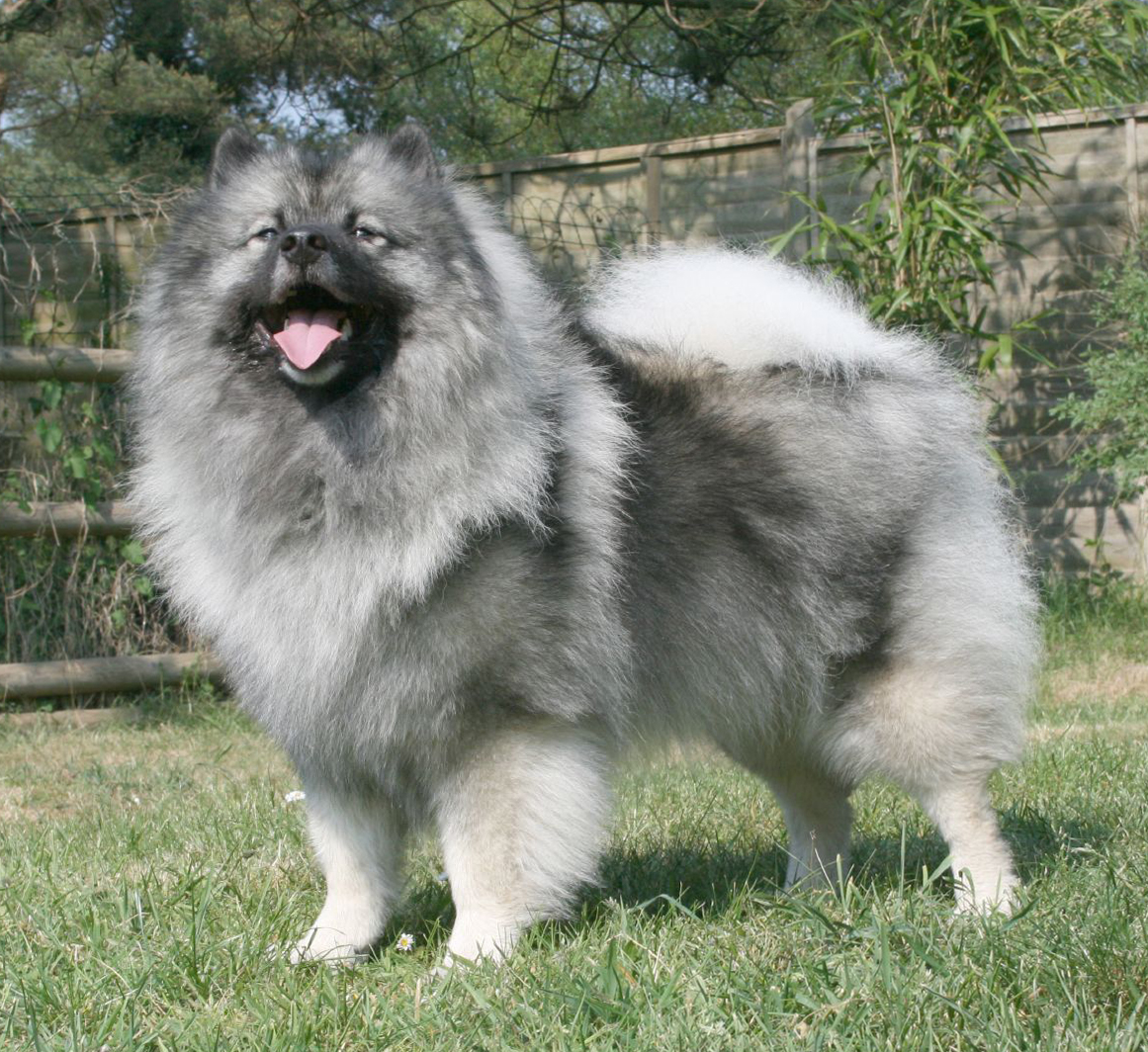
Keeshond gallery
Frequently asked questions about the Keeshond
- How long does a Keeshond live? ▾
- The life expectancy of the Keeshond is 12-15 años. A good diet, adequate exercise, annual veterinary check-ups and preventive care can help reach the upper end of that range.
- How much does a Keeshond weigh? ▾
- An adult Keeshond weighs between 14-20 kg, depending on its sex, genetics and condition. It is mediano.
- Where does the Keeshond breed come from? ▾
- The Keeshond originates from Países Bajos. Recognised by the FCI. Native to the Netherlands. Dutch spitz.
- How much exercise does a Keeshond need? ▾
- The Keeshond has media energy. **Exercise:** 90-120 min/day divided into sessions. Off-lead time in a safe area is essential.
- Is the Keeshond good with children? ▾
- **Children:** good with its own family. **Other dogs:** sociable with socialisation. **Other animals:** with early socialisation.
- Who is the Keeshond NOT recommended for? ▾
- It isn't the right breed for: Sedentary families. Homes with no daily exercise. Homes where it is left alone for many hours (it suffers). It's important to choose a breed that's compatible with your lifestyle.
- What health problems does the Keeshond have? ▾
- Hip/elbow dysplasia. Progressive retinal atrophy (genetic test recommended). Life expectancy 12-15 years with proper care.
- Does it shed a lot? ▾
- A great deal, especially during the two annual moults, when it releases large amounts of undercoat. It requires frequent brushing and vacuuming often; it is not a breed for those who want a hair-free home.
- Can I shave it in summer to keep it cooler? ▾
- No. The double coat acts as thermal insulation in both directions and, once shaved, it may regrow poorly and leave the skin unprotected. Better to brush thoroughly to remove undercoat and provide shade and water.
- Does it bark a lot? ▾
- It is an alert barker: it announces everything going on, a legacy of its role on the Dutch barges. With training and stimulation this can be managed, but it is worth bearing in mind in a flat.
- Is it good with children and other dogs? ▾
- Yes, it is sociable, balanced and very family-oriented. With socialisation it lives well with children, dogs and other animals; it is an excellent family dog.
- Does it tolerate being left alone? ▾
- Only moderately: it is very attached ("velcro") and prefers to be with its people. Get it used to being alone gradually to avoid separation anxiety.
Learn more about dogs
Practical veterinary guides to support your Keeshond.
Sources and references
Content compiled from official breed standards and leading veterinary sources.
- WikipediaKeeshond ↗
- AKCKeeshond ↗
- FCIFCI Standard No. 97 (German Spitz) ↗
Want to adopt a keeshond?
There are keeshonds in rescue shelters looking for a family. Filter by breed in the catalogue.