

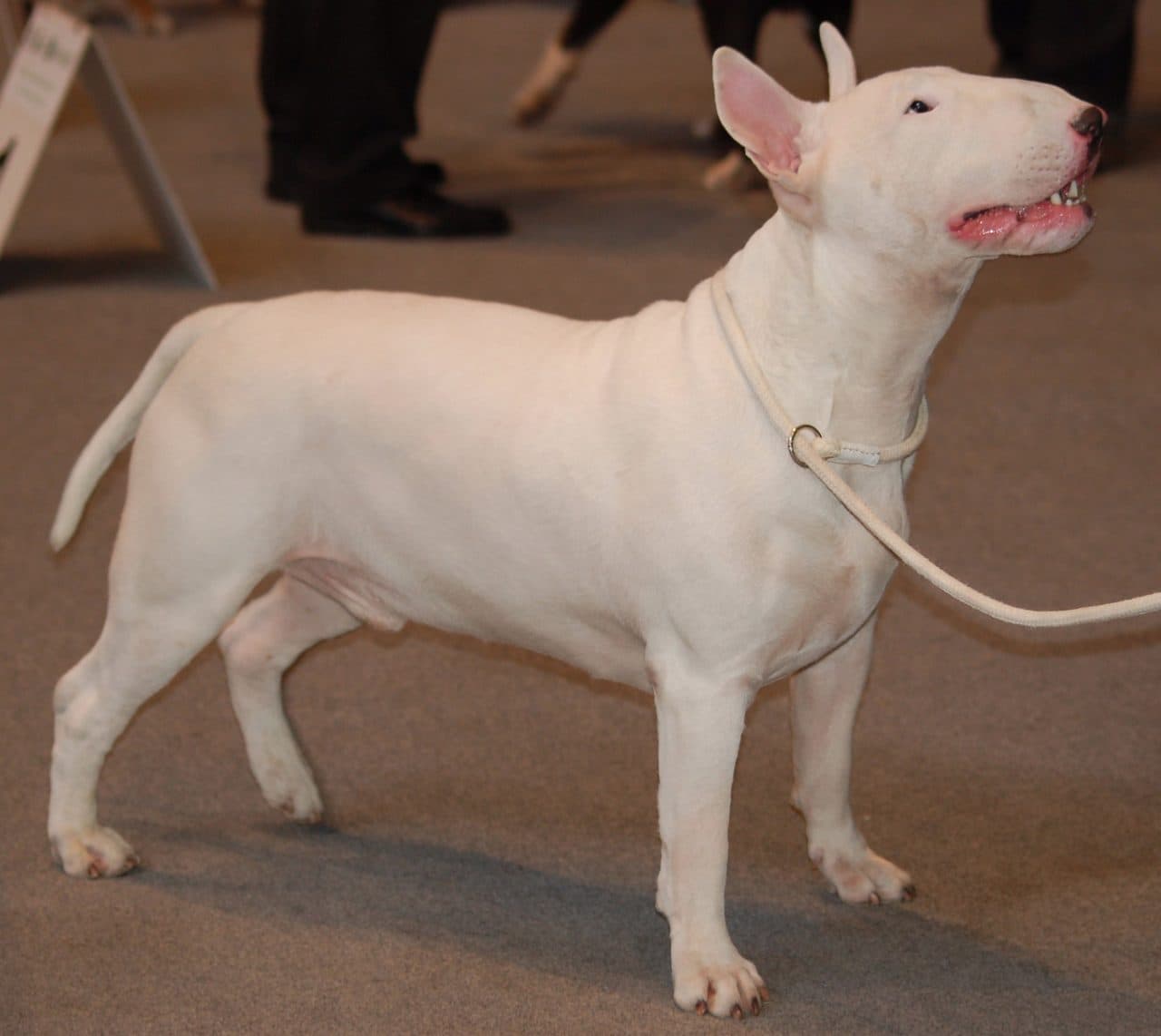
Bull Terrier
Unmistakable egg-shaped head ("egg face"). Athletic, clownish and strong. Cheerful, affectionate but stubborn character. Needs firm training and plenty of exercise.
Foto: Wikipedia Commons · CC BY-SA
Ideal for
- ✓Very active families
- ✓Those looking for a charismatic, energetic dog
Reconsider if
- ×First-time owners
- ×Homes with other small dogs
- ×Flats without exercise
Notify me when a Bull Terrier is up for adoption
We'll only email you when a verified rescue posts one available. No spam, unsubscribe in 1 click.
We'll only use your email for this alert. More info in our privacy policy.
Is the Bull Terrier a good match for you?
Indicative rating from 1 (low) to 5 (high).
💶 Estimated cost of ownership
60-110 €/month
Food: 30-50 € · Preventive vet care: 18-35 € · Hygiene and accessories: 10-20 € · Insurance and extras: 10-25 €
History and origin
Created by James Hinks in Birmingham (1860s) by crossing bulldog and terrier for fighting and later as a companion. Its present form was stabilised in the early 20th century.
Recognised by the FCI. In the UK it falls under Dangerous Dogs Act legislation in some cases (check the Dangerous Dogs Act 1991 and local regulations). Its historical selection for guarding calls for early training and broad socialisation so that its character is channelled positively.
Temperament and character
Cheerful, playful and brave. Attached to its family (cannot bear solitude). Stubborn. Some individuals develop compulsions (tail chasing). Needs daily mental stimulation — scent games, food Kongs and short tricks channel its energy better than physical exercise alone. Responds best to positive reinforcement: physical punishment breeds fear, anxiety and reactivity — coercive methods are NOT recommended by veterinary behaviourists. Sensitive to its family's mood: it picks up on tension and catches it.
Living together
Children: fine with respectful ones of its own household. Other dogs: reactive. Cats: variable.
Life stages of the Bull Terrier
Each stage has its own care priorities. Life expectancy: 11-14 años.
Puppy
0-1 year
Intensive socialisation to channel its energy; monitoring of hearing (congenital deafness) and starting to control obsessive chewing.
Young
1-3 years
Plenty of physical and mental exercise to prevent compulsive behaviours (spinning/chasing the tail); dental and skin care.
Adult
3-8 years
Weight and muscle control; annual renal and cardiac check; management of skin allergies.
Senior
8+ years
Monitoring of renal function and heart murmurs; mobility control and six-monthly geriatric check-ups.
Care
Exercise: 60-90 min/day split into at least 2 sessions. Off-lead running in a safe area is essential for high-energy breeds.
Brushing: 2-3 times/week; intensive during the moults (spring and autumn).
Feeding: good-quality food appropriate to its life stage (puppy/adult/senior) and size. Weight control: obesity is the leading preventable cause of joint problems.
Vet: annual check-up with preventive blood work from 5 years of age (7 years in giant breeds); twice a year from 8.
Exercise 1.5 h/day + mental play. Weekly brushing. Careful with sun (sensitive). Firm training.
Care in detail
🍽️ Nutrition
Good-quality food for medium breeds in 2 meals, with weight control due to its compact musculature and renal monitoring if there is a family predisposition.
✂️ Grooming
Minimal: short coat, weekly brushing. Its pale skin is sensitive to the sun; protect it in summer to prevent burns.
🎓 Training
Cheerful, brave and very attached, but stubborn. It needs firm, consistent positive training, plenty of exercise and mental stimulation to prevent the compulsive behaviours typical of the breed.
🏃 Exercise
Around 1.5 hours of physical exercise a day plus mental play. It does not tolerate prolonged solitude: it gets bored and can become destructive.
Breed-specific health
Deafness (especially whites). Hereditary kidney problems. Patellar luxation. Heart disease. Life expectancy 11-14 years. Life expectancy 11-14 years with appropriate care. Pre-breeding tests are recommended in responsible kennels (dysplasia + cardiac + ophthalmology according to the breed's conditions). When adopting, ask the shelter for a vet report on the current state of health.
🩺 Health predispositions of this breed
Conditions this breed is more predisposed to. Knowing about them helps with prevention and early detection. A predisposition does not mean the animal will develop them.
Common diseases in dogs
Learn the symptoms, prevention and when to see the vet. Reviewed indicative information that does not replace a veterinary consultation.
Screening and prevention for the Bull Terrier
Recommended tests and screenings
- ✓BAER hearing test (deafness, especially in white specimens)
- ✓Renal function profile and analysis (hereditary nephropathy)
- ✓Echocardiography (heart disease)
- ✓Patellar luxation assessment
Prevention
Periodic renal monitoring, sun protection for the pale skin, plenty of exercise and management of compulsive behaviours (tail chasing).
Check-up schedule
Annual check-up with a renal profile; hearing assessment in puppies.
Warning signs
- !Excessive thirst and urination (kidney problem)
- !Failing to respond to sounds (deafness)
- !Compulsive tail chasing
- !Intermittent lameness (patella)
Bull Terrier gallery

Frequently asked questions about the Bull Terrier
- How long does a Bull Terrier live? ▾
- The life expectancy of the Bull Terrier is 11-14 años. A good diet, adequate exercise, annual veterinary check-ups and preventive care can help reach the upper end of that range.
- How much does a Bull Terrier weigh? ▾
- An adult Bull Terrier weighs between 20-30 kg, depending on its sex, genetics and condition. It is mediano.
- Where does the Bull Terrier breed come from? ▾
- The Bull Terrier originates from Inglaterra. Created by James Hinks in Birmingham (1860s) by crossing bulldog and terrier for fighting and later as a companion. Its present form was stabilised in the early 20th century.
- How much exercise does a Bull Terrier need? ▾
- The Bull Terrier has alta energy. **Exercise:** 60-90 min/day split into at least 2 sessions. Off-lead running in a safe area is essential for high-energy breeds.
- Is the Bull Terrier good with children? ▾
- Children: fine with respectful ones of its own household. Other dogs: reactive. Cats: variable.
- Who is the Bull Terrier NOT recommended for? ▾
- It isn't the right breed for: First-time owners. Homes with other small dogs. Flats without exercise. It's important to choose a breed that's compatible with your lifestyle.
- What health problems does the Bull Terrier have? ▾
- Deafness (especially whites). Hereditary kidney problems. Patellar luxation. Heart disease. Life expectancy 11-14 years. Life expectancy 11-14 years with appropriate care. Pre-breeding tests are recommended in responsible kennels (dysplasia + cardiac + ophthalmology according to the breed's conditions). When adopting, ask the shelter for a vet report on the current state of health.
- Is the Bull Terrier a restricted breed in the UK? ▾
- In many cases it can fall under dangerous-dog rules. Check the Dangerous Dogs Act 1991 and your local regulations: it may require a licence, insurance and a muzzle in public.
- Why does it chase its own tail? ▾
- Some individuals develop compulsive behaviours, such as obsessively chasing their tail. It is usually linked to a lack of stimulation or to stress and requires a veterinary/behavioural assessment.
- Is it good with other dogs? ▾
- It can be reactive, especially with dogs of the same sex or small ones. Early socialisation helps, but it is always advisable to supervise.
- Why are many white Bull Terriers deaf? ▾
- Congenital deafness is associated with the white coat gene. The BAER test in puppies detects it; a deaf dog can live well with management and visual signals.
- Can it cope with being left alone at home? ▾
- Poorly. It is very attached to its family and does not tolerate prolonged solitude; without company and an outlet it becomes frustrated and can be destructive.
Related and similar breeds
Learn more about dogs
Practical veterinary guides to support your Bull Terrier.
Sources and references
Content compiled from official breed standards and leading veterinary sources.
Want to adopt a bull terrier?
There are bull terriers in rescue shelters looking for a family. Filter by breed in the catalogue.