


Tortuga Rusa (Horsfield)
Small terrestrial tortoise. Active, a burrower. Hardy in cold climates.
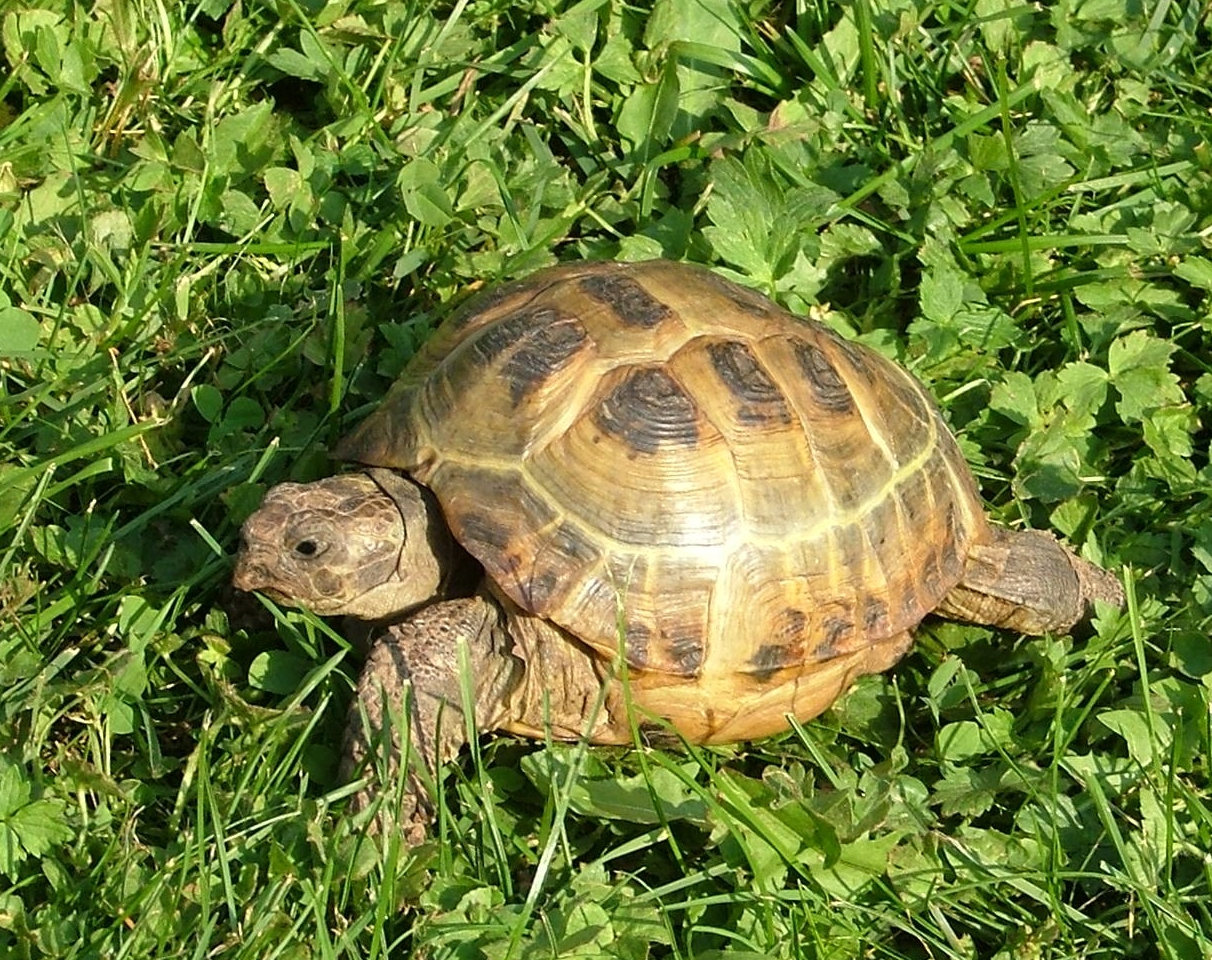
Foto: Wikipedia Commons · CC BY-SA
Ideal for
- ✓Anyone looking for an exotic pet with a technical commitment
- ✓Patient people (reptiles need time to build trust)
- ✓Homes with room for a vivarium
Reconsider if
- ×Homes with young children without supervision
- ×People with no prior experience (consult an exotics vet first)
- ×A life spent 100% in a small vivarium (cruel)
Notify me when a Tortuga Rusa (Horsfield) is up for adoption
We'll only email you when a verified rescue posts one available. No spam, unsubscribe in 1 click.
We'll only use your email for this alert. More info in our privacy policy.
Is the Tortuga Rusa (Horsfield) a good match for you?
Indicative rating from 1 (low) to 5 (high).
💶 Estimated cost of ownership
20-40 €/month
Plants, grasses and cuttlebone 5-10 €, electricity for UVB and heat 8-18 €, deep substrate 3-6 €; annual UVB replacement and exotics vet. Hibernation reduces winter costs.
History and origin
A burrowing tortoise from the Central Asian steppes (Horsfield's tortoise); it withstands extreme climates with long periods of inactivity.
Temperament and character
Reptiles are NOT social the way mammals are. They tolerate handling but do not seek company. Trust is earned with patience.
Living together
Children: depends on the species plus educational handling. **Other pets:** avoid — risk in both directions. **Other reptiles:** depending on the species, separate vivariums are best.
Life stages of the Tortuga Rusa (Horsfield)
Each stage has its own care priorities. Life expectancy: 40-50 años.
Hatchling/Neonate
0-12 months
Intense UVB, hot spot 33-35 °C; dry diggable substrate; high-fibre herbivorous diet with calcium.
Juvenile
1-4 years
Wild plants and forage, calcium supplement without phosphorus; a very active burrowing species that needs substrate depth.
Subadult
4-8 years
A wide thermal gradient, a dry continental environment; monitoring of shell growth.
Adult
8+ years
Marked aestivation and hibernation, a low-protein fibrous diet, prevention of egg retention in females.
Care
Vivarium: minimum size according to species (consult species-specific guides). UVB is mandatory for diurnal species.
Temperature: day/night gradient · warm zone vs. cool zone for thermoregulation.
Humidity: according to species (rainforest 70%+ · desert 30-50%).
Feeding: species-specific diet · insectivores, herbivores and carnivores vary radically.
Veterinarian: an exotics vet (an ordinary vet will NOT do). Annual check-up.
Care in detail
🍽️ Nutrition
Herbivorous: grasses, fibrous wild plants and flowers (dandelion, chicory), little fruit and constant calcium. A varied, low-protein diet.
✂️ Grooming
No frequent bathing; lukewarm baths to hydrate, especially when coming out of hibernation. Watch for a smooth shell.
🎓 Training
It cannot be domesticated; it tolerates minimal handling. It is active and curious, but does not seek contact.
🏃 Exercise
A spacious enclosure with deep substrate for digging (a great burrower), hides and a thermal gradient; outdoors it makes good use of the sun. A secure fence: it escapes by digging and climbing.
Breed-specific health
UVB deficiency (rickets, MBD), parasites, respiratory infections from incorrect humidity. Life expectancy 40-50 years when well cared for.
🩺 Health predispositions of this breed
Conditions this breed is more predisposed to. Knowing about them helps with prevention and early detection. A predisposition does not mean the animal will develop them.
Common diseases in reptiles
Learn the symptoms, prevention and when to see the vet. Reviewed indicative information that does not replace a veterinary consultation.
Screening and prevention for the Tortuga Rusa (Horsfield)
Recommended tests and screenings
- ✓Shell examination (MBD, shell rot)
- ✓Pre-hibernation assessment (weight, hydration)
- ✓Faecal test for internal parasites
- ✓CITES II documentation for the specimen
Prevention
An enclosure with deep substrate for digging, quality UVB, a fibrous herbivorous diet with calcium, and controlled hibernation in winter if the animal is healthy and the enclosure is well secured (it is a burrower and a climber, and escapes easily).
Check-up schedule
Annual check-up with an exotics vet, ideally before and after hibernation.
Warning signs
- !Nasal/ocular discharge (respiratory infection)
- !Soft or deformed shell (MBD)
- !Weight loss before hibernating
- !Lethargy outside the hibernation period
- !Abnormal faeces or parasites
Tortuga Rusa (Horsfield) gallery
Frequently asked questions about the Tortuga Rusa (Horsfield)
- How long does a Tortuga Rusa (Horsfield) live? ▾
- The life expectancy of the Tortuga Rusa (Horsfield) is 40-50 años. A good diet, adequate exercise, annual veterinary check-ups and preventive care can help reach the upper end of that range.
- How much does a Tortuga Rusa (Horsfield) weigh? ▾
- An adult Tortuga Rusa (Horsfield) weighs between 1-2 kg, depending on its sex, genetics and condition. It is pequeño.
- Where does the Tortuga Rusa (Horsfield) breed come from? ▾
- The Tortuga Rusa (Horsfield) originates from Asia Central. A burrowing tortoise from the Central Asian steppes (Horsfield's tortoise); it withstands extreme climates with long periods of inactivity.
- How much exercise does a Tortuga Rusa (Horsfield) need? ▾
- The Tortuga Rusa (Horsfield) has media energy. **Vivarium:** minimum size according to species (consult species-specific guides). UVB is mandatory for diurnal species.
- Is the Tortuga Rusa (Horsfield) good with children? ▾
- **Children:** depends on the species plus educational handling. **Other pets:** avoid — risk in both directions. **Other reptiles:** depending on the species, separate vivariums are best.
- Who is the Tortuga Rusa (Horsfield) NOT recommended for? ▾
- It isn't the right breed for: Homes with young children without supervision. People with no prior experience (consult an exotics vet first). A life spent 100% in a small vivarium (cruel). It's important to choose a breed that's compatible with your lifestyle.
- What health problems does the Tortuga Rusa (Horsfield) have? ▾
- UVB deficiency (rickets, MBD), parasites, respiratory infections from incorrect humidity. Life expectancy 40-50 years when well cared for.
- Is it a good tortoise to start with? ▾
- Yes, it is one of the hardiest terrestrial tortoises and one of the easiest to care for, always with UVB, a correct diet and the possibility of hibernating.
- Why does it dig so much? ▾
- It is a natural burrower that digs burrows to shelter from cold and heat. It needs deep substrate and an enclosure it cannot undermine.
- Does it cope with the cold? ▾
- It comes from Central Asia and is very cold-hardy; it hibernates naturally in winter, provided the specimen is healthy and at a good weight.
- Does it escape easily? ▾
- Yes: it digs and climbs surprisingly well. The enclosure must have a buried barrier and enough height to prevent escapes.
Learn more about reptiles
Practical veterinary guides to support your Tortuga Rusa (Horsfield).
Sources and references
Content compiled from official breed standards and leading veterinary sources.
- WikipediaTestudo horsfieldii ↗
- The Reptile DatabaseReptile Database ↗
- AHESpanish Herpetological Association ↗
Want to adopt a tortuga rusa (horsfield)?
There are tortuga rusa (horsfield)s in rescue shelters looking for a family. Filter by breed in the catalogue.