

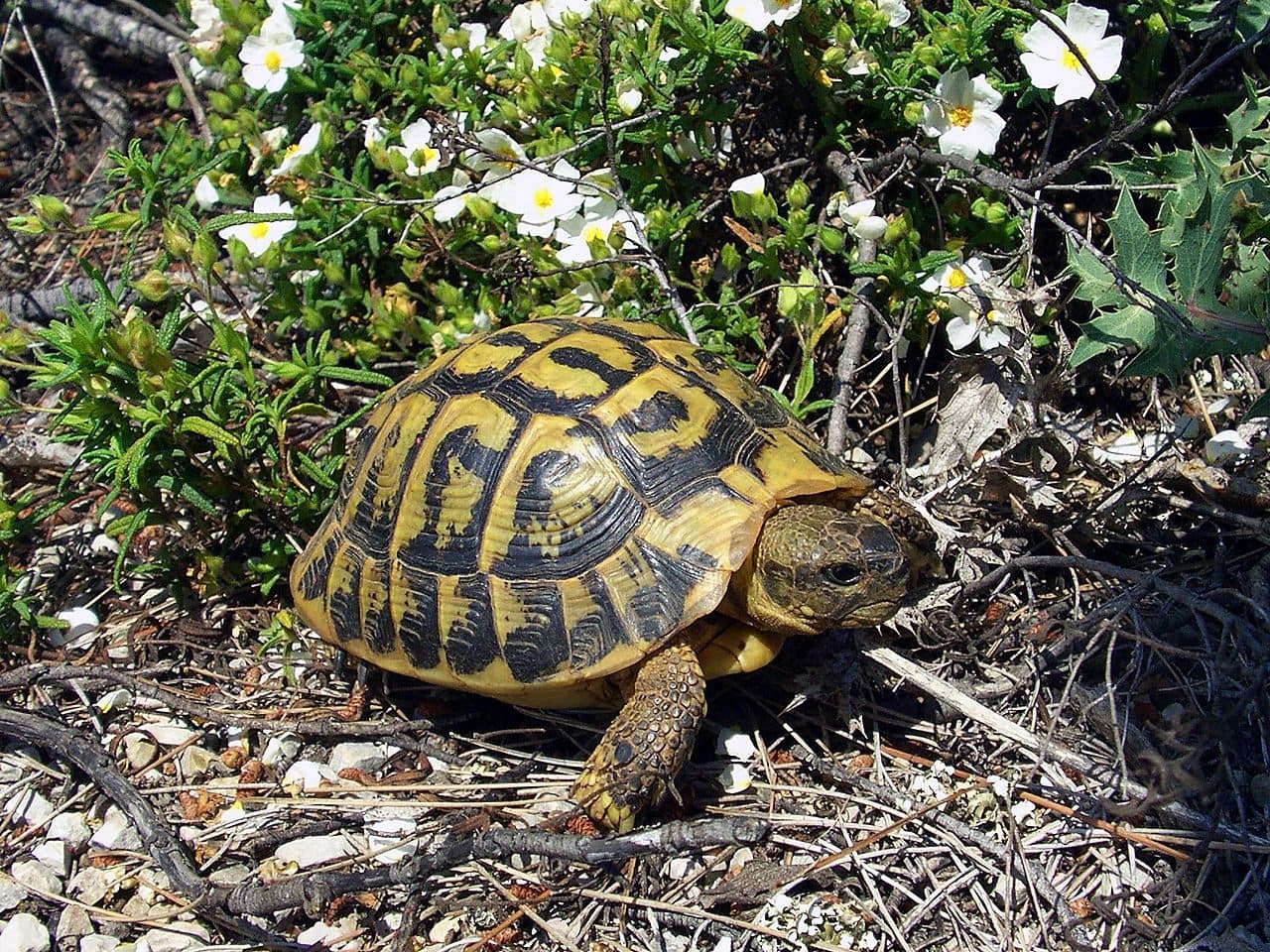
Tortuga Mediterránea (Testudo hermanni)
Native land tortoise. CITES II — only documented captive-bred specimens in the UK. Protected.
Foto: Wikipedia Commons · CC BY-SA
Ideal for
- ✓Anyone seeking an exotic pet with a technical commitment
- ✓Patient people (reptiles need time to build trust)
- ✓Homes with space for a terrarium
Reconsider if
- ×Homes with young children without supervision
- ×People with no prior experience (consult an exotics vet first)
- ×Life 100% in a small terrarium (cruel)
Notify me when a Tortuga Mediterránea (Testudo hermanni) is up for adoption
We'll only email you when a verified rescue posts one available. No spam, unsubscribe in 1 click.
We'll only use your email for this alert. More info in our privacy policy.
Is the Tortuga Mediterránea (Testudo hermanni) a good match for you?
Indicative rating from 1 (low) to 5 (high).
💶 Estimated cost of ownership
30-60 €/month
Feeding (vegetables/plants + supplements) 10-18 €, electricity (UVB + heat) 8-18 €, exotics vet provision 8-15 €, substrate and maintenance 4-9 €.
History and origin
A land tortoise from southern Europe (Iberia, Italy, the Balkans); a protected species and an emblem of Mediterranean scrubland and dehesas.
Temperament and character
Reptiles are NOT social like mammals. They tolerate handling but do not seek company. Trust is earned with patience.
Living together
Children: depends on species + educational handling. **Other pets:** avoid — bidirectional risk. **Other reptiles:** depending on species, separate terrariums are best.
Life stages of the Tortuga Mediterránea (Testudo hermanni)
Each stage has its own care priorities. Life expectancy: 50-90 años.
Hatchling/Neonate
0-12 months
Powerful UVB and a heat spot of 32-35 °C; high humidity in the hide to prevent pyramiding; a fibre- and calcium-rich herbivorous diet (high Ca:P).
Juvenile
1-5 years
Slow, sturdy growth: a variety of wild plants, calcium supplement without phosphorus, daily UVB and hydration baths.
Subadult
5-10 years
Thermal gradient 20-35 °C, ample outdoor space in a Mediterranean climate; weight and shell monitoring.
Adult
10+ years
Controlled hibernation in a suitable climate, a diet low in animal protein, reproductive management and prevention of egg retention.
Care
Terrarium: minimum size according to species (consult species-specific guides). UVB is mandatory for diurnal species.
Temperature: day/night gradient · warm zone vs cool zone for thermoregulation.
Humidity: according to species (rainforest 70%+ · desert 30-50%).
Feeding: species-specific diet · insectivores, herbivores and carnivores vary radically.
Vet: exotics vet (a regular vet will NOT do). Annual check-up.
Care in detail
🍽️ Nutrition
A strict herbivore: wild plants and leafy greens rich in fibre and calcium (dandelion, chicory), with a calcium supplement. No animal protein, excess fruit or dog/cat food.
✂️ Grooming
Requires no grooming. Keep the terrarium/outdoor enclosure clean and provide a shallow water dish for drinking and bathing.
🎓 Training
Reptiles are neither sociable nor trainable: they tolerate handling but do not seek company. Minimise handling and let it build trust over time.
🏃 Exercise
Low. Needs a large enclosure (ideally a protected outdoor one in a suitable climate) to walk, bask and thermoregulate between warm and cool zones.
Breed-specific health
UVB deficiency (rickets, MBD), parasites, respiratory infections from incorrect humidity. Life expectancy 50-90 years when well cared for.
🩺 Health predispositions of this breed
Conditions this breed is more predisposed to. Knowing about them helps with prevention and early detection. A predisposition does not mean the animal will develop them.
Common diseases in reptiles
Learn the symptoms, prevention and when to see the vet. Reviewed indicative information that does not replace a veterinary consultation.
Screening and prevention for the Tortuga Mediterránea (Testudo hermanni)
Recommended tests and screenings
- ✓Assessment of the shell and bones (metabolic bone disease/MBD)
- ✓Respiratory examination (infections from incorrect humidity/temperature)
- ✓Faecal test (internal parasites)
- ✓Weight and shell-growth monitoring
- ✓Examination by a vet specialising in exotics
Prevention
Mandatory UVB lighting and a correct thermal gradient (key to metabolising calcium and avoiding rickets), a high-fibre, calcium-rich herbivorous diet, and controlled hibernation according to the species. CITES II: only documented, legal captive-bred specimens in the UK.
Check-up schedule
Annual check-up with an exotics vet; special monitoring before and after hibernation.
Warning signs
- !Soft or deformed shell, or overgrown beak/nails (MBD)
- !Open-mouth breathing, mucus or wheezing (respiratory infection)
- !Lack of appetite or lethargy outside of hibernation
- !Swollen or closed eyes (vitamin A deficiency)
Tortuga Mediterránea (Testudo hermanni) gallery

Frequently asked questions about the Tortuga Mediterránea (Testudo hermanni)
- How long does a Tortuga Mediterránea (Testudo hermanni) live? ▾
- The life expectancy of the Tortuga Mediterránea (Testudo hermanni) is 50-90 años. A good diet, adequate exercise, annual veterinary check-ups and preventive care can help reach the upper end of that range.
- How much does a Tortuga Mediterránea (Testudo hermanni) weigh? ▾
- An adult Tortuga Mediterránea (Testudo hermanni) weighs between 0.6-3 kg, depending on its sex, genetics and condition. It is pequeño-mediano.
- Where does the Tortuga Mediterránea (Testudo hermanni) breed come from? ▾
- The Tortuga Mediterránea (Testudo hermanni) originates from Sur de Europa. A land tortoise from southern Europe (Iberia, Italy, the Balkans); a protected species and an emblem of Mediterranean scrubland and dehesas.
- How much exercise does a Tortuga Mediterránea (Testudo hermanni) need? ▾
- The Tortuga Mediterránea (Testudo hermanni) has media energy. **Terrarium:** minimum size according to species (consult species-specific guides). UVB is mandatory for diurnal species.
- Is the Tortuga Mediterránea (Testudo hermanni) good with children? ▾
- **Children:** depends on species + educational handling. **Other pets:** avoid — bidirectional risk. **Other reptiles:** depending on species, separate terrariums are best.
- Who is the Tortuga Mediterránea (Testudo hermanni) NOT recommended for? ▾
- It isn't the right breed for: Homes with young children without supervision. People with no prior experience (consult an exotics vet first). Life 100% in a small terrarium (cruel). It's important to choose a breed that's compatible with your lifestyle.
- What health problems does the Tortuga Mediterránea (Testudo hermanni) have? ▾
- UVB deficiency (rickets, MBD), parasites, respiratory infections from incorrect humidity. Life expectancy 50-90 years when well cared for.
- Is it legal to keep a Mediterranean tortoise? ▾
- Yes, but it is protected (CITES II). Only specimens from captive breeding with legal documentation may be kept. Buying without paperwork or taking one from the wild is a crime.
- Why is UVB light essential? ▾
- Without UVB radiation it cannot synthesise vitamin D or absorb calcium, and it develops metabolic bone disease (soft shell and deformities). It is as important as food.
- Do they hibernate? ▾
- Yes, Testudo hermanni hibernates in winter. It must be done in a controlled way and only with healthy specimens of adequate weight; poorly managed hibernation can be fatal. Consult an exotics vet.
- How long does it live? ▾
- It is a lifelong commitment: between 50 and 90 years when well cared for. It may outlive its keeper, so it is wise to plan who will take charge in the long term.
Learn more about reptiles
Practical veterinary guides to support your Tortuga Mediterránea (Testudo hermanni).
Sources and references
Content compiled from official breed standards and leading veterinary sources.
- WikipediaTestudo hermanni ↗
- The Reptile DatabaseReptile Database ↗
- AHESpanish Herpetological Association ↗
Want to adopt a tortuga mediterránea (testudo hermanni)?
There are tortuga mediterránea (testudo hermanni)s in rescue shelters looking for a family. Filter by breed in the catalogue.