

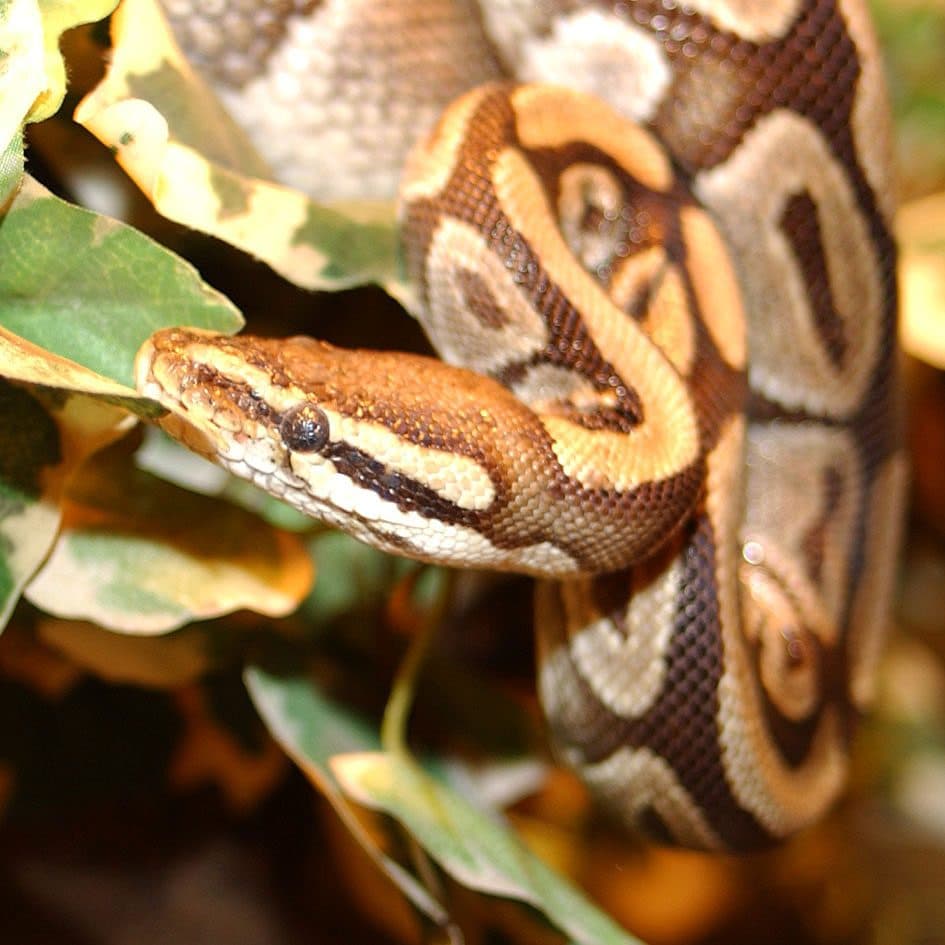
Pitón Bola (Real)
The most popular python. Small for a python. Docile — curls into a ball when stressed. NOT dangerous.
Foto: Wikipedia Commons · CC BY-SA
Ideal for
- ✓Anyone seeking an exotic pet with a technical commitment
- ✓Patient people (reptiles need time to build trust)
- ✓Homes with space for a terrarium
Reconsider if
- ×Homes with young children without supervision
- ×People with no prior experience (consult an exotics vet first)
- ×Life spent 100% in a small terrarium (cruel)
Notify me when a Pitón Bola (Real) is up for adoption
We'll only email you when a verified rescue posts one available. No spam, unsubscribe in 1 click.
We'll only use your email for this alert. More info in our privacy policy.
Is the Pitón Bola (Real) a good match for you?
Indicative rating from 1 (low) to 5 (high).
💶 Estimated cost of ownership
25-40 €/month
Frozen rodents 4-8 €, heating electricity 12-18 €, substrate and maintenance 3-5 €; annual exotics vet check-up (~40-60 €) and a quality thermostat as a recommended initial investment.
History and origin
Native to West Africa. The most popular python.
Temperament and character
Reptiles are NOT social like mammals. They tolerate handling but do not seek company. Trust is earned with patience.
Living together
Children: depends on the species + supervised handling. **Other pets:** avoid — two-way risk. **Other reptiles:** depending on the species, better kept in separate terrariums.
Life stages of the Pitón Bola (Real)
Each stage has its own care priorities. Life expectancy: 20-30 años.
Hatchling
0-4 months
Small space and plenty of hides to reduce stress; warm spot 30-32 °C, humidity 55-65%; pinky/fuzzy every 5-7 days.
Juvenile
4-12 months
Hopper/adult mouse every 7-10 days; stable humidity; watch for typical voluntary fasting and complete sheds.
Sub-adult
1-3 years
Gradient 28-32 °C, heat source with a thermostat (burn risk); small rat every 10-14 days.
Adult
3-30 years
Gradient 27-31 °C, humidity 55-65% (raise during shedding); appropriate rat every 14-21 days; in females monitor egg retention.
Care
Terrarium: minimum size depending on the species (consult species-specific guides). UVB mandatory for diurnal species.
Temperature: day/night gradient · warm zone vs cool zone for thermoregulation.
Humidity: depending on the species (rainforest 70%+ · desert 30-50%).
Feeding: species-specific diet · insectivores, herbivores and carnivores vary radically.
Vet: exotics vet (a regular vet will NOT do). Annual check-up.
Care in detail
🍽️ Nutrition
Carnivore: one defrosted rodent as thick as the widest part of the snake every 1-2 weeks (adults every 2-4 weeks). They are famous for fasting without losing weight, especially in winter.
✂️ Grooming
No routine baths; provide a humid hide during shedding. Bathe occasionally only if it retains shed or to hydrate.
🎓 Training
One of the most docile snakes; it curls into a ball when stressed rather than striking. Short, regular handling sessions get it used to you; never right after feeding.
🏃 Exercise
A safe horizontal terrarium with two snug hides, a branch, a large water bowl and a thermal gradient; it values feeling hidden more than open space.
Breed-specific health
Lack of UVB (rickets, MBD), parasites, respiratory infections from incorrect humidity. Life expectancy 20-30 years when well cared for.
🩺 Health predispositions of this breed
Conditions this breed is more predisposed to. Knowing about them helps with prevention and early detection. A predisposition does not mean the animal will develop them.
Common diseases in reptiles
Learn the symptoms, prevention and when to see the vet. Reviewed indicative information that does not replace a veterinary consultation.
Screening and prevention for the Pitón Bola (Real)
Recommended tests and screenings
- ✓Faecal test for internal parasites
- ✓Screening for mites (Ophionyssus) on the scales and around the eyes
- ✓Examination of the oral cavity (stomatitis/mouth rot)
- ✓CITES II documentation when buying or selling
Prevention
Thermal gradient with a warm spot of 31-33 °C and a cool zone of 26-28 °C, humidity of 55-60% (up to 70% during shedding), hides on both sides and feeding with defrosted prey of the appropriate girth.
Check-up schedule
Annual check-up with an exotics vet; quarantine faecal test on acquisition and periodic weight monitoring.
Warning signs
- !Open-mouth breathing or wheezing (respiratory infection)
- !Moving black dots or the animal constantly soaking (mites)
- !Prolonged fasting with real weight loss
- !Retained shed, especially the eye caps
- !Swelling or caseum in the mouth (stomatitis)
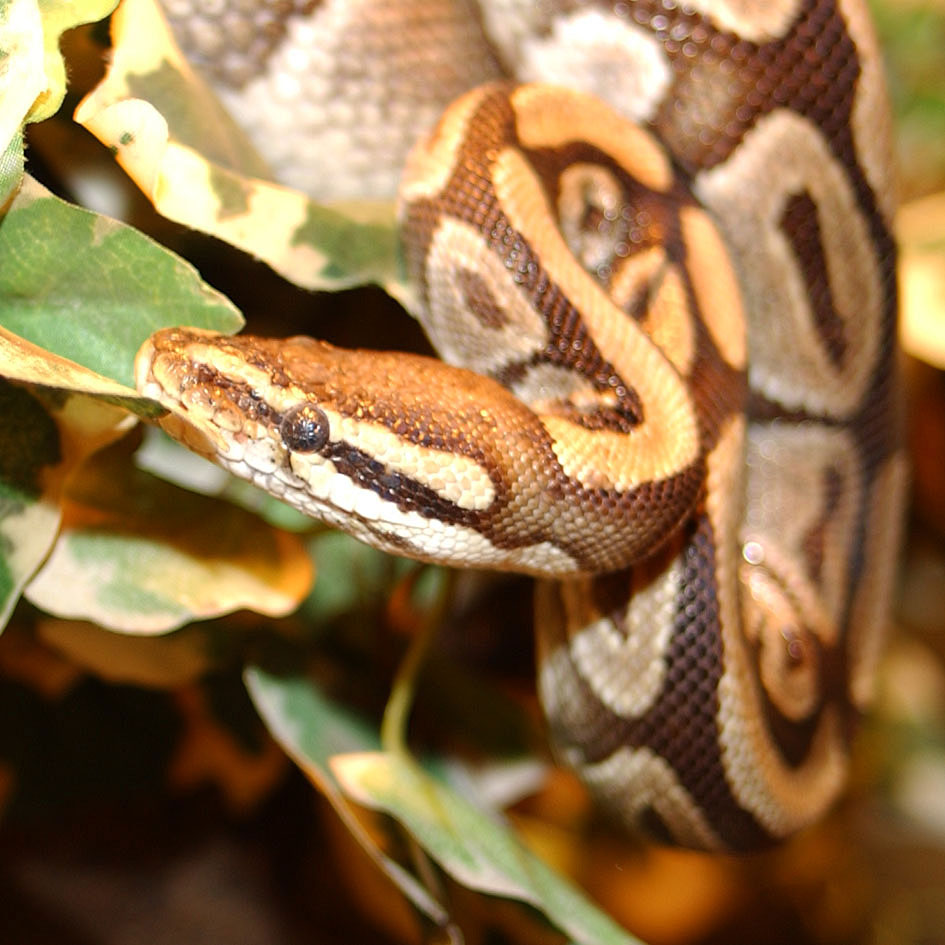
Pitón Bola (Real) gallery
Frequently asked questions about the Pitón Bola (Real)
- How long does a Pitón Bola (Real) live? ▾
- The life expectancy of the Pitón Bola (Real) is 20-30 años. A good diet, adequate exercise, annual veterinary check-ups and preventive care can help reach the upper end of that range.
- How much does a Pitón Bola (Real) weigh? ▾
- An adult Pitón Bola (Real) weighs between 1.5-2.5 kg, depending on its sex, genetics and condition. It is mediano.
- Where does the Pitón Bola (Real) breed come from? ▾
- The Pitón Bola (Real) originates from África Occidental. Native to West Africa. The most popular python.
- How much exercise does a Pitón Bola (Real) need? ▾
- The Pitón Bola (Real) has media energy. **Terrarium:** minimum size depending on the species (consult species-specific guides). UVB mandatory for diurnal species.
- Is the Pitón Bola (Real) good with children? ▾
- **Children:** depends on the species + supervised handling. **Other pets:** avoid — two-way risk. **Other reptiles:** depending on the species, better kept in separate terrariums.
- Who is the Pitón Bola (Real) NOT recommended for? ▾
- It isn't the right breed for: Homes with young children without supervision. People with no prior experience (consult an exotics vet first). Life spent 100% in a small terrarium (cruel). It's important to choose a breed that's compatible with your lifestyle.
- What health problems does the Pitón Bola (Real) have? ▾
- Lack of UVB (rickets, MBD), parasites, respiratory infections from incorrect humidity. Life expectancy 20-30 years when well cared for.
- Is it dangerous? ▾
- No. It is a small and very docile constrictor; when stressed it curls into a ball instead of striking. It is the most recommended python for beginners.
- Is it normal for it to stop eating? ▾
- Yes, ball pythons fast frequently, especially in winter, without losing weight. It is only a concern if it visibly loses weight or shows other symptoms.
- Does it need a UVB lamp? ▾
- It is not essential as it is crepuscular, but it does need a good heat gradient from a heat mat or a bulb controlled by a thermostat. A little gentle UVB can benefit it.
- How long does it live? ▾
- Between 20 and 30 years, and even longer with good care: it is a very long-term commitment as a pet.
Learn more about reptiles
Practical veterinary guides to support your Pitón Bola (Real).
Sources and references
Content compiled from official breed standards and leading veterinary sources.
- WikipediaPython regius (Wikipedia) ↗
- The Reptile DatabasePython regius — The Reptile Database ↗
Want to adopt a pitón bola (real)?
There are pitón bola (real)s in rescue shelters looking for a family. Filter by breed in the catalogue.