


Camaleón Pantera
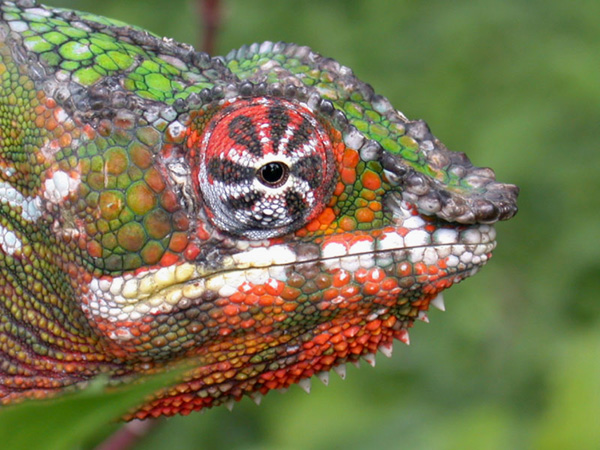
Spectacular colours (males). More active than the veiled chameleon. CITES II.
Foto: Wikipedia Commons · CC BY-SA
Ideal for
- ✓Anyone looking for an exotic pet with a technical commitment
- ✓Patient people (reptiles need time to build trust)
- ✓Homes with room for a terrarium
Reconsider if
- ×Homes with young children without supervision
- ×People with no previous experience (consult an exotic vet first)
- ×A life 100% inside a small terrarium (cruel)
Notify me when a Camaleón Pantera is up for adoption
We'll only email you when a verified rescue posts one available. No spam, unsubscribe in 1 click.
We'll only use your email for this alert. More info in our privacy policy.
Is the Camaleón Pantera a good match for you?
Indicative rating from 1 (low) to 5 (high).
💶 Estimated cost of ownership
30-50 €/month
Varied insects 12-20 € + supplements 3-5 € + electricity for UVB/heat/misting 8-15 € + UVB replacement amortisation.
History and origin
A Madagascan chameleon famous for its spectacular colours, which vary according to the locality (morph) of origin.
Temperament and character
Reptiles are NOT social like mammals. They tolerate handling but do not seek company. Trust is earned with patience.
Living together
Children: depends on the species + educational handling. **Other pets:** avoid — bidirectional risk. **Other reptiles:** depending on the species, separate terrariums are best.
Life stages of the Camaleón Pantera
Each stage has its own care priorities. Life expectancy: 5-8 años.
Hatchling/Neonate
0-2 months
UVB and heat 27-30 °C, high hydration by dripper/misting; micro-insects with calcium to prevent MBD.
Juvenile
2-6 months
Daily insects with calcium, a planted and ventilated terrarium with frequent watering; rapid growth.
Subadult
6-12 months
A tall planted terrarium, thermal gradient and quality UVB; males develop their intense colouration.
Adult
1+ years
A varied insectivorous diet, constant hydration; monitor egg retention and shedding in females.
Care
Terrarium: minimum size depending on the species (consult species-specific guides). UVB is mandatory for diurnal species.
Temperature: day/night gradient · warm zone vs cool zone for thermoregulation.
Humidity: depending on the species (rainforest 70%+ · desert 30-50%).
Feeding: species-specific diet · insectivores, herbivores and carnivores vary radically.
Veterinarian: exotic vet (a regular vet will NOT do). Annual check-up.
Care in detail
🍽️ Nutrition
Insectivore: crickets, locusts, worms and flies in variety, dusted with calcium and a multivitamin. Plentiful hydration by dripper/misting.
✂️ Grooming
It is not bathed or handled. Misting keeps sheds complete; check the toes and crest.
🎓 Training
A display animal; handling stresses it. More active and showy than the veiled chameleon, but just as delicate.
🏃 Exercise
A tall, very well-ventilated terrarium with abundant foliage and branches, a 24-29 °C daytime gradient, a basking spot of 30-32 °C and a night-time drop to 20-22 °C.
Breed-specific health
UVB deficiency (rickets, MBD), parasites, respiratory infections from incorrect humidity. Life expectancy 5-8 years when well cared for.
🩺 Health predispositions of this breed
Conditions this breed is more predisposed to. Knowing about them helps with prevention and early detection. A predisposition does not mean the animal will develop them.
Common diseases in reptiles
Learn the symptoms, prevention and when to see the vet. Reviewed indicative information that does not replace a veterinary consultation.
Screening and prevention for the Camaleón Pantera
Recommended tests and screenings
- ✓Faecal exam (parasites)
- ✓MBD assessment
- ✓Eye and hydration check
- ✓Urate/renal function monitoring
Prevention
Quality UVB renewed every 6-12 months, dosed calcium/D3 and hydration by dripper or misting. Good ventilation and a correct thermal gradient. CITES II: verify documentation.
Check-up schedule
Check-up with an exotic vet on acquisition and annually.
Warning signs
- !Soft jaw or bowed legs (MBD)
- !Sunken eyes, orange urates (dehydration/renal problem)
- !Persistently dull colours and lethargy (stress/illness)
- !Ocular swelling or discharge
Camaleón Pantera gallery
Frequently asked questions about the Camaleón Pantera
- How long does a Camaleón Pantera live? ▾
- The life expectancy of the Camaleón Pantera is 5-8 años. A good diet, adequate exercise, annual veterinary check-ups and preventive care can help reach the upper end of that range.
- How much does a Camaleón Pantera weigh? ▾
- An adult Camaleón Pantera weighs between 120-300g, depending on its sex, genetics and condition. It is mediano.
- Where does the Camaleón Pantera breed come from? ▾
- The Camaleón Pantera originates from Madagascar. A Madagascan chameleon famous for its spectacular colours, which vary according to the locality (morph) of origin.
- How much exercise does a Camaleón Pantera need? ▾
- The Camaleón Pantera has media energy. **Terrarium:** minimum size depending on the species (consult species-specific guides). UVB is mandatory for diurnal species.
- Is the Camaleón Pantera good with children? ▾
- **Children:** depends on the species + educational handling. **Other pets:** avoid — bidirectional risk. **Other reptiles:** depending on the species, separate terrariums are best.
- Who is the Camaleón Pantera NOT recommended for? ▾
- It isn't the right breed for: Homes with young children without supervision. People with no previous experience (consult an exotic vet first). A life 100% inside a small terrarium (cruel). It's important to choose a breed that's compatible with your lifestyle.
- What health problems does the Camaleón Pantera have? ▾
- UVB deficiency (rickets, MBD), parasites, respiratory infections from incorrect humidity. Life expectancy 5-8 years when well cared for.
- Why does it have such striking colours? ▾
- Male panther chameleons display spectacular colours that vary according to the geographic locality of origin, mood and temperature.
- Is it for beginners? ▾
- No. It is delicate, requiring UVB, drip hydration, ventilation and stable parameters; a husbandry mistake is costly.
- Does it need paperwork? ▾
- Yes, it is listed on CITES II; you must buy captive-bred specimens with legal documentation.
- Can it be handled? ▾
- Only the bare minimum. It is an animal for observation and frequent handling causes it stress.
Learn more about reptiles
Practical veterinary guides to support your Camaleón Pantera.
Sources and references
Content compiled from official breed standards and leading veterinary sources.
- WikipediaFurcifer pardalis ↗
- The Reptile DatabaseReptile Database ↗
- AHESpanish Herpetological Association ↗
Want to adopt a camaleón pantera?
There are camaleón panteras in rescue shelters looking for a family. Filter by breed in the catalogue.