


Camaleón de Jackson
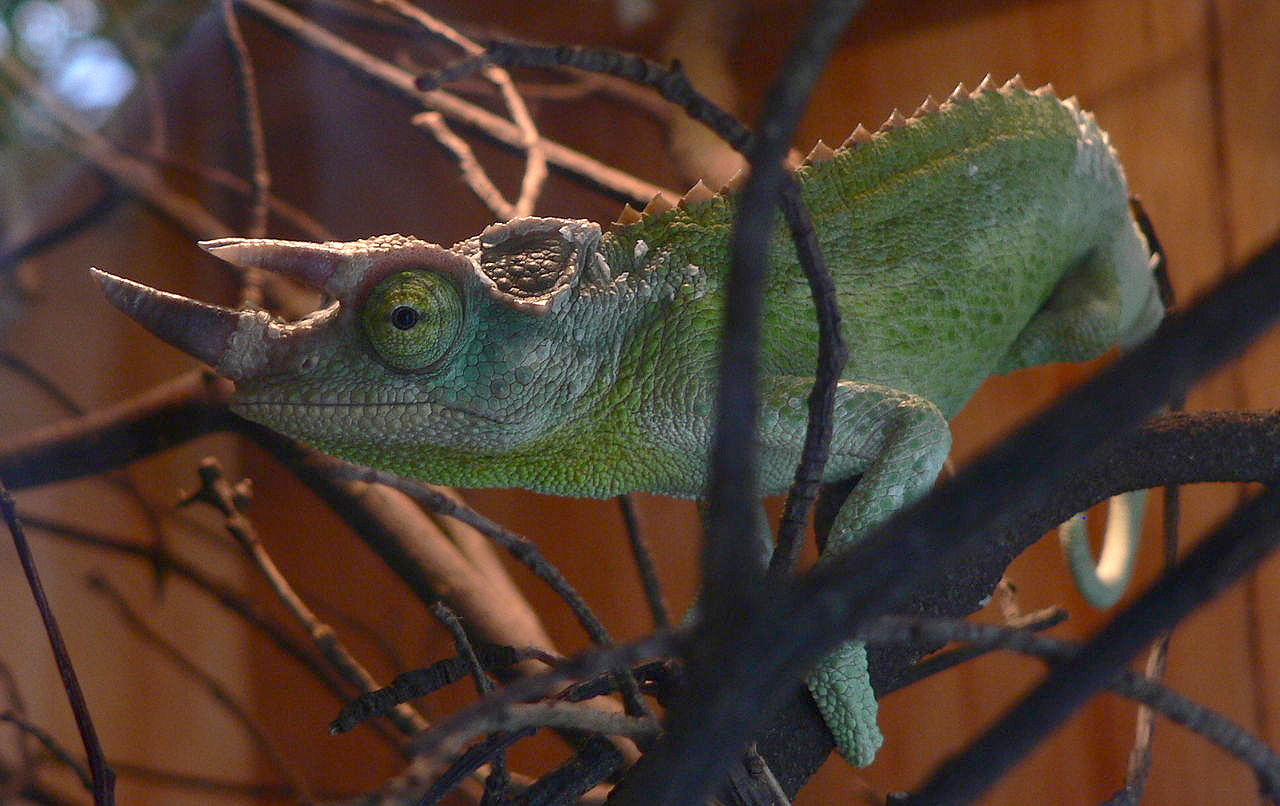
Three horns in the male. Needs fresh air (no excessive heat). CITES II.
Foto: Wikipedia Commons · CC BY-SA
Ideal for
- ✓Anyone looking for an exotic pet with a technical commitment
- ✓Patient people (reptiles need time to build trust)
- ✓Households with space for a terrarium
Reconsider if
- ×Households with small children without supervision
- ×People with no previous experience (consult an exotics vet first)
- ×A life 100% in a small terrarium (cruel)
Notify me when a Camaleón de Jackson is up for adoption
We'll only email you when a verified rescue posts one available. No spam, unsubscribe in 1 click.
We'll only use your email for this alert. More info in our privacy policy.
Is the Camaleón de Jackson a good match for you?
Indicative rating from 1 (low) to 5 (high).
💶 Estimated cost of ownership
25-45 €/month
Varied insects 10-18 € + supplements 3-5 € + UVB/misting electricity 6-12 € + UVB amortisation.
History and origin
A mountain chameleon from East Africa (Kenya, Tanzania), with three horns in the males; viviparous and fond of a cool, humid climate.
Temperament and character
Reptiles are NOT social like mammals. They tolerate handling but do not seek company. Trust is earned with patience.
Living together
Children: depends on the species plus educational handling. **Other pets:** avoid — bidirectional risk. **Other reptiles:** depending on species, separate terrariums are better.
Life stages of the Camaleón de Jackson
Each stage has its own care priorities. Life expectancy: 6-9 años.
Neonate/Hatchling
0-2 months
A mountain species: cool temperatures 22-26 °C, UVB and water dripping; micro-insects with calcium (sensitive to hypervitaminosis A).
Juvenile
2-6 months
Insects with calcium, a cool, humid planted terrarium; viviparous: does not require egg-laying as such.
Subadult
6-12 months
A cool, ventilated environment, a gentle gradient; the males develop their three horns.
Adult
1+ years
Avoid excessive heat, constant hydration; take care with excess vitamin supplements (hypervitaminosis).
Care
Terrarium: minimum size according to species (consult species-specific guides). UVB mandatory for diurnal species.
Temperature: day/night gradient · warm zone vs cool zone for thermoregulation.
Humidity: according to species (rainforest 70%+ · desert 30-50%).
Feeding: species-specific diet · insectivores, herbivores and carnivores vary radically.
Vet: exotics vet (a regular vet will NOT do). Annual check-up.
Care in detail
🍽️ Nutrition
Insectivore: varied crickets, grasshoppers, silkworms and flies, dusted with calcium and a multivitamin. Plentiful hydration by dripper/misting.
✂️ Grooming
Not bathed or handled. Frequent hydration ensures complete sheds; keep an eye on the toes and casque.
🎓 Training
A display species; handling stresses it greatly. Get it used to your presence without forcing contact.
🏃 Exercise
A tall, VERY well-ventilated terrarium (mesh), plenty of foliage and branches, cool temperatures (21-26 °C by day, a gentle basking spot ~27 °C, night 15-18 °C). Excessive heat is lethal.
Breed-specific health
UVB deficiency (rickets, MBD), parasites, respiratory infections from incorrect humidity. Life expectancy 6-9 years when well cared for.
🩺 Health predispositions of this breed
Conditions this breed is more predisposed to. Knowing about them helps with prevention and early detection. A predisposition does not mean the animal will develop them.
Common diseases in reptiles
Learn the symptoms, prevention and when to see the vet. Reviewed indicative information that does not replace a veterinary consultation.
Screening and prevention for the Camaleón de Jackson
Recommended tests and screenings
- ✓Faecal test (parasites, common given their origin)
- ✓Assessment of MBD and bone quality
- ✓Eye examination (infections, hypovitaminosis A)
- ✓Hydration and renal function control
Prevention
Adequate UVB renewed every 6-12 months, careful calcium supplementation with/without D3 according to protocol, and hydration by dripper or misting (they do not drink from a bowl). COOL temperatures: this mountain species suffers with excessive heat.
Check-up schedule
Examination by an exotics vet on acquisition (CITES II, check the documentation) and annually.
Warning signs
- !Swollen mouth or eyes, lethargy (heatstroke: very sensitive)
- !Soft jaw or bowed limbs (MBD)
- !Sunken eyes and urine with orange urates (dehydration)
- !Tongue that fails to project properly or loss of appetite
Camaleón de Jackson gallery
Frequently asked questions about the Camaleón de Jackson
- How long does a Camaleón de Jackson live? ▾
- The life expectancy of the Camaleón de Jackson is 6-9 años. A good diet, adequate exercise, annual veterinary check-ups and preventive care can help reach the upper end of that range.
- How much does a Camaleón de Jackson weigh? ▾
- An adult Camaleón de Jackson weighs between 90-150g, depending on its sex, genetics and condition. It is mediano.
- Where does the Camaleón de Jackson breed come from? ▾
- The Camaleón de Jackson originates from África Oriental. A mountain chameleon from East Africa (Kenya, Tanzania), with three horns in the males; viviparous and fond of a cool, humid climate.
- How much exercise does a Camaleón de Jackson need? ▾
- The Camaleón de Jackson has media energy. **Terrarium:** minimum size according to species (consult species-specific guides). UVB mandatory for diurnal species.
- Is the Camaleón de Jackson good with children? ▾
- **Children:** depends on the species plus educational handling. **Other pets:** avoid — bidirectional risk. **Other reptiles:** depending on species, separate terrariums are better.
- Who is the Camaleón de Jackson NOT recommended for? ▾
- It isn't the right breed for: Households with small children without supervision. People with no previous experience (consult an exotics vet first). A life 100% in a small terrarium (cruel). It's important to choose a breed that's compatible with your lifestyle.
- What health problems does the Camaleón de Jackson have? ▾
- UVB deficiency (rickets, MBD), parasites, respiratory infections from incorrect humidity. Life expectancy 6-9 years when well cared for.
- Why does it need to stay cool? ▾
- It comes from the highlands of East Africa; it tolerates heat poorly and above 27-28 °C it suffers heat stress, which can be fatal.
- Is it legally protected? ▾
- Yes, it is listed in CITES II: it must be acquired with legal documentation certifying its captive-bred origin.
- How does it drink? ▾
- It does not drink from bowls. It needs droplets on the leaves via a dripper system or misting several times a day.
- Can it be handled? ▾
- Better not. It is an animal for observation that handling stresses; touching it regularly harms its health.
Learn more about reptiles
Practical veterinary guides to support your Camaleón de Jackson.
Sources and references
Content compiled from official breed standards and leading veterinary sources.
- WikipediaTrioceros jacksonii ↗
- The Reptile DatabaseReptile Database ↗
- AHESpanish Herpetological Association ↗
Want to adopt a camaleón de jackson?
There are camaleón de jacksons in rescue shelters looking for a family. Filter by breed in the catalogue.