

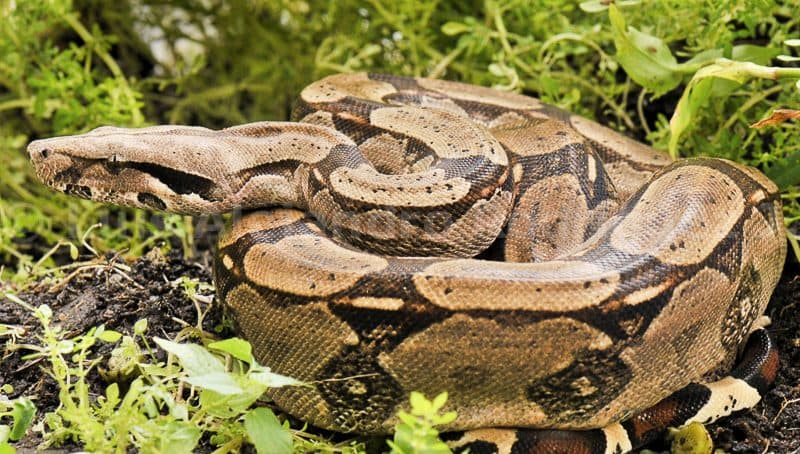
Boa Constrictora
Large constrictor. Requires space and knowledge. Adults up to 3 m.
Foto: Wikipedia Commons · CC BY-SA
Ideal for
- ✓Anyone seeking an exotic pet with a technical commitment
- ✓Patient people (reptiles need time to build trust)
- ✓Homes with space for a vivarium
Reconsider if
- ×Homes with unsupervised young children
- ×People with no prior experience (consult an exotics vet first)
- ×Life spent entirely in a small vivarium (cruel)
Notify me when a Boa Constrictora is up for adoption
We'll only email you when a verified rescue posts one available. No spam, unsubscribe in 1 click.
We'll only use your email for this alert. More info in our privacy policy.
Is the Boa Constrictora a good match for you?
Indicative rating from 1 (low) to 5 (high).
💶 Estimated cost of ownership
25-45 €/month
Frozen prey 8-15 € + heating electricity 12-22 € + substrate and maintenance of the large enclosure 5-10 €.
History and origin
Native to the Americas. A large constrictor.
Temperament and character
Reptiles are NOT social like mammals. They tolerate handling but do not seek companionship. Trust is earned with patience.
Living together
Children: depends on species + educated handling. **Other pets:** avoid — bidirectional risk. **Other reptiles:** depending on species, best kept in separate vivariums.
Life stages of the Boa Constrictora
Each stage has its own care priorities. Life expectancy: 20-30 años.
Hatchling
0-6 months
Born live (viviparous); enclosure with hides, gradient 28-31 °C, humidity 60-70%; a mouse every 7 days and gentle handling.
Juvenile
6-24 months
Sustained growth; large mouse/rat every 7-10 days; sturdy branches; watch for complete sheds and eye caps.
Subadult
2-3 years
Spacious enclosure, heat lamp with thermostat (burns); a suitable rat every 10-14 days; avoid overfeeding and obesity.
Adult
3-30 years
Gradient 28-31 °C, humidity 60-70%; prey every 2-3 weeks; in females, monitor for egg/embryo retention.
Care
Vivarium: minimum size depending on species (consult species-specific guides). UVB essential for diurnal species.
Temperature: day/night gradient · warm zone vs cool zone for thermoregulation.
Humidity: depending on species (rainforest 70%+ · desert 30-50%).
Feeding: species-specific diet · insectivores, herbivores and carnivores vary radically.
Veterinary care: an exotics vet (a regular vet will NOT do). Annual check-up.
Care in detail
🍽️ Nutrition
Carnivore: dead rodents or small rabbits sized to the snake, every 1-3 weeks (adults every 2-4 weeks). Do not overfeed: obesity is common in captivity.
✂️ Grooming
Supports shedding with ambient humidity and water to soak in. Warm bath if there is dysecdysis; remove eye caps only if they are retained.
🎓 Training
Usually docile but very powerful: with large adults, follow the two-person rule for handling. Never handle alone with the snake around your neck.
🏃 Exercise
A sturdy, spacious enclosure (adults: 180-240 cm long), gradient of 28-32 °C in the warm spot and 24-26 °C in the cool zone, with hides on both sides.
Breed-specific health
UVB deficiency (rickets, MBD), parasites, respiratory infections from incorrect humidity. Life expectancy 20-30 years when well cared for.
🩺 Health predispositions of this breed
Conditions this breed is more predisposed to. Knowing about them helps with prevention and early detection. A predisposition does not mean the animal will develop them.
Common diseases in reptiles
Learn the symptoms, prevention and when to see the vet. Reviewed indicative information that does not replace a veterinary consultation.
Screening and prevention for the Boa Constrictora
Recommended tests and screenings
- ✓Faecal exam (nematodes, cryptosporidia)
- ✓Oral examination (infectious stomatitis)
- ✓Respiratory assessment (pneumonia)
- ✓Inclusion body disease (IBD) screening in collections
Prevention
Correct thermal gradient with a thermostat, humidity 50-60% and a large water dish. Long quarantine of new specimens (IBD risk). Two-person handling of large adults.
Check-up schedule
Annual check-up with an exotics vet; weighing and growth monitoring.
Warning signs
- !Open-mouth breathing, wheezing or mucus (pneumonia)
- !Star-gazing/disorientation or chronic regurgitation (possible IBD)
- !Retained shed or stuck eye caps
- !Mouth sores and excess saliva (stomatitis)
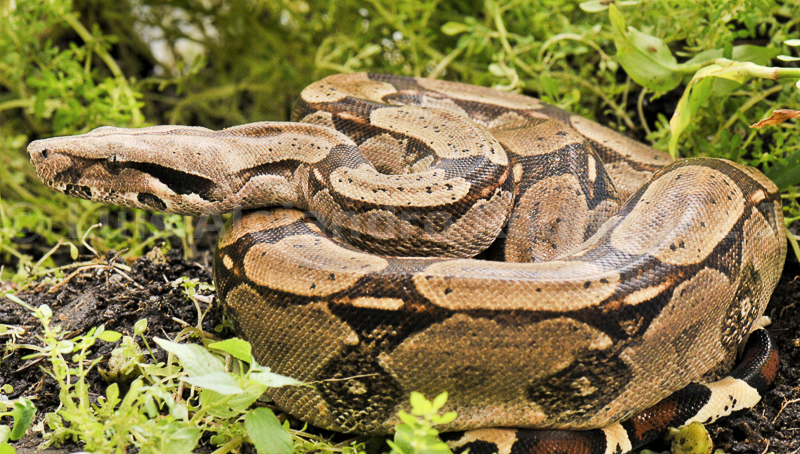
Boa Constrictora gallery
Frequently asked questions about the Boa Constrictora
- How long does a Boa Constrictora live? ▾
- The life expectancy of the Boa Constrictora is 20-30 años. A good diet, adequate exercise, annual veterinary check-ups and preventive care can help reach the upper end of that range.
- How much does a Boa Constrictora weigh? ▾
- An adult Boa Constrictora weighs between 10-30 kg, depending on its sex, genetics and condition. It is grande.
- Where does the Boa Constrictora breed come from? ▾
- The Boa Constrictora originates from América. Native to the Americas. A large constrictor.
- How much exercise does a Boa Constrictora need? ▾
- The Boa Constrictora has media energy. **Vivarium:** minimum size depending on species (consult species-specific guides). UVB essential for diurnal species.
- Is the Boa Constrictora good with children? ▾
- **Children:** depends on species + educated handling. **Other pets:** avoid — bidirectional risk. **Other reptiles:** depending on species, best kept in separate vivariums.
- Who is the Boa Constrictora NOT recommended for? ▾
- It isn't the right breed for: Homes with unsupervised young children. People with no prior experience (consult an exotics vet first). Life spent entirely in a small vivarium (cruel). It's important to choose a breed that's compatible with your lifestyle.
- What health problems does the Boa Constrictora have? ▾
- UVB deficiency (rickets, MBD), parasites, respiratory infections from incorrect humidity. Life expectancy 20-30 years when well cared for.
- How big does it grow? ▾
- Adults commonly reach 2-3 m and a considerable weight, so it needs a large enclosure and space that most flats do not have.
- Is it dangerous? ▾
- It is non-venomous and usually docile, but very strong. Large adults should be handled by two people and never allowed to wrap around the neck.
- How often does it eat? ▾
- As a hatchling it eats more often; adults only need a suitable prey item every 2-4 weeks. Overfeeding causes obesity.
- How long does it live? ▾
- Between 20 and 30 years, so it is a commitment of several decades that should be weighed up before acquiring one.
Learn more about reptiles
Practical veterinary guides to support your Boa Constrictora.
Sources and references
Content compiled from official breed standards and leading veterinary sources.
- WikipediaBoa constrictor (Wikipedia) ↗
- The Reptile DatabaseBoa constrictor — The Reptile Database ↗
Want to adopt a boa constrictora?
There are boa constrictoras in rescue shelters looking for a family. Filter by breed in the catalogue.