

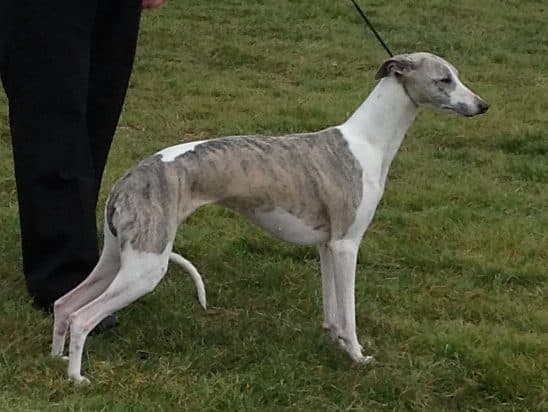
Whippet
A medium-sized version of the greyhound. The same balanced character: athlete plus sofa dog. Lower exercise demands than the Greyhound. An excellent family dog for anyone who accepts its prey drive.
Foto: Wikipedia Commons · CC BY-SA
Ideal for
- ✓Families with older children
- ✓Flats with daily walks
- ✓Anyone looking for an elegant dog that is calm at home
Reconsider if
- ×Homes with rabbits/cats
- ×Very cold climates without a coat
Notify me when a Whippet is up for adoption
We'll only email you when a verified rescue posts one available. No spam, unsubscribe in 1 click.
We'll only use your email for this alert. More info in our privacy policy.
Is the Whippet a good match for you?
Indicative rating from 1 (low) to 5 (high).
💶 Estimated cost of ownership
70-110 €/month
Food 25-35 €, prorated vet costs (vaccines, deworming, annual check-up) 15-25 €, third-party liability insurance and contingencies 10-20 €, coat/bed/accessories 5-10 €, basic hygiene 5-10 €. Rises in years with cardiac or dental issues.
History and origin
Emerged in England in the 18th-19th centuries as the "poor man's greyhound" to hunt rabbits and for local working-class racing. A cross of Greyhound with terriers.
The plight of hunting sighthounds abandoned at the end of the season is a well-known problem, and adopting a sighthound from a shelter helps reduce this drama. A stamina athlete in pure speed: short sprints, long rest at home.
Temperament and character
Balanced, sensitive, affectionate. Calm at home, an athlete outside. Attached to its family. Shy with strangers without socialisation. Needs daily mental stimulation — scent games, food kongs and short tricks channel its energy better than physical exercise alone. Responds best to positive reinforcement: physical punishment creates fear, anxiety and reactivity — coercive methods are NOT recommended by behavioural vets. Sensitive to its family's mood: it detects tension and catches it.
Living together
Children: good with older children. Other dogs: sociable. Cats/rabbits: prey drive.
Life stages of the Whippet
Each stage has its own care priorities. Life expectancy: 12-15 años.
Puppy
0-10 months
Socialisation, vaccination and protection from the cold due to its thin skin.
Junior
10 months-2 years
Controlled sprint exercise and training.
Adult
2-9 years
Cardiac auscultation, dental health and dermatological care.
Senior
9+ years
Periodic cardiac, eye and joint follow-up.
Care
Exercise: 45-60 min/day split into at least 2 sessions. Calm walks plus mental play.
Brushing: 2-3 times/week; intensive during the moults (spring and autumn).
Feeding: quality food matched to life stage (puppy/adult/senior) and size. Weight control: obesity is the main preventable cause of joint problems.
Vet: annual check-up with preventive blood work from age 5 (7 in giant breeds); twice a year from age 8.
Exercise 45-60 min/day plus off-lead sprints in a safe area. A coat in winter. A soft bed. Short weekly brushing.
Care in detail
🍽️ Nutrition
Quality food matched to life stage and to its sighthound metabolism; split the ration into 2 meals. Make sure it does not become too thin: the last two ribs should show, not the whole rib cage. Avoid a single large meal before intense exercise.
✂️ Grooming
Very short coat: weekly brushing with a rubber grooming mitt and a bath only when it gets dirty. Check pads and nails, and apply sun protection to depigmented areas in summer.
🎓 Training
Sensitive and cooperative, it responds very well to positive reinforcement. Work on recall with high-value rewards from puppyhood, but accept that prey drive can override any command when faced with a moving stimulus: let it off-lead only in fenced areas.
🏃 Exercise
45-60 min daily split up, plus the occasional off-lead sprint in a secure enclosure. It is an explosive athlete: it runs hard for a few minutes and then rests for a long time on the sofa. It does not need miles, but it does need controlled runs.
Breed-specific health
Heart disease. Anaesthetic sensitivity. Eye problems. Wobbler syndrome (rare). Life expectancy 12-15 years. Life expectancy 12-15 years with proper care. Pre-breeding tests recommended in responsible kennels (dysplasia + cardiac + ophthalmology according to the breed's conditions). When adopting, ask the shelter for a vet report on the current condition.
🩺 Health predispositions of this breed
Conditions this breed is more predisposed to. Knowing about them helps with prevention and early detection. A predisposition does not mean the animal will develop them.
Common diseases in dogs
Learn the symptoms, prevention and when to see the vet. Reviewed indicative information that does not replace a veterinary consultation.
Screening and prevention for the Whippet
Recommended tests and screenings
- ✓Cardiac auscultation and echocardiography (heart disease, murmurs)
- ✓Ophthalmological examination (progressive retinal atrophy, lens abnormalities)
- ✓Thyroid panel (T4/TSH)
- ✓Haematology and biochemistry with sighthound reference values (high haematocrit and proteins are normal)
Prevention
Full vaccination schedule and internal/external deworming kept up to date. A coat in winter (they have hardly any subcutaneous fat or hair). A padded bed to prevent calluses. ALWAYS tell the vet it is a sighthound before any anaesthesia or sedation: they metabolise drugs differently.
Check-up schedule
Annual check-up with reference blood work in the young adult; every six months from age 8 or at any cardiac sign.
Warning signs
- !Murmur, cough or early tiredness during exercise
- !Exaggerated reaction or slow recovery after anaesthesia/sedation
- !Frequent bruising or skin wounds due to thin skin
- !Shivering, constant seeking of warmth or refusal to go out in the cold
Whippet gallery

Frequently asked questions about the Whippet
- How long does a Whippet live? ▾
- The life expectancy of the Whippet is 12-15 años. A good diet, adequate exercise, annual veterinary check-ups and preventive care can help reach the upper end of that range.
- How much does a Whippet weigh? ▾
- An adult Whippet weighs between 9-19 kg, depending on its sex, genetics and condition. It is mediano.
- Where does the Whippet breed come from? ▾
- The Whippet originates from Reino Unido. Emerged in England in the 18th-19th centuries as the "poor man's greyhound" to hunt rabbits and for local working-class racing. A cross of Greyhound with terriers.
- How much exercise does a Whippet need? ▾
- The Whippet has media energy. **Exercise:** 45-60 min/day split into at least 2 sessions. Calm walks plus mental play.
- Is the Whippet good with children? ▾
- Children: good with older children. Other dogs: sociable. Cats/rabbits: prey drive.
- Who is the Whippet NOT recommended for? ▾
- It isn't the right breed for: Homes with rabbits/cats. Very cold climates without a coat. It's important to choose a breed that's compatible with your lifestyle.
- What health problems does the Whippet have? ▾
- Heart disease. Anaesthetic sensitivity. Eye problems. Wobbler syndrome (rare). Life expectancy 12-15 years. Life expectancy 12-15 years with proper care. Pre-breeding tests recommended in responsible kennels (dysplasia + cardiac + ophthalmology according to the breed's conditions). When adopting, ask the shelter for a vet report on the current condition.
- Is the whippet suitable for a flat? ▾
- Yes. Indoors it is calm and sleepy, one of the most flat-adaptable sighthounds, as long as it gets its walks and a couple of runs a week. It is clean, hardly barks and does not need a garden.
- Can I let it off-lead in the park? ▾
- Only in fenced areas. It has an extremely strong prey drive and reaches over 50 km/h in seconds: if it takes off after a cat or a bird it will not respond to recall and could end up far away or crossing a road.
- Does it live with cats or rabbits? ▾
- With household cats it can learn to live if raised with them, but it is never 100% reliable. With rabbits, ferrets or guinea pigs it is not advised because of its hunting instinct.
- Why does it shiver and look for blankets? ▾
- It is normal: it has very thin skin and very little fat, so it gets cold easily. It needs a coat in winter, a padded bed and a warm spot. It is not anxiety, it is thermoregulation.
- Is adopting a sighthound a good option instead of buying? ▾
- Excellent. There are many sighthounds and whippets in shelters after the hunting season. They are grateful, balanced dogs that are easy at home; adopting reduces abandonment and usually includes neutering and basic tests already done.
Related and similar breeds
Learn more about dogs
Practical veterinary guides to support your Whippet.
Sources and references
Content compiled from official breed standards and leading veterinary sources.
- WikipediaWhippet ↗
- AKCWhippet ↗
- FCIFCI Nomenclature - Whippet (no. 162) ↗
Want to adopt a whippet?
There are whippets in rescue shelters looking for a family. Filter by breed in the catalogue.