

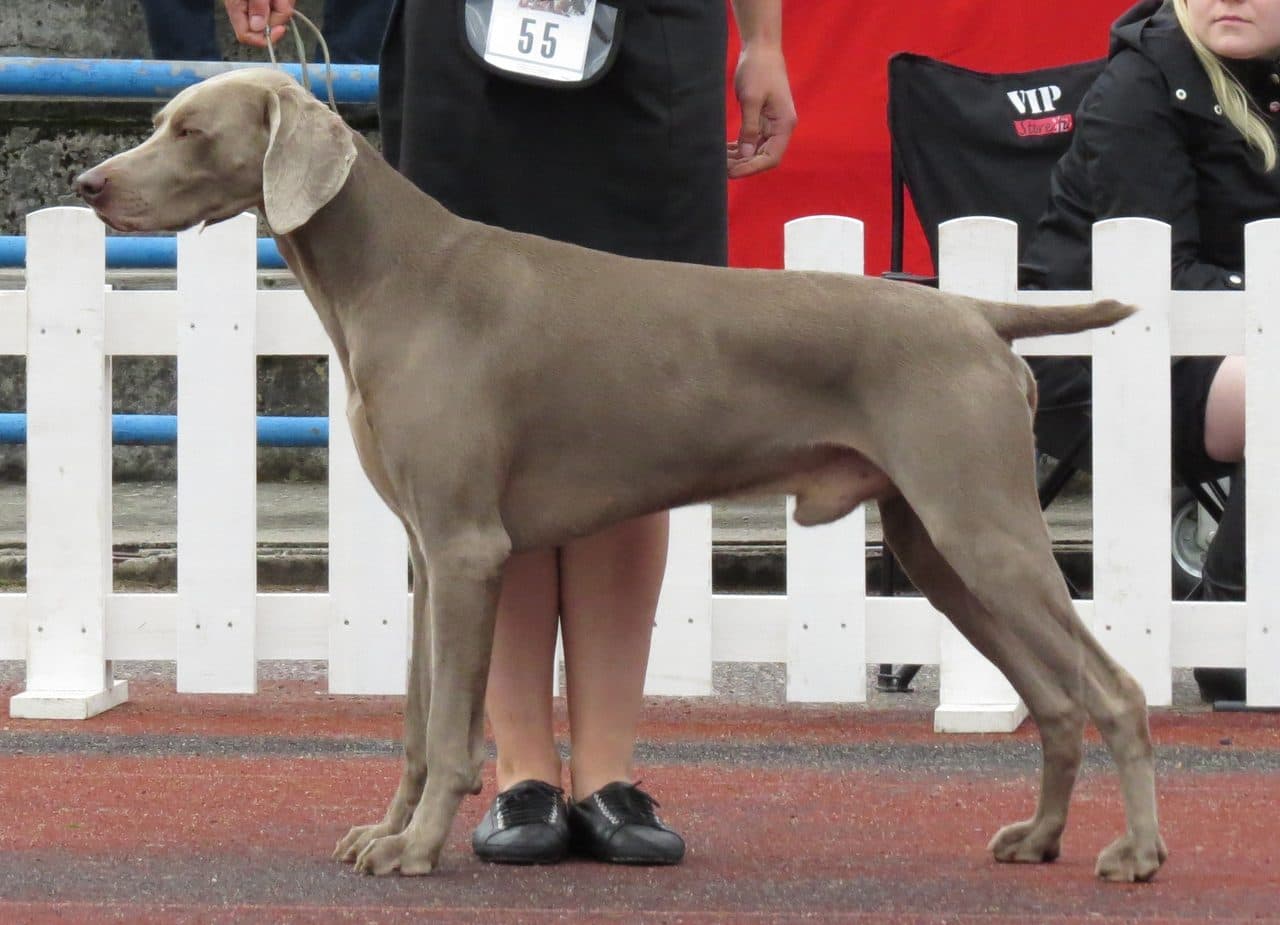
Weimaraner
Unique silver-grey coat, blue/amber eyes. An elegant hunting athlete. Extremely high energy. NOT suited to sedentary people: it needs 2 h/day of exercise or it will wreck the house.
Foto: Wikipedia Commons · CC BY-SA
Ideal for
- ✓Sportspeople (running/cycling/canicross)
- ✓Hunters
- ✓Those who devote many hours to the dog
Reconsider if
- ×Flats without exercise
- ×Households alone for many hours
- ×Sedentary families
Notify me when a Weimaraner is up for adoption
We'll only email you when a verified rescue posts one available. No spam, unsubscribe in 1 click.
We'll only use your email for this alert. More info in our privacy policy.
Is the Weimaraner a good match for you?
Indicative rating from 1 (low) to 5 (high).
💶 Estimated cost of ownership
100-150 €/month
Food 40-55 €, prorated veterinary care (vaccinations, deworming, check-up) 18-28 €, insurance and contingencies 12-22 €, exercise/training and accessories (harness, mental games, coat) 10-20 €, basic hygiene 5-10 €. Separation anxiety may add the cost of a trainer.
History and origin
Bred by the nobility of Weimar (Germany) in the 18th-19th centuries as a versatile hunting dog. Preserved in secret for decades. Standardised in the late 19th century.
Recognised by the FCI within group 7 or 8 (pointing or retrieving dogs). Its historical hunting use determines its need for physical exercise and scent work: boredom is the main cause of behavioural problems.
Temperament and character
Energetic, loyal, sensitive. Deep bond with its human ("velcro dog"). Separation anxiety is common. Intelligent. Needs daily mental stimulation — scent games, food kongs and short tricks channel its energy better than physical exercise alone. Responds best to positive reinforcement: physical punishment breeds fear, anxiety and reactivity — coercive methods are NOT recommended by veterinary behaviourists. Sensitive to its family's mood: it senses tension and catches it.
Living together
Children: good with active ones. Other dogs: variable. Cats: depends on socialisation.
Life stages of the Weimaraner
Each stage has its own care priorities. Life expectancy: 10-13 años.
Puppy
0-1 year
Controlled bone growth (watch for hypertrophic osteodystrophy); early socialisation to prevent separation anxiety.
Young
1-2 years
High daily physical and mental expenditure; coagulation (von Willebrand) and thyroid tests before any surgery.
Adult
2-7 years
Split meals and post-meal rest due to the risk of gastric torsion; weight and joint control.
Senior
7+ years
Thyroid and cardiac examination; management of osteoarthritis and maintenance of moderate activity.
Care
Exercise: 90-120 min/day divided into at least 2 sessions. Off-lead running in a safe area is essential for high-energy breeds.
Brushing: 2-3 times/week; intensive during the moults (spring and autumn).
Feeding: quality food appropriate to its life stage (puppy/adult/senior) and size. Weight control: obesity is the main avoidable cause of joint problems.
Veterinary care: annual check-up with preventive blood tests from age 5 (7 in giant breeds); twice a year from age 8.
Exercise 2 h/day. Very short coat, easy to maintain. Firm and positive training. Company: it does NOT tolerate prolonged solitude.
Care in detail
🍽️ Nutrition
Quality food for a very active large breed in 2 meals, a floor-level bowl and rest before and after eating: it is one of the breeds most prone to gastric torsion. Adjust the ration to its very high expenditure and control the weight.
✂️ Grooming
Very short coat with minimal upkeep: weekly brushing with a mitt and the occasional bath. It sheds more than you would expect for how short it is. In winter it appreciates a coat: it has hardly any fat or undercoat.
🎓 Training
Very intelligent, energetic and sensitive, the classic 'velcro dog' that lives glued to its human. It learns quickly with positive reinforcement, but needs constant guidance and a lot of work. Work on tolerance to solitude from puppyhood: separation anxiety is its great problem.
🏃 Exercise
90-120 min of intense exercise daily, split up, with safe off-lead running and scent work. It is a tireless athlete: without spending body and mind daily, it wrecks the house and develops behavioural problems. It is not a dog for sedentary people.
Breed-specific health
Bloat. Dysplasia. Progressive retinal atrophy. Hypothyroidism. Haemophilia. Life expectancy 10-13 years. Life expectancy 10-13 years with proper care. Pre-breeding tests are recommended in responsible kennels (dysplasia + cardiac + ophthalmology according to the breed's conditions). When adopting, ask the shelter for a vet report on its current condition.
🩺 Health predispositions of this breed
Conditions this breed is more predisposed to. Knowing about them helps with prevention and early detection. A predisposition does not mean the animal will develop them.
Common diseases in dogs
Learn the symptoms, prevention and when to see the vet. Reviewed indicative information that does not replace a veterinary consultation.
Screening and prevention for the Weimaraner
Recommended tests and screenings
- ✓Official X-ray for hip and elbow dysplasia
- ✓Cardiac echocardiography and thyroid profile (hypothyroidism)
- ✓Ophthalmological examination (entropion, retinal atrophy)
- ✓Screening for coagulopathies (von Willebrand factor/haemophilia) before surgery
Prevention
Prevention of gastric torsion: 2 daily meals, floor-level bowl and complete rest before and after eating; it is one of the highest-risk breeds. Controlled growth in the puppy. Plenty of exercise and mental stimulation to prevent behavioural problems.
Check-up schedule
Annual check-up with blood tests from age 5; thyroid and cardiac monitoring. Coagulation testing before procedures due to bleeding risk.
Warning signs
- !Swollen abdomen, retching without vomiting, drooling and restlessness (life-threatening emergency from gastric torsion)
- !Prolonged bleeding after wounds or surgery
- !Lameness or difficulty getting up (dysplasia)
- !Destruction, barking and self-injury when left alone (separation anxiety)
Weimaraner gallery

Frequently asked questions about the Weimaraner
- How long does a Weimaraner live? ▾
- The life expectancy of the Weimaraner is 10-13 años. A good diet, adequate exercise, annual veterinary check-ups and preventive care can help reach the upper end of that range.
- How much does a Weimaraner weigh? ▾
- An adult Weimaraner weighs between 25-40 kg, depending on its sex, genetics and condition. It is grande.
- Where does the Weimaraner breed come from? ▾
- The Weimaraner originates from Alemania (Weimar). Bred by the nobility of Weimar (Germany) in the 18th-19th centuries as a versatile hunting dog. Preserved in secret for decades. Standardised in the late 19th century.
- How much exercise does a Weimaraner need? ▾
- The Weimaraner has muy alta energy. **Exercise:** 90-120 min/day divided into at least 2 sessions. Off-lead running in a safe area is essential for high-energy breeds.
- Is the Weimaraner good with children? ▾
- Children: good with active ones. Other dogs: variable. Cats: depends on socialisation.
- Who is the Weimaraner NOT recommended for? ▾
- It isn't the right breed for: Flats without exercise. Households alone for many hours. Sedentary families. It's important to choose a breed that's compatible with your lifestyle.
- What health problems does the Weimaraner have? ▾
- Bloat. Dysplasia. Progressive retinal atrophy. Hypothyroidism. Haemophilia. Life expectancy 10-13 years. Life expectancy 10-13 years with proper care. Pre-breeding tests are recommended in responsible kennels (dysplasia + cardiac + ophthalmology according to the breed's conditions). When adopting, ask the shelter for a vet report on its current condition.
- Why is it called a 'velcro dog'? ▾
- Because it literally sticks to its person: it follows you from room to room and seeks constant contact. It is loyal and affectionate to the extreme, which also makes it very prone to separation anxiety if you leave it alone for long.
- How much exercise does it really need? ▾
- A lot: 90-120 minutes daily of intense activity, with off-lead running and scent work, not just walks. It is an athletic hunter; without burning off energy every day it becomes destructive and nervous. It is not a dog for sedentary people.
- Can it cope with being left alone while I work? ▾
- This is its weakest point. It copes very badly with solitude and develops separation anxiety easily: it barks, destroys and self-injures. It needs a home with plenty of presence or support (dog-walker, day care) and progressive training for being alone.
- Is it suitable for a flat? ▾
- It is not ideal. Because of its size, energy and need for constant company, it suffers in a flat unless it is given a great deal of exercise and hardly ever left alone. It does better with very active, available people.
- Is it good with children? ▾
- It can be with active, older children, because it is affectionate and playful, but its energy and strength can knock little ones over by accident. It needs training and supervision, and never harsh methods: it is very sensitive.
Related and similar breeds
Learn more about dogs
Practical veterinary guides to support your Weimaraner.
Sources and references
Content compiled from official breed standards and leading veterinary sources.
- WikipediaWeimaraner ↗
- AKCWeimaraner ↗
- FCIFCI - Weimaraner (Standard No. 99) ↗
Want to adopt a weimaraner?
There are weimaraners in rescue shelters looking for a family. Filter by breed in the catalogue.