

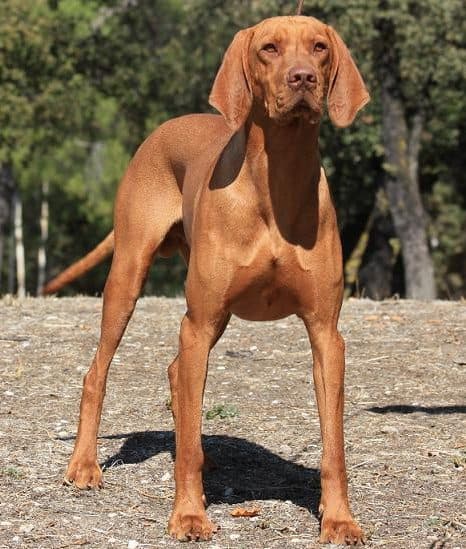
Vizsla (Braco Húngaro)
Elegant golden-rust coat. A "velcro dog": it never leaves its human's side. An excellent athlete for hunters and sportspeople. Suffers when left alone — the perfect companion for someone who works from home.
Foto: Wikipedia Commons · CC BY-SA
Ideal for
- ✓Hunters
- ✓Sportspeople (canicross, running)
- ✓Very active families
Reconsider if
- ×Sedentary families
- ×Homes without long exercise
Notify me when a Vizsla (Braco Húngaro) is up for adoption
We'll only email you when a verified rescue posts one available. No spam, unsubscribe in 1 click.
We'll only use your email for this alert. More info in our privacy policy.
Is the Vizsla (Braco Húngaro) a good match for you?
Indicative rating from 1 (low) to 5 (high).
💶 Estimated cost of ownership
75-120 €/month
High-end food for an active dog (45-70 €), preventive healthcare and insurance (25-40 €), and a recurring extra for ear care and possible professional support (trainer, dog-walker or day care if you work away from home).
History and origin
Recognised by the FCI. Native to Hungary. Elegant golden-rust coat.
Temperament and character
Active, intelligent, loyal. Attached to its family. Needs a daily 'task', both mental AND physical. Strong bond with its main human.
Living together
Children: good with its own family. **Other dogs:** sociable with socialisation. **Other animals:** with early socialisation.
Life stages of the Vizsla (Braco Húngaro)
Each stage has its own care priorities. Life expectancy: 12-14 años.
Puppy
0-12 months
Intensive socialisation and channelling of its very high energy; avoid high-impact exercise until the growth plates close to protect the hips.
Young
1-3 years
Plenty of daily exercise and mental stimulation (a hunting breed); firm training against separation anxiety, typical of the 'velcro dog'.
Adult
3-8 years
Maintain athletic condition, weight control and skin/thyroid examination; routine dental care.
Senior
8+ years
Oncological surveillance (mast cell tumour, lymphoma), joint monitoring and periodic thyroid blood tests.
Care
Exercise: 90-120 min/day + scent stimulation.
Brushing: weekly (more for the wire-haired coat).
Feeding: food for active dogs.
Veterinary care: annual check-up + ear monitoring (long ears).
Care in detail
🍽️ Nutrition
High-energy food for a sporting dog, adjusted to its real activity level. Split into 2 daily servings and avoid strenuous exercise around mealtimes to reduce the risk of gastric torsion. Watch the weight without allowing excessive thinness in very active dogs.
✂️ Grooming
Short, very low-maintenance coat: weekly brushing with a rubber mitt and the occasional bath. The key is regular cleaning and drying of its drop ears to prevent otitis. Check nails and pads after exercise.
🎓 Training
Very intelligent and eager to please, but sensitive: it responds badly to harshness. Positive reinforcement, short and varied sessions, and plenty of mental work (scent, obedience, canine sport). Early socialisation prevents overexcitement.
🏃 Exercise
Very high needs: 90-120 minutes of intense exercise daily (running, canicross, swimming) plus scent stimulation. It is an athlete that requires a real outlet every day; without it, it develops anxiety and destructiveness.
Breed-specific health
Recurrent otitis. Dysplasia. Bloat. Life expectancy 12-14 years.
🩺 Health predispositions of this breed
Conditions this breed is more predisposed to. Knowing about them helps with prevention and early detection. A predisposition does not mean the animal will develop them.
Common diseases in dogs
Learn the symptoms, prevention and when to see the vet. Reviewed indicative information that does not replace a veterinary consultation.
Screening and prevention for the Vizsla (Braco Húngaro)
Recommended tests and screenings
- ✓Official X-ray for hip and elbow dysplasia
- ✓Ophthalmological examination (cataracts, entropion)
- ✓Neurological assessment in case of seizures (idiopathic epilepsy)
- ✓Dermatological assessment for atopy/allergies
- ✓Periodic ear examination (otitis due to drop ears)
- ✓Screening for predisposition to oncological processes in adults/seniors
Prevention
Because of the risk of gastric dilatation-volvulus (bloat): split meals into 2 servings, avoid intense exercise right before and after eating, and use anti-gulp bowls. Dry the ears well after bathing or swimming. Maintain ideal weight and muscle tone to protect the joints.
Check-up schedule
Annual veterinary check-up with specific ear monitoring; preventive blood tests from age 5 and every 6 months from age 8. Oncological surveillance with palpation for lumps at check-ups.
Warning signs
- !Swollen abdomen, unproductive attempts to vomit and restlessness (bloat: life-threatening EMERGENCY)
- !Seizures or absence episodes (epilepsy)
- !Head shaking, bad smell or discharge from the ears (otitis)
- !Scratching, redness or hair loss (atopy/allergy)
- !New lumps, weight loss or lethargy (oncological monitoring)
Frequently asked questions about the Vizsla (Braco Húngaro)
- How long does a Vizsla (Braco Húngaro) live? ▾
- The life expectancy of the Vizsla (Braco Húngaro) is 12-14 años. A good diet, adequate exercise, annual veterinary check-ups and preventive care can help reach the upper end of that range.
- How much does a Vizsla (Braco Húngaro) weigh? ▾
- An adult Vizsla (Braco Húngaro) weighs between 20-30 kg, depending on its sex, genetics and condition. It is mediano-grande.
- Where does the Vizsla (Braco Húngaro) breed come from? ▾
- The Vizsla (Braco Húngaro) originates from Hungría. Recognised by the FCI. Native to Hungary. Elegant golden-rust coat.
- How much exercise does a Vizsla (Braco Húngaro) need? ▾
- The Vizsla (Braco Húngaro) has muy alta energy. **Exercise:** 90-120 min/day + scent stimulation.
- Is the Vizsla (Braco Húngaro) good with children? ▾
- **Children:** good with its own family. **Other dogs:** sociable with socialisation. **Other animals:** with early socialisation.
- Who is the Vizsla (Braco Húngaro) NOT recommended for? ▾
- It isn't the right breed for: Sedentary families. Homes without long exercise. It's important to choose a breed that's compatible with your lifestyle.
- What health problems does the Vizsla (Braco Húngaro) have? ▾
- Recurrent otitis. Dysplasia. Bloat. Life expectancy 12-14 years.
- Why is it called a 'velcro dog'? ▾
- Because it forms an extremely close bond with its person and needs to be stuck to them constantly. It is one of the breeds that cope worst with solitude: the ideal option is someone who works from home or who can take it along with them.
- Can it live in a flat? ▾
- It can, but only if it gets 2 long hours of intense exercise a day plus mental stimulation. It is not space it lacks, but an outlet: a bored Vizsla in a flat suffers anxiety and becomes destructive.
- Does it tolerate the cold well? ▾
- Not much. Its coat is very short and lacks an undercoat, so it gets cold easily. In winter it is advisable to use a coat for walks and to avoid prolonged baths in cold water.
- What is bloat and why should I worry about it? ▾
- It is gastric dilatation-volvulus, a life-threatening emergency common in deep-chested breeds like the Vizsla. It is prevented by splitting meals and avoiding strenuous exercise around them. If the abdomen is swollen and there is retching without vomiting, go to the vet immediately.
- Is it a good breed for a first-time owner? ▾
- It is not the easiest: its very high energy and its need for constant company demand time and experience. It works very well with sporty, committed owners, but it can overwhelm anyone looking for a calm dog.
Learn more about dogs
Practical veterinary guides to support your Vizsla (Braco Húngaro).
Sources and references
Content compiled from official breed standards and leading veterinary sources.
Want to adopt a vizsla (braco húngaro)?
There are vizsla (braco húngaro)s in rescue shelters looking for a family. Filter by breed in the catalogue.