

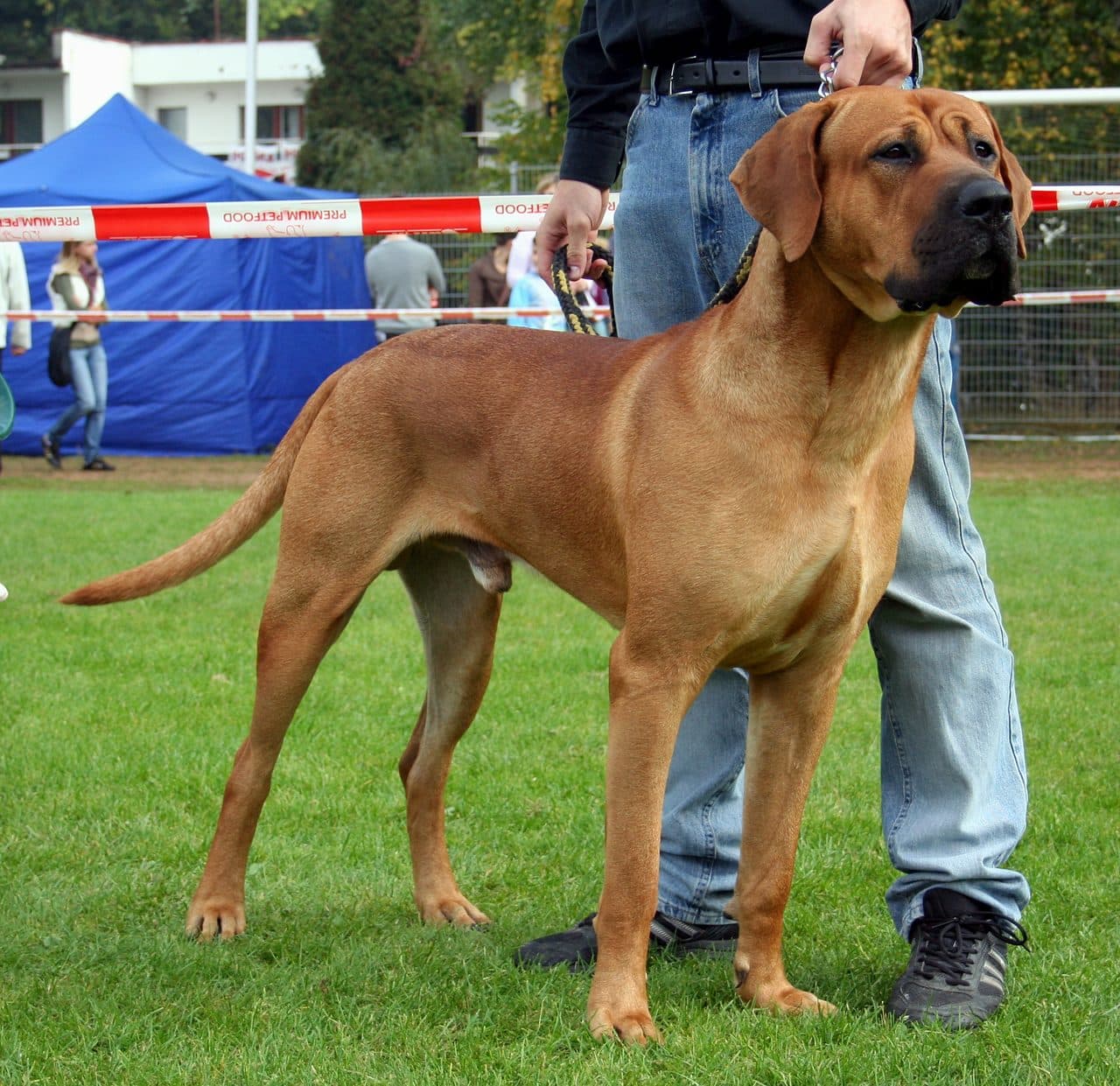
Tosa Inu
A Japanese mastiff created for fighting (the canine sumo tradition). Classified as a potentially dangerous dog (PPP) in Spain and banned in many countries. Calm and dignified in character when well trained. NOT for beginners.
Foto: Wikipedia Commons · CC BY-SA
Ideal for
- ✓Homes experienced with mastiffs
- ✓Anyone who will devote hours to socialisation
Reconsider if
- ×Beginners
- ×Families with other dogs
- ×Flats
Notify me when a Tosa Inu is up for adoption
We'll only email you when a verified rescue posts one available. No spam, unsubscribe in 1 click.
We'll only use your email for this alert. More info in our privacy policy.
Is the Tosa Inu a good match for you?
Indicative rating from 1 (low) to 5 (high).
💶 Estimated cost of ownership
150-230 €/month
Giant-breed feeding 55-80 €, prorated vet costs (vaccines, deworming, check-ups, large doses) 25-40 €, mandatory PPP third-party liability insurance 15-25 €, prorated licence/renewals and approved muzzle/lead 10-20 €, contingencies 15-30 €. It is an expensive breed to keep.
History and origin
Created in Tosa (Japan) in the 19th century by crossing the Shikoku with imported European mastiffs (Mastiff, Bull Terrier, Great Dane, St Bernard) for fighting.
Recognised by the FCI. In Spain it is subject to potentially-dangerous-dog (PPP) regulations in some cases (see Law 50/1999 and regional legislation). Its historical selection for guarding demands early training and broad socialisation so that the character is channelled positively.
Temperament and character
Calm, dignified, brave. A silent devotee of its family. It tolerates humans better than other dogs. Intelligent. It needs daily mental stimulation — scent games, food Kongs and short trick sessions channel its energy better than physical exercise alone. It responds best to positive reinforcement: physical punishment generates fear, anxiety and reactivity — coercive methods are NOT recommended by veterinary behaviourists. Sensitive to its family's mood: it detects tension and picks up on it.
Living together
PPP in Spain: legal requirements. Children: with its own. Other dogs: very reactive. Cats: prey.
Life stages of the Tosa Inu
Each stage has its own care priorities. Life expectancy: 10-12 años.
Puppy
0-1 year
Early, intensive socialisation (a fighting breed, dominant); controlled bone growth with an appropriate diet.
Young
1-2 years
Hip radiographs; firm behavioural management; split meals due to the risk of gastric torsion.
Adult
2-8 years
Weight and joint control; baseline thyroid function; periodic general check-ups.
Senior
8+ years
Thyroid and joint monitoring; management of osteoarthritis; geriatric check-ups.
Care
Exercise: 45-60 min/day split into at least 2 sessions. Calm walks plus mental play.
Brushing: 2-3 times/week; intensively during the moults (spring and autumn).
Feeding: quality food appropriate to life stage (puppy/adult/senior) and size. Weight control: obesity is the leading preventable cause of joint problems.
Veterinarian: annual check-up with preventive blood work from age 5 (7 years in giant breeds); twice a year from age 8.
Exercise 1.5 h/day. Professional training. Extensive socialisation. Ample space.
Care in detail
🍽️ Nutrition
A giant-breed specific food split into 2-3 meals to reduce the risk of gastric torsion, avoiding exercise before and after eating. Rigorous weight control: every extra kilo punishes the joints and heart of a mastiff.
✂️ Grooming
Short, simple coat: weekly brushing with a mitt and the occasional bath. Cleaning of facial folds and lips (it tends to drool), checking of ears and nails. Low maintenance — the hard part of a Tosa is never the coat.
🎓 Training
Professional training and extensive socialisation from puppyhood are essential. It is calm and devoted to its family but not very tolerant of other dogs; it needs a firm, calm, expert handler. It is not a dog for first-timers or for coercive methods.
🏃 Exercise
45-60 minutes of calm walking a day with good lead control and a muzzle where the law requires it. It does not need extreme sport, but it does need constant outings, space and obedience work to keep it balanced and manageable.
Breed-specific health
Dysplasia. Bloat. Heart disease. Hypothyroidism. Life expectancy 10-12 years. Life expectancy 10-12 years with appropriate care. Pre-breeding tests are recommended in responsible kennels (dysplasia + cardiac + ophthalmology depending on the breed's conditions). When adopting, ask the shelter for a vet report on the current condition.
🩺 Health predispositions of this breed
Conditions this breed is more predisposed to. Knowing about them helps with prevention and early detection. A predisposition does not mean the animal will develop them.
Common diseases in dogs
Learn the symptoms, prevention and when to see the vet. Reviewed indicative information that does not replace a veterinary consultation.
Screening and prevention for the Tosa Inu
Recommended tests and screenings
- ✓Official hip and elbow dysplasia radiographs
- ✓Echocardiography and electrocardiogram (mastiff heart disease)
- ✓Thyroid profile (hypothyroidism)
- ✓Ophthalmological examination (entropion/ectropion, eyelids)
Prevention
Slow, controlled growth, with no impact exercise as a puppy, to protect the joints of a dog that can exceed 50 kg. Prevention of gastric torsion: 2-3 daily meals and rest after eating. Lifelong weight control.
Check-up schedule
Annual check-up with blood work from age 3-4 given its shorter life expectancy; periodic cardiac and joint monitoring. Meeting the legal PPP requirements is essential.
Warning signs
- !Swollen abdomen, retching without vomiting and restlessness (emergency from gastric torsion)
- !Lameness or difficulty getting up (dysplasia)
- !Tiredness, coughing or fainting (heart problem)
- !Apathy, weight gain or skin problems (hypothyroidism)
Frequently asked questions about the Tosa Inu
- How long does a Tosa Inu live? ▾
- The life expectancy of the Tosa Inu is 10-12 años. A good diet, adequate exercise, annual veterinary check-ups and preventive care can help reach the upper end of that range.
- How much does a Tosa Inu weigh? ▾
- An adult Tosa Inu weighs between 36-60 kg, depending on its sex, genetics and condition. It is grande.
- Where does the Tosa Inu breed come from? ▾
- The Tosa Inu originates from Japón. Created in Tosa (Japan) in the 19th century by crossing the Shikoku with imported European mastiffs (Mastiff, Bull Terrier, Great Dane, St Bernard) for fighting.
- How much exercise does a Tosa Inu need? ▾
- The Tosa Inu has media energy. **Exercise:** 45-60 min/day split into at least 2 sessions. Calm walks plus mental play.
- Is the Tosa Inu good with children? ▾
- PPP in Spain: legal requirements. Children: with its own. Other dogs: very reactive. Cats: prey.
- Who is the Tosa Inu NOT recommended for? ▾
- It isn't the right breed for: Beginners. Families with other dogs. Flats. It's important to choose a breed that's compatible with your lifestyle.
- What health problems does the Tosa Inu have? ▾
- Dysplasia. Bloat. Heart disease. Hypothyroidism. Life expectancy 10-12 years. Life expectancy 10-12 years with appropriate care. Pre-breeding tests are recommended in responsible kennels (dysplasia + cardiac + ophthalmology depending on the breed's conditions). When adopting, ask the shelter for a vet report on the current condition.
- Is the Tosa Inu a PPP breed in Spain? ▾
- In practice the potentially-dangerous-dog regulations apply to it: you need a licence, third-party liability insurance, identification, and a muzzle and non-extendable lead in public. Also check the by-laws of your region and municipality.
- Is it aggressive? ▾
- With its family it is calm, quiet and very loyal. The critical point is its low tolerance of other dogs, a legacy of its fighting past. With socialisation and expert handling it is stable, but it is never a dog for just anyone.
- Is it suitable for a flat? ▾
- Not advised. It is an enormous mastiff that needs space, constant outings and a calm environment. In a small flat, without expert handling and without meeting the legal requirements, it is not a responsible choice.
- Can it live with other dogs or cats? ▾
- It is difficult. It tends not to tolerate other dogs, especially of the same sex, and has a prey drive towards cats. The safest option is for it to be the only pet in a home with no other animals.
- Is it a good breed for someone without experience? ▾
- No. Its size, strength and character demand an owner with experience of mastiffs, time to socialise and a willingness to invest in professional training. A poorly handled Tosa is a serious risk.
Related and similar breeds
Learn more about dogs
Practical veterinary guides to support your Tosa Inu.
Sources and references
Content compiled from official breed standards and leading veterinary sources.
Want to adopt a tosa inu?
There are tosa inus in rescue shelters looking for a family. Filter by breed in the catalogue.