

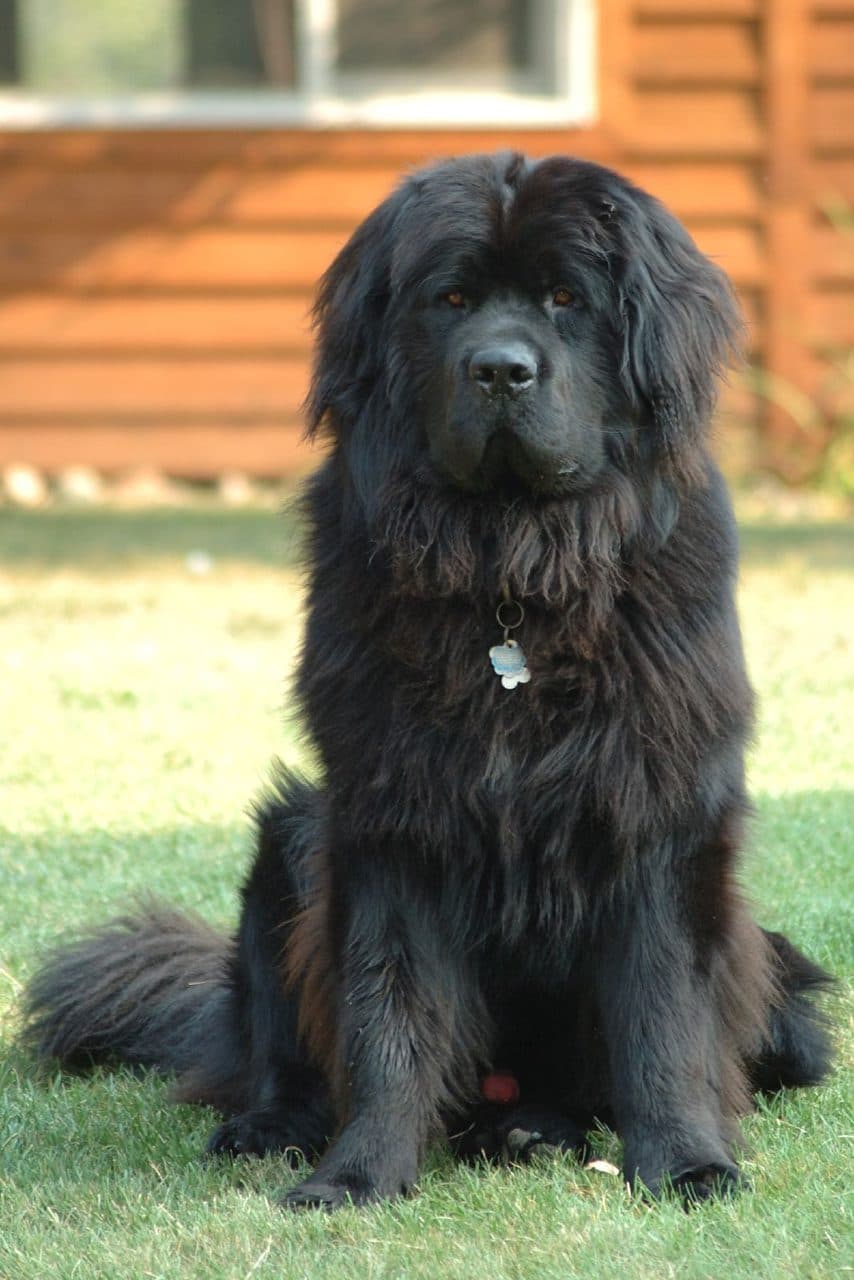
Terranova (Newfoundland)
The giant of Canadian fishermen. Excellent swimmer (webbed feet). Sweet, patient nature, a historic lifesaver in cold waters. The quintessential "canine nanny".
Foto: Wikipedia Commons · CC BY-SA
Ideal for
- ✓Families with space
- ✓Cool climates
- ✓Those seeking a gentle giant
Reconsider if
- ×Small flats
- ×Warm climates without air conditioning
- ×Those unwilling to accept a short life
Notify me when a Terranova (Newfoundland) is up for adoption
We'll only email you when a verified rescue posts one available. No spam, unsubscribe in 1 click.
We'll only use your email for this alert. More info in our privacy policy.
Is the Terranova (Newfoundland) a good match for you?
Indicative rating from 1 (low) to 5 (high).
💶 Estimated cost of ownership
150-240 €/month
Giant-breed food €60-90, prorated vet costs (vaccines, deworming, check-ups, large doses) €25-40, grooming/brushing and supplies €12-20, insurance and unexpected costs €15-30, reinforced accessories €8-15. Joint or cardiac surgery sends costs soaring.
History and origin
Recognised by the FCI. Originating from Canada (Newfoundland). The giant of Canadian fishermen.
Temperament and character
Calm, patient, loyal. Excellent with well-behaved children. Needs broad socialisation due to its imposing size.
Living together
Children: good with its own family. **Other dogs:** sociable with socialisation. **Other animals:** with early socialisation.
Life stages of the Terranova (Newfoundland)
Each stage has its own care priorities. Life expectancy: 8-10 años.
Puppy
0-18 months
Slow, controlled growth; low-impact exercise and gentle swimming to protect the joints; socialisation.
Young
1.5-3 years
Moderate exercise, split meals and rest after eating (torsion risk); cardiac screening (subaortic stenosis).
Adult
3-6 years
Weight control, cardiac and joint health; urinary monitoring for cystinuria/stones.
Senior
6+ years
Cardiac check-ups, joint support and quality-of-life monitoring in a giant breed.
Care
Exercise: moderate (45-60 min/day), avoid jumping during growth.
Brushing: 2-3 times/week.
Feeding: giant-breed food; weight control is critical.
Vet: annual cardiac check-up from the age of 4.
Care in detail
🍽️ Nutrition
Giant-breed-specific food in 2-3 meals to reduce the risk of gastric torsion, with adjusted calcium/phosphorus in the puppy for slow growth. Strict weight control: obesity ruins the joints and heart, and shortens an already short life.
✂️ Grooming
Dense, water-resistant double coat: brushing 3-4 times a week and daily during moulting, which is heavy. Pay attention to knots behind the ears and on the trousers. It drools, so keep cloths handy. Dry thoroughly after baths or water to avoid skin problems.
🎓 Training
Sweet, calm and very eager to please; one of the easiest giants to train with positive reinforcement. The key is to socialise and teach good manners as a puppy, while it can still be managed: a 65 kg adult must know how to walk on a lead and not jump.
🏃 Exercise
45-60 minutes daily of calm walking; it loves to swim, its ideal, low-impact exercise. It does not need intense sport, but rather moderate and consistent activity. Avoid exercise during hot hours.
Breed-specific health
Hip/elbow dysplasia. Bloat (gastric torsion). Heart disease. Life expectancy 8-10 years (short due to size).
🩺 Health predispositions of this breed
Conditions this breed is more predisposed to. Knowing about them helps with prevention and early detection. A predisposition does not mean the animal will develop them.
Common diseases in dogs
Learn the symptoms, prevention and when to see the vet. Reviewed indicative information that does not replace a veterinary consultation.
Screening and prevention for the Terranova (Newfoundland)
Recommended tests and screenings
- ✓Official radiography for hip and elbow dysplasia
- ✓Echocardiography (subvalvular aortic stenosis and other heart conditions)
- ✓Genetic test for cystinuria (stone formation)
- ✓Thyroid profile and ophthalmological examination (entropion/ectropion)
Prevention
Slow growth with no impact exercise or stairs as a puppy, to protect the joints of a dog that reaches 60-70 kg. Prevention of gastric torsion: 2-3 meals and rest after eating. Avoid the heat: this is a cold-water dog and suffers greatly in summer.
Check-up schedule
Annual check-up with blood work and cardiac monitoring from 2-3 years of age due to its short life expectancy; echocardiography before breeding. Periodic urinalysis for cystinuria.
Warning signs
- !Bloated abdomen, unproductive retching and restlessness (gastric torsion emergency)
- !Tiredness, fainting or a murmur (heart disease)
- !Lameness or difficulty getting up (dysplasia)
- !Difficulty or blood when urinating (stones from cystinuria)
Terranova (Newfoundland) gallery

Frequently asked questions about the Terranova (Newfoundland)
- How long does a Terranova (Newfoundland) live? ▾
- The life expectancy of the Terranova (Newfoundland) is 8-10 años. A good diet, adequate exercise, annual veterinary check-ups and preventive care can help reach the upper end of that range.
- How much does a Terranova (Newfoundland) weigh? ▾
- An adult Terranova (Newfoundland) weighs between 50-70 kg, depending on its sex, genetics and condition. It is gigante.
- Where does the Terranova (Newfoundland) breed come from? ▾
- The Terranova (Newfoundland) originates from Canadá (Terranova). Recognised by the FCI. Originating from Canada (Newfoundland). The giant of Canadian fishermen.
- How much exercise does a Terranova (Newfoundland) need? ▾
- The Terranova (Newfoundland) has media energy. **Exercise:** moderate (45-60 min/day), avoid jumping during growth.
- Is the Terranova (Newfoundland) good with children? ▾
- **Children:** good with its own family. **Other dogs:** sociable with socialisation. **Other animals:** with early socialisation.
- Who is the Terranova (Newfoundland) NOT recommended for? ▾
- It isn't the right breed for: Small flats. Warm climates without air conditioning. Those unwilling to accept a short life. It's important to choose a breed that's compatible with your lifestyle.
- What health problems does the Terranova (Newfoundland) have? ▾
- Hip/elbow dysplasia. Bloat (gastric torsion). Heart disease. Life expectancy 8-10 years (short due to size).
- Is it good with children? ▾
- It is one of the best: sweet, patient and protective, with a reputation as a 'nanny dog'. The caution is not its temperament but its size: it can knock over or accidentally crush a small child, so always supervise play.
- Does it really love water that much? ▾
- Yes, it is a water rescue dog with webbed feet and a waterproof coat. Swimming is its favourite exercise and ideal for its joints. Many have an instinct to rescue anyone they see in the water.
- Can it cope with heat? ▾
- Poorly. It is designed for the cold waters of Canada, with a dense coat that smothers it in summer. In warm climates it needs shade, fresh water, air conditioning and exercise only during cool hours; heatstroke is a real risk.
- How long does it live and why so little? ▾
- Between 8 and 10 years on average. Like the giants, it ages quickly and is prone to joint and cardiac problems. Buying from breeders who carry out hip, elbow and heart testing greatly improves the outlook.
- Does it shed a lot and drool? ▾
- Both. It sheds all year round and enormously during moults, so it needs frequent brushing. And it drools, especially after drinking or eating. It is a magnificent dog, but not a tidy one: you have to accept that.
Learn more about dogs
Practical veterinary guides to support your Terranova (Newfoundland).
Sources and references
Content compiled from official breed standards and leading veterinary sources.
- WikipediaNewfoundland (dog) ↗
- AKCNewfoundland ↗
- FCIFCI Standard No. 50 ↗
Want to adopt a terranova (newfoundland)?
There are terranova (newfoundland)s in rescue shelters looking for a family. Filter by breed in the catalogue.