

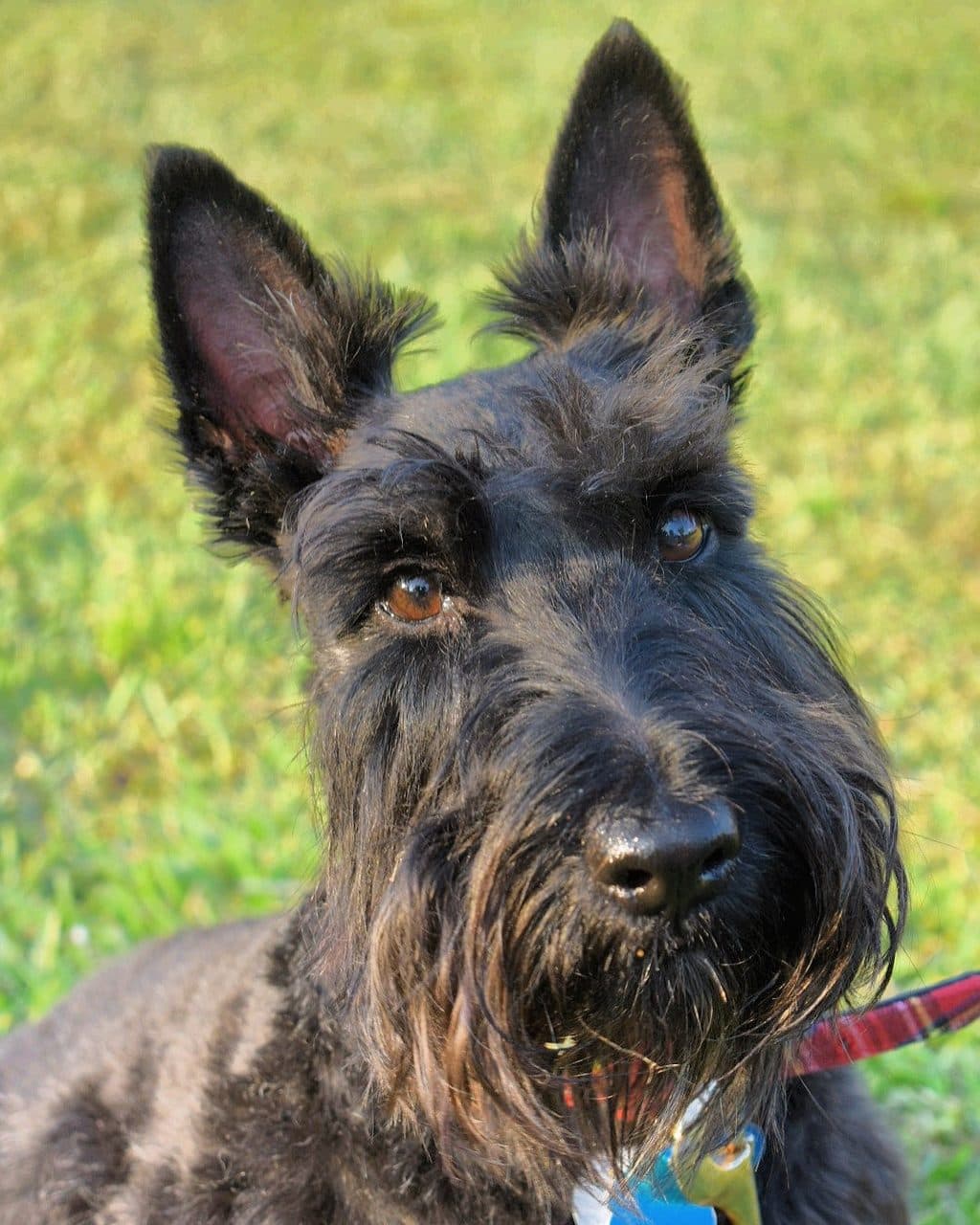
Scottish Terrier
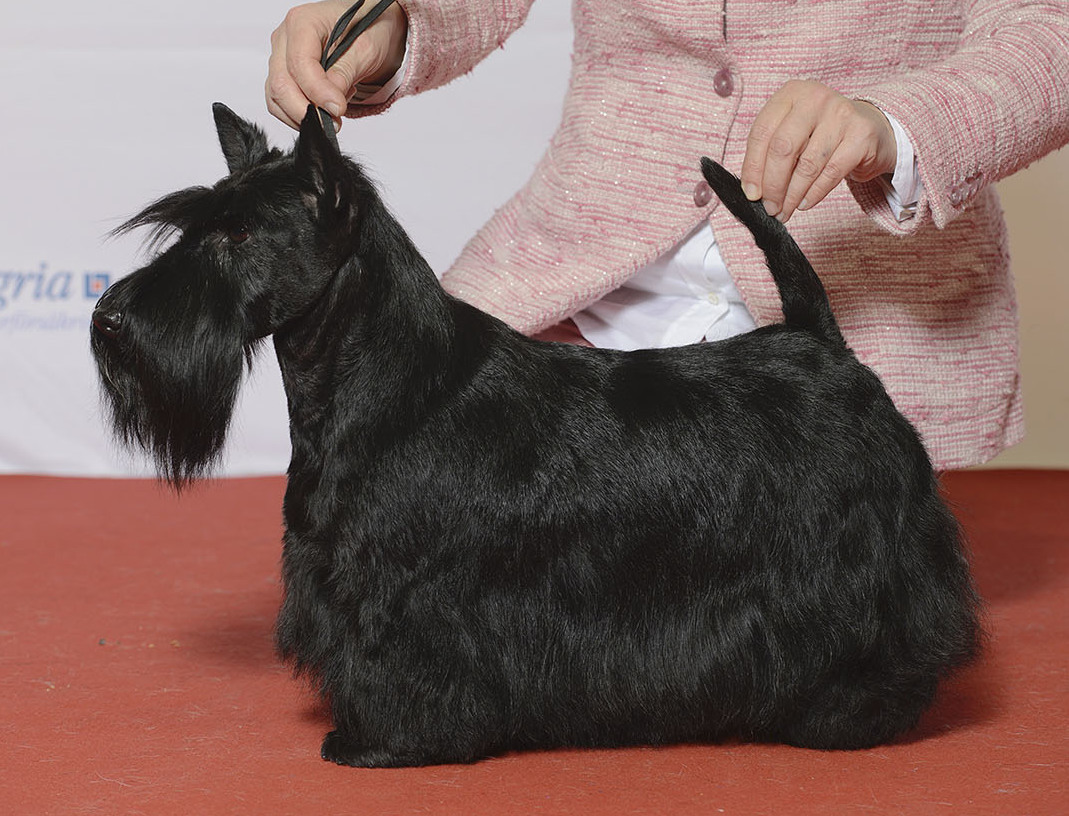
A sturdy little Scot, with an unmistakable silhouette (beard, eyebrows, erect tail). Independent and dignified character. Reserved with strangers. The "Scottie" was the White House dog under Eisenhower and G.W. Bush.
Foto: Wikipedia Commons · CC BY-SA
Ideal for
- ✓Active families
- ✓Anyone looking for a charismatic dog in a small package
Reconsider if
- ×Homes with pet rodents
- ×Anyone looking for a submissive dog
Notify me when a Scottish Terrier is up for adoption
We'll only email you when a verified rescue posts one available. No spam, unsubscribe in 1 click.
We'll only use your email for this alert. More info in our privacy policy.
Is the Scottish Terrier a good match for you?
Indicative rating from 1 (low) to 5 (high).
💶 Estimated cost of ownership
60-95 €/month
Food £18-28, grooming (stripping/clipping every 8-10 weeks) prorated £15-25, prorated veterinary care (vaccinations, deworming, check-up) £12-20, insurance and unforeseen costs £8-15, hygiene and accessories £5-10.
History and origin
Recognised by the FCI. Originally from Scotland. A sturdy little Scot, with an unmistakable silhouette (beard, eyebrows, erect tail).
Temperament and character
Lively, alert, brave. A strong bond with its family. High hunting instinct. A barker. Firm, positive training is essential.
Living together
Children: with respectful older ones. **Other dogs:** variable. **Rodents:** high prey drive.
Life stages of the Scottish Terrier
Each stage has its own care priorities. Life expectancy: 12-15 años.
Puppy
0-12 months
Patient socialisation given its independent character; von Willebrand screening before any surgery.
Young
1-3 years
Regular moderate exercise and firm training; coat maintenance through stripping.
Adult
3-8 years
Skin monitoring (atopy), weight control and haemostatic caution during procedures.
Senior
8+ years
Check-ups due to higher tumour risk; periodic joint and dental checks.
Care
Exercise: 60-90 min/day + scent games.
Brushing: 2-3 times/week; stripping every 8-10 weeks if the coat is wiry.
Feeding: suited to high energy.
Vet: annual check-up.
Care in detail
🍽️ Nutrition
Quality food for small breeds in 2 meals, with portion control: it is compact and muscular, easy to overfeed. Moderate treats and no fatty leftovers. Water always available to support urinary health.
✂️ Grooming
A wiry double coat: brushing 2-3 times a week and stripping every 8-10 weeks (or clipping if you forgo the texture). Keep the beard and the feathering on the legs clean and combed, and check the skin while brushing.
🎓 Training
Independent, brave and stubborn, the classic 'terrier character'. It learns, but at its own pace and only if it's worth its while: positive reinforcement, short sessions and plenty of patience. Don't expect border collie obedience; respect its dignity.
🏃 Exercise
60-90 minutes daily between walks and scent games. It loves to dig and track (it was bred to hunt badgers and vermin). Keep it on the lead near rodents and burrows: its prey drive is high.
Breed-specific health
Patellar luxation. Retinal atrophy. Life expectancy 12-15 years.
🩺 Health predispositions of this breed
Conditions this breed is more predisposed to. Knowing about them helps with prevention and early detection. A predisposition does not mean the animal will develop them.
Common diseases in dogs
Learn the symptoms, prevention and when to see the vet. Reviewed indicative information that does not replace a veterinary consultation.
Screening and prevention for the Scottish Terrier
Recommended tests and screenings
- ✓Ophthalmological examination (cataracts, retinal atrophy)
- ✓Radiograph of the patellae (luxation) and joints
- ✓Screening for von Willebrand disease (hereditary coagulopathy)
- ✓Assessment for 'Scottie cramp' and monitoring of skin lumps due to tumour predisposition
Prevention
Skin monitoring and checking of lumps: the breed has a higher incidence of certain tumours. Constant dental hygiene. Von Willebrand screening before any surgery. Weight control to protect the patellae and spine.
Check-up schedule
Annual check-up with blood work from age 5 and careful palpation of the mammary glands, skin and bladder; coagulation testing before procedures.
Warning signs
- !Prolonged bleeding after wounds or minor surgery (von Willebrand)
- !Stiffness or cramps in the legs after excitement/exercise (Scottie cramp)
- !New or rapidly growing skin lumps
- !Blood in the urine or difficulty urinating
Scottish Terrier gallery
Frequently asked questions about the Scottish Terrier
- How long does a Scottish Terrier live? ▾
- The life expectancy of the Scottish Terrier is 12-15 años. A good diet, adequate exercise, annual veterinary check-ups and preventive care can help reach the upper end of that range.
- How much does a Scottish Terrier weigh? ▾
- An adult Scottish Terrier weighs between 8-10 kg, depending on its sex, genetics and condition. It is pequeño.
- Where does the Scottish Terrier breed come from? ▾
- The Scottish Terrier originates from Escocia. Recognised by the FCI. Originally from Scotland. A sturdy little Scot, with an unmistakable silhouette (beard, eyebrows, erect tail).
- How much exercise does a Scottish Terrier need? ▾
- The Scottish Terrier has alta energy. **Exercise:** 60-90 min/day + scent games.
- Is the Scottish Terrier good with children? ▾
- **Children:** with respectful older ones. **Other dogs:** variable. **Rodents:** high prey drive.
- Who is the Scottish Terrier NOT recommended for? ▾
- It isn't the right breed for: Homes with pet rodents. Anyone looking for a submissive dog. It's important to choose a breed that's compatible with your lifestyle.
- What health problems does the Scottish Terrier have? ▾
- Patellar luxation. Retinal atrophy. Life expectancy 12-15 years.
- Is it an easy dog to train? ▾
- Not especially. It is intelligent but independent and headstrong: it does things if it's convinced to. With patience, short sessions and positive reinforcement it trains well, but don't look for a submissive dog or one of instant obedience.
- Does it get on with other animals? ▾
- With dogs it can be dominant, especially of the same sex, and with rodents or rabbits its hunting instinct makes it incompatible. With household cats it depends on early socialisation, but always with supervision.
- Does it need grooming? ▾
- Yes. Its wiry coat is maintained by stripping every 8-10 weeks to preserve texture and colour, or by clipping if preferred. It also requires brushing at home and care of the characteristic beard.
- What is 'Scottie cramp'? ▾
- It is a disorder typical of the breed, benign, in which after excitement or exercise the dog suffers passing stiffness in the legs and walks oddly for a few seconds. It is not painful nor epilepsy, but it is advisable for the vet to assess it.
- Is it suitable for a flat? ▾
- Yes, it adapts well to a flat thanks to its size and calm character indoors, always with its daily walks. That said, it is watchful and a barker, something to work on if you have sensitive neighbours.
Learn more about dogs
Practical veterinary guides to support your Scottish Terrier.
Sources and references
Content compiled from official breed standards and leading veterinary sources.
- WikipediaScottish Terrier ↗
- AKCScottish Terrier ↗
- FCIFCI Standard No. 73 ↗
Want to adopt a scottish terrier?
There are scottish terriers in rescue shelters looking for a family. Filter by breed in the catalogue.