

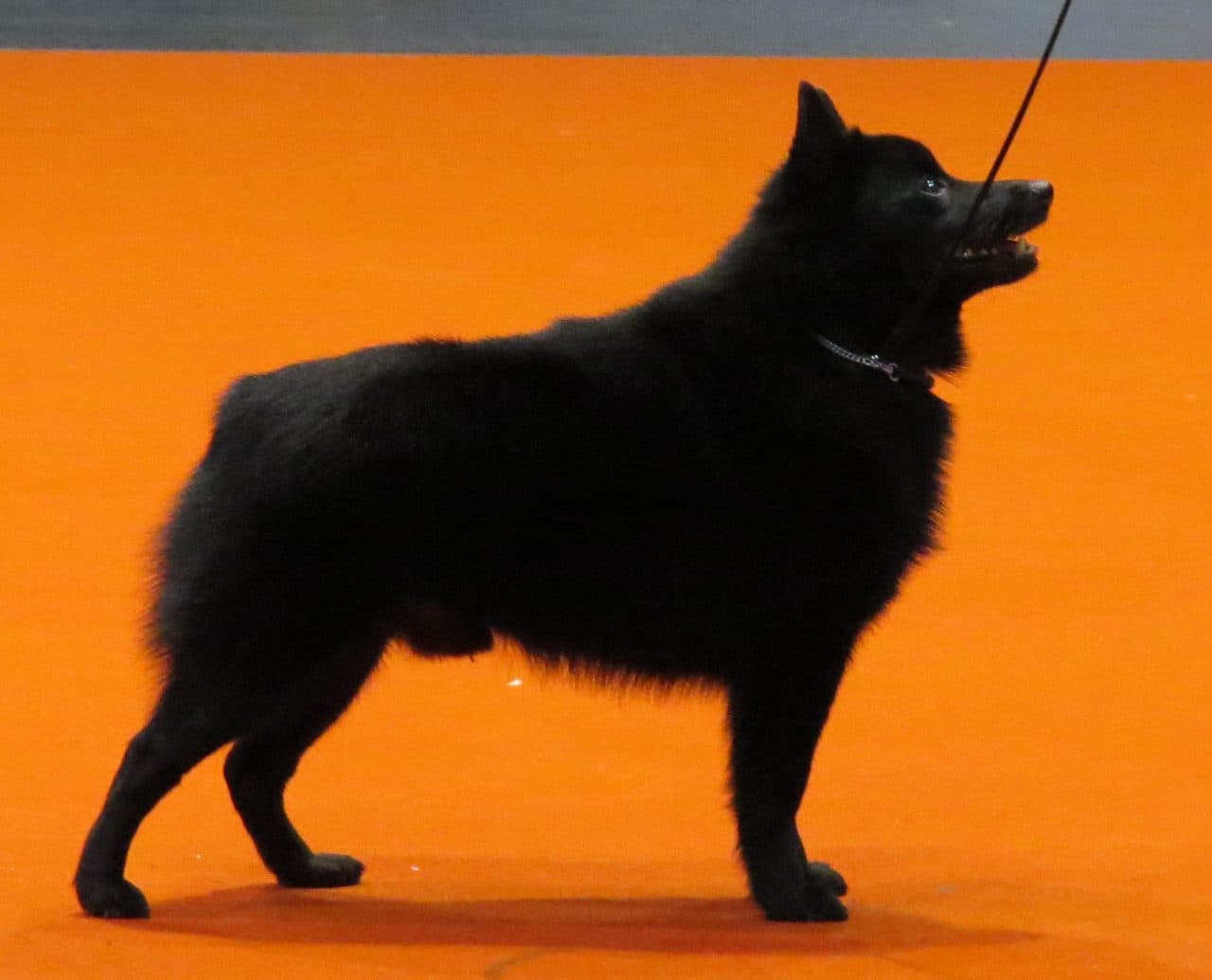
Schipperke
The "little captain" of Belgian boats. A small black spitz with a short tail or no tail at all. Lively, alert and prone to barking. An excellent watchdog in a small package.
Foto: Wikipedia Commons · CC BY-SA
Ideal for
- ✓Active families
- ✓Anyone looking for a charismatic dog in a small format
Reconsider if
- ×Homes with pet rodents
- ×Anyone looking for a submissive dog
Notify me when a Schipperke is up for adoption
We'll only email you when a verified rescue posts one available. No spam, unsubscribe in 1 click.
We'll only use your email for this alert. More info in our privacy policy.
Is the Schipperke a good match for you?
Indicative rating from 1 (low) to 5 (high).
💶 Estimated cost of ownership
45-80 €/month
Food for a small active dog €20-30; parasite control €8-15; pro-rated vaccinations and check-ups €15-20; toys and activities €5-15. The MPS IIIB genetic test is a one-off cost in breeding.
History and origin
Recognised by the FCI. Originating in Belgium. The "little captain" of Belgian boats.
Temperament and character
Lively, alert and brave. Forms a strong bond with its family. High hunting instinct. A barker. Firm, positive training is essential.
Living together
Children: with older, respectful children. **Other dogs:** variable. **Rodents:** strong prey drive.
Life stages of the Schipperke
Each stage has its own care priorities. Life expectancy: 13-16 años.
Puppy
0-12 months
Socialisation of the small, alert and lively watchdog; channelling its curiosity and guarding instinct.
Young
1-3 years
Daily exercise and mental stimulation; consistent training; patellar monitoring.
Adult
3-9 years
Weight control, dental health and thyroid blood tests; ophthalmological check-up.
Senior
9+ years
Eye check-ups (retinal atrophy) and joint check-ups; periodic thyroid monitoring.
Care
Exercise: 60-90 min/day plus scent games.
Brushing: 2-3 times/week; hand-stripping every 8-10 weeks if the coat is wiry.
Feeding: matched to its high energy levels.
Vet: annual check-up.
Care in detail
🍽️ Nutrition
Quality food for small active breeds, with a ration matched to its high energy and weight. Measured treats during training.
✂️ Grooming
Black double coat with a characteristic ruff: brushing 2-3 times a week, more intensively during moulting. Simple upkeep, with no clipping required.
🎓 Training
Lively, clever and rather stubborn; it needs firm, positive training from puppyhood. It is worth working early on bark control and recall because of its hunting instinct.
🏃 Exercise
High: 60-90 minutes daily across walks, play and scent work. It is a tireless watchdog in a small package.
Breed-specific health
Patellar luxation. Retinal atrophy. Life expectancy 13-16 years.
🩺 Health predispositions of this breed
Conditions this breed is more predisposed to. Knowing about them helps with prevention and early detection. A predisposition does not mean the animal will develop them.
Common diseases in dogs
Learn the symptoms, prevention and when to see the vet. Reviewed indicative information that does not replace a veterinary consultation.
Screening and prevention for the Schipperke
Recommended tests and screenings
- ✓Genetic test for mucopolysaccharidosis type IIIB (MPS IIIB)
- ✓Patellar luxation assessment
- ✓Ophthalmological examination (retinal atrophy)
- ✓Thyroid function (T4/TSH)
- ✓Full blood count and biochemistry
Prevention
Genetic testing for MPS IIIB in breeding stock to avoid this storage disease; weight control to protect the kneecaps; plenty of exercise and mental work to channel its energy and its tendency to bark.
Check-up schedule
Annual check-up with patellar assessment and eye examination; periodic thyroid monitoring.
Warning signs
- !Loss of coordination, tremors or regression in young adults (MPS IIIB)
- !Skipping gait or intermittent weight-bearing on one leg (patella)
- !Stumbling in low light or loss of vision (retinal atrophy)
- !Excessive barking or boredom-related behaviours
- !Lethargy or weight gain (hypothyroidism)
Schipperke gallery

Frequently asked questions about the Schipperke
- How long does a Schipperke live? ▾
- The life expectancy of the Schipperke is 13-16 años. A good diet, adequate exercise, annual veterinary check-ups and preventive care can help reach the upper end of that range.
- How much does a Schipperke weigh? ▾
- An adult Schipperke weighs between 4-9 kg, depending on its sex, genetics and condition. It is pequeño.
- Where does the Schipperke breed come from? ▾
- The Schipperke originates from Bélgica. Recognised by the FCI. Originating in Belgium. The "little captain" of Belgian boats.
- How much exercise does a Schipperke need? ▾
- The Schipperke has alta energy. **Exercise:** 60-90 min/day plus scent games.
- Is the Schipperke good with children? ▾
- **Children:** with older, respectful children. **Other dogs:** variable. **Rodents:** strong prey drive.
- Who is the Schipperke NOT recommended for? ▾
- It isn't the right breed for: Homes with pet rodents. Anyone looking for a submissive dog. It's important to choose a breed that's compatible with your lifestyle.
- What health problems does the Schipperke have? ▾
- Patellar luxation. Retinal atrophy. Life expectancy 13-16 years.
- Why is it called the 'little captain'? ▾
- It accompanied bargemen and boats on the Belgian canals, where it guarded the cargo and hunted rats. Hence its name, which in Flemish means 'little shepherd or bargeman'.
- Does it bark a lot? ▾
- Yes, it is an alert and very vocal watchdog. With early bark training and enough exercise it stays under control.
- Is it suitable for a flat? ▾
- Yes, its size means it adapts well to flat living, as long as it gets its 60-90 minutes of daily exercise and mental stimulation.
- Can I keep it with a hamster or rodents? ▾
- It is not advisable. It has a high prey drive towards rodents and small animals, a legacy of its rat-catching past.
- What is MPS IIIB? ▾
- It is a genetic storage disease present in the breed. A genetic test on the breeding animals allows it to be avoided; it is worth asking a responsible breeder for the results.
Learn more about dogs
Practical veterinary guides to support your Schipperke.
Sources and references
Content compiled from official breed standards and leading veterinary sources.
- WikipediaSchipperke ↗
- AKCSchipperke ↗
- FCIFCI Standard No. 83 ↗
Want to adopt a schipperke?
There are schipperkes in rescue shelters looking for a family. Filter by breed in the catalogue.