

Puli
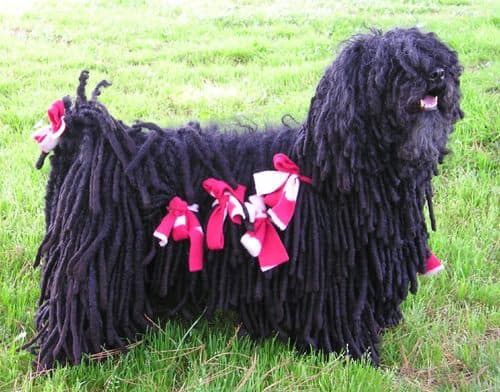
Hungarian herding dog with unique dreadlocks (a mini Komondor). Intelligent and hard-working. The cords form naturally from 8-10 months of age.
Foto: Wikipedia Commons · CC BY-SA
Ideal for
- ✓Very active families
- ✓Homes with a garden
- ✓Canine sports
Reconsider if
- ×Sedentary families
- ×Homes where it is left alone for many hours
Notify me when a Puli is up for adoption
We'll only email you when a verified rescue posts one available. No spam, unsubscribe in 1 click.
We'll only use your email for this alert. More info in our privacy policy.
Is the Puli a good match for you?
Indicative rating from 1 (low) to 5 (high).
💶 Estimated cost of ownership
55-95 €/month
Food for active medium-sized breeds 30-50 €; maintenance of the cords and specialist grooming 10-20 €; parasite prevention 10-18 €; pro-rated vaccinations and check-ups 15-25 €.
History and origin
Recognised by the FCI. Originating from Hungary. A Hungarian herding dog with unique dreadlocks (a mini Komondor).
Temperament and character
Intelligent, loyal and well-balanced when properly socialised and trained. Needs daily mental stimulation. Responds best to positive reinforcement. Physical punishment creates fear and reactivity.
Living together
Children: good with its own family. **Other dogs:** sociable with socialisation. **Cats:** with early socialisation.
Life stages of the Puli
Each stage has its own care priorities. Life expectancy: 12-16 años.
Puppy
0-15 months
Early socialisation; beginning care of the characteristic corded coat and mental stimulation.
Young adult
1-3 years
Plenty of physical and mental exercise; formation of the coat's cords; canine sports.
Adult
3-9 years
Maintenance of the coat and physical condition; hip and eye examinations.
Senior
9+ years
Adapted exercise, joint and ophthalmological check-ups; senior diet.
Care
Exercise: 90-120 min/day in several sessions. Off-lead running in a safe area is essential.
Brushing: 2-3 times/week; daily during shedding.
Feeding: quality food matched to its physical workload.
Vet: annual check-up + blood work from 5 years of age.
Care in detail
🍽️ Nutrition
Quality food for active medium-sized breeds, adjusted to its physical workload. Control its weight to avoid overloading the joints.
✂️ Grooming
A very distinctive coat: the cords form naturally from 8-10 months of age and need to be separated by hand and dried thoroughly after bathing. It is not brushed and barely sheds.
🎓 Training
Intelligent and hard-working; learns quickly with positive training and enjoys agility. Needs early socialisation and an owner who keeps it occupied.
🏃 Exercise
High: 90-120 minutes daily in several sessions, with off-lead time in a safe area and mental stimulation. It is a herding dog built to move.
Breed-specific health
Common conditions in the breed according to its FCI group. Life expectancy of 12-16 years with appropriate care. Annual vet check-up + blood work from 5 years of age.
🩺 Health predispositions of this breed
Conditions this breed is more predisposed to. Knowing about them helps with prevention and early detection. A predisposition does not mean the animal will develop them.
Common diseases in dogs
Learn the symptoms, prevention and when to see the vet. Reviewed indicative information that does not replace a veterinary consultation.
Screening and prevention for the Puli
Recommended tests and screenings
- ✓Hip dysplasia radiograph
- ✓Ophthalmological examination (retinal atrophy and cataracts)
- ✓Genetic eye test in breeding stock
- ✓Complete blood count and biochemistry
- ✓Joint assessment
Prevention
Daily work and exercise to suit its active herding nature; expert care of the cords to prevent moisture and skin infections; weight control and regular eye examinations.
Check-up schedule
Annual check-up with an eye examination; preventive blood work from 5 years of age.
Warning signs
- !Lameness or stiffness after exercise
- !Stumbling in low light or clouding of the eye (retina or cataracts)
- !Bad smell, moisture or itching in the cords (skin infection)
- !Destructive behaviour or anxiety from boredom
- !Lethargy or changes in appetite
Frequently asked questions about the Puli
- How long does a Puli live? ▾
- The life expectancy of the Puli is 12-16 años. A good diet, adequate exercise, annual veterinary check-ups and preventive care can help reach the upper end of that range.
- How much does a Puli weigh? ▾
- An adult Puli weighs between 10-15 kg, depending on its sex, genetics and condition. It is mediano.
- Where does the Puli breed come from? ▾
- The Puli originates from Hungría. Recognised by the FCI. Originating from Hungary. A Hungarian herding dog with unique dreadlocks (a mini Komondor).
- How much exercise does a Puli need? ▾
- The Puli has alta energy. **Exercise:** 90-120 min/day in several sessions. Off-lead running in a safe area is essential.
- Is the Puli good with children? ▾
- **Children:** good with its own family. **Other dogs:** sociable with socialisation. **Cats:** with early socialisation.
- Who is the Puli NOT recommended for? ▾
- It isn't the right breed for: Sedentary families. Homes where it is left alone for many hours. It's important to choose a breed that's compatible with your lifestyle.
- What health problems does the Puli have? ▾
- Common conditions in the breed according to its FCI group. Life expectancy of 12-16 years with appropriate care. Annual vet check-up + blood work from 5 years of age.
- How do its cords form? ▾
- Naturally from 8-10 months of age, when the inner and outer coat interweave. The owner only needs to separate them by hand so they stay defined and to dry them thoroughly after bathing.
- Does it shed a lot? ▾
- Hardly at all. As the cords form, dead hair is retained, so it is very clean around the house, although it is not guaranteed to be hypoallergenic.
- Does it dry quickly after a bath? ▾
- No. The cords take a long time to dry and, if left damp, can develop a bad smell and skin infections; thorough drying is essential.
- Does it need a lot of exercise? ▾
- Yes. It is an active herding dog that needs 90-120 minutes of daily physical and mental activity to stay balanced.
- How does it differ from the Pumi? ▾
- The Puli is older and forms cords, whereas the Pumi has a curly coat and erect ears. Both are Hungarian herding dogs but look very different.
Learn more about dogs
Practical veterinary guides to support your Puli.
Sources and references
Content compiled from official breed standards and leading veterinary sources.
- WikipediaPuli ↗
- AKCPuli ↗
- FCIPuli (FCI no. 55) ↗
Want to adopt a puli?
There are pulis in rescue shelters looking for a family. Filter by breed in the catalogue.