

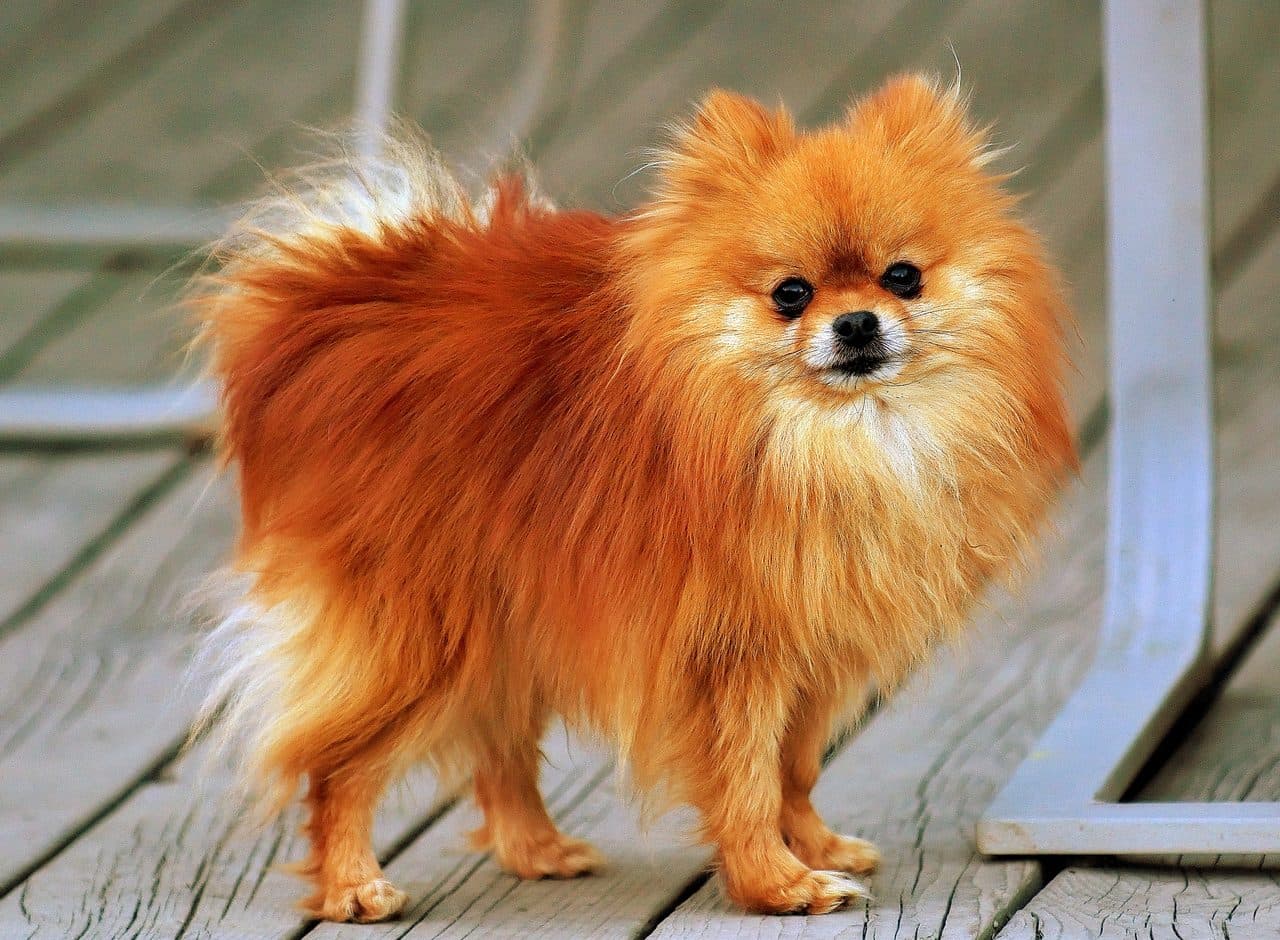
Pomerania
A fluffy mini-spitz. A cute fox-like face. A lush double coat. Very popular: a victim of irresponsible breeding and dental/joint problems. Bold, lively character.
Foto: Wikipedia Commons · CC BY-SA
Ideal for
- ✓Flats
- ✓Older people
- ✓Anyone looking for an elegant companion dog
Reconsider if
- ×Young children
- ×Homes without time for brushing
- ×Anyone who doesn't want a barker
Notify me when a Pomerania is up for adoption
We'll only email you when a verified rescue posts one available. No spam, unsubscribe in 1 click.
We'll only use your email for this alert. More info in our privacy policy.
Is the Pomerania a good match for you?
Indicative rating from 1 (low) to 5 (high).
💶 Estimated cost of ownership
35-60 €/month
Food: 10-18 € · Grooming: 12-22 € · Vet and dental: 10-20 €
History and origin
Bred down in the 19th century from large Nordic spitz dogs. Popularised by Queen Victoria of England, who fell in love with a small one in Italy.
Recognised by the FCI within Group 5 (spitz and primitive types). A dense double coat adapted to cold climates: in warm climates it requires precautions (shade, water, avoiding midday walks in summer).
Temperament and character
Bold, curious, lively. "Small dog syndrome" if not trained. A barker. Attached to its human. Intelligent. Needs daily mental stimulation — scent games, food-stuffed Kongs and short trick sessions channel its energy better than physical exercise alone. Responds best to positive reinforcement: physical punishment breeds fear, anxiety and reactivity — coercive methods are NOT recommended by veterinary behaviourists. Sensitive to its family's mood: it picks up on tension and mirrors it.
Living together
Children: better with older ones. Other dogs: territorial. Cats: coexists if socialised.
Life stages of the Pomerania
Each stage has its own care priorities. Life expectancy: 12-16 años.
Puppy
0-8 months
Careful handling due to fragility; starting dental hygiene; double coat care and socialisation.
Junior
8 months-1.5 years
Training and socialisation; patella and tracheal check; use of a harness instead of a collar.
Adult
1.5-9 years
Rigorous dental hygiene (periodontal), monitoring of tracheal collapse and patellas; coat care.
Senior
9+ years
Dental and cardiac health, tracheal monitoring and joint management; watch for coat changes.
Care
Exercise: 45-60 min/day split across at least 2 sessions. Calm walks + mental play.
Brushing: daily; intensive during the moulting seasons (spring and autumn).
Feeding: quality food matched to life stage (puppy/adult/senior) and size. Weight control: obesity is the leading preventable cause of joint problems.
Vet: annual check-up with preventive blood work from age 5 (age 7 in giant breeds); twice a year from age 8.
Exercise 30 min/day. Daily brushing or 4-5 times/week. Dental hygiene is critical (small mouth, crowded teeth). Careful with knocks (fragile).
Care in detail
🍽️ Nutrition
Food for miniature breeds; in puppies, frequent meals due to the risk of hypoglycaemia.
✂️ Grooming
Daily or near-daily brushing of its lush double coat, intensive during moults. Frequent dental hygiene.
🎓 Training
Intelligent and bold but a barker: it needs training to avoid small dog syndrome. Positive reinforcement and socialisation.
🏃 Exercise
30-45 minutes daily of walking and play; careful with knocks due to its fragility and with the heat.
Breed-specific health
Patellar luxation. Tracheal collapse. Alopecia X. Dental problems. Hypoglycaemia (puppies). Life expectancy 12-16 years. Life expectancy of 12-16 years with proper care. Pre-breeding tests recommended in responsible kennels (hip dysplasia + cardiac + ophthalmology according to the breed's conditions). When adopting, ask the shelter for a vet report on the dog's current condition.
🩺 Health predispositions of this breed
Conditions this breed is more predisposed to. Knowing about them helps with prevention and early detection. A predisposition does not mean the animal will develop them.
Common diseases in dogs
Learn the symptoms, prevention and when to see the vet. Reviewed indicative information that does not replace a veterinary consultation.
Screening and prevention for the Pomerania
Recommended tests and screenings
- ✓Orthopaedic assessment for patellar luxation
- ✓Dental check (small mouth with crowded teeth)
- ✓Tracheal collapse assessment
- ✓Alopecia X work-up in case of hair loss
Prevention
Critical dental hygiene due to its small mouth, use of a harness instead of a collar to avoid damaging the trachea, protection from heat due to its dense double coat, and care with falls.
Check-up schedule
Annual check-up with emphasis on the mouth, patellas and trachea.
Warning signs
- !A dry, honking cough when excited or pulling on the collar (tracheal collapse)
- !Patella slipping or lameness
- !Symmetrical hair loss without itching (alopecia X)
- !Heavy tartar and bad breath
Pomerania gallery

Frequently asked questions about the Pomerania
- How long does a Pomerania live? ▾
- The life expectancy of the Pomerania is 12-16 años. A good diet, adequate exercise, annual veterinary check-ups and preventive care can help reach the upper end of that range.
- How much does a Pomerania weigh? ▾
- An adult Pomerania weighs between 1.5-3.5 kg, depending on its sex, genetics and condition. It is toy.
- Where does the Pomerania breed come from? ▾
- The Pomerania originates from Pomerania (Polonia/Alemania). Bred down in the 19th century from large Nordic spitz dogs. Popularised by Queen Victoria of England, who fell in love with a small one in Italy.
- How much exercise does a Pomerania need? ▾
- The Pomerania has media energy. **Exercise:** 45-60 min/day split across at least 2 sessions. Calm walks + mental play.
- Is the Pomerania good with children? ▾
- Children: better with older ones. Other dogs: territorial. Cats: coexists if socialised.
- Who is the Pomerania NOT recommended for? ▾
- It isn't the right breed for: Young children. Homes without time for brushing. Anyone who doesn't want a barker. It's important to choose a breed that's compatible with your lifestyle.
- What health problems does the Pomerania have? ▾
- Patellar luxation. Tracheal collapse. Alopecia X. Dental problems. Hypoglycaemia (puppies). Life expectancy 12-16 years. Life expectancy of 12-16 years with proper care. Pre-breeding tests recommended in responsible kennels (hip dysplasia + cardiac + ophthalmology according to the breed's conditions). When adopting, ask the shelter for a vet report on the dog's current condition.
- Does the Pomeranian bark a lot? ▾
- Yes, it is quite a barker and alert. With early socialisation and training it moderates, but you should expect its tendency to sound the alarm.
- Should its coat be shaved short in summer? ▾
- Not recommended. Shaving it can damage its double coat and leave it unprotected against the sun; better to brush frequently and avoid the midday heat.
- Why is its dental hygiene so important? ▾
- It has a small mouth with very crowded teeth that builds up tartar easily; without frequent brushing it develops periodontal disease and tooth loss.
- Is it fragile? ▾
- Yes. It weighs between 1.5 and 3.5 kg and can be injured by falls or jumps; care is needed with young children and rough handling.
- What is alopecia X? ▾
- It is a symmetrical hair loss without itching, common in spitz dogs, of hormonal/genetic cause. It is usually not serious, but other causes should be ruled out with the vet.
Related and similar breeds
Learn more about dogs
Practical veterinary guides to support your Pomerania.
Sources and references
Content compiled from official breed standards and leading veterinary sources.
Want to adopt a pomerania?
There are pomeranias in rescue shelters looking for a family. Filter by breed in the catalogue.