

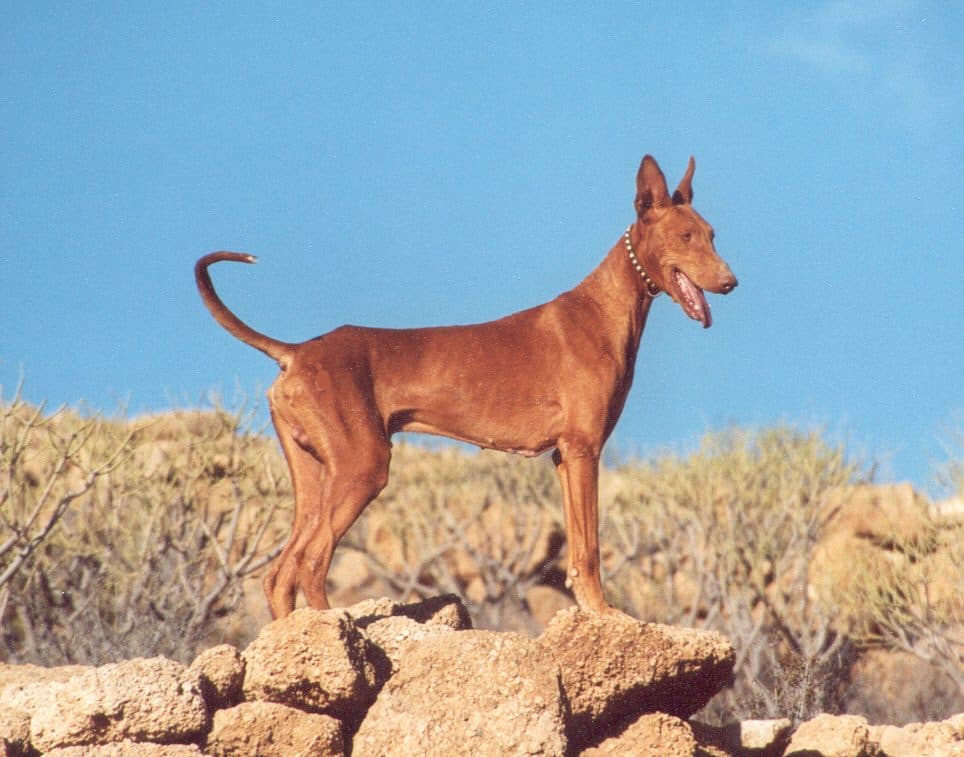
Podenco
Another Spanish breed that is massively abandoned. Rabbit hunters by sight and scent. High energy, independent temperament. "Primitive" type: hunters with a degree of autonomy. Adoption from rescues is also an option.
Foto: Wikipedia Commons · CC BY-SA
Ideal for
- ✓Active people with dog experience
- ✓Houses with a well-fenced garden
- ✓Those who value independent dogs
Reconsider if
- ×Homes with loose cats/rabbits
- ×Those expecting automatic obedience
- ×Small flats
Notify me when a Podenco is up for adoption
We'll only email you when a verified rescue posts one available. No spam, unsubscribe in 1 click.
We'll only use your email for this alert. More info in our privacy policy.
Is the Podenco a good match for you?
Indicative rating from 1 (low) to 5 (high).
💶 Estimated cost of ownership
40-70 €/month
Feeding: 20-35 € · Vet and prevention: 15-25 € · Accessories: 5-15 €
History and origin
Primitive breeds present in Iberia since before the Romans. Variants: Ibizan (taller, elegant), Andalusian, Canarian, Maneto. Traditional rabbit hunters worked in packs. Massively abandoned once they no longer hunt well.
Temperament and character
Independent, intelligent, alert. Bonds with its person but is not servile. Strong prey drive. Jumpers and climbers. Vocalises less than a Beagle.
Living together
Children: good with older children. Other dogs: sociable. Cats: high risk (prey drive).
Life stages of the Podenco
Each stage has its own care priorities. Life expectancy: 12-15 años.
Puppy
0-11 months
Broad socialisation, increasing physical outlet and protection against parasites in rural areas.
Junior
11 months-2 years
Channel its high energy with exercise and scent/sight work; reinforce recall because of its strong hunting instinct.
Adult
2-8 years
Prevention of leishmaniasis and other Mediterranean parasites; plenty of exercise; a rustic, robust breed.
Senior
8+ years
Cardiac and eye examination (cataracts), weight control and maintaining moderate activity.
Care
Exercise: 2-3 hours of intense activity daily. Free running in a safe area. Garden WELL fenced and high. Feeding: adult pellets. Grooming: low (short coat) or medium (wire-haired variety).
Care in detail
🍽️ Nutrition
Good-quality adult pellets adjusted to its activity level; they are usually efficient eaters and keep their weight well.
✂️ Grooming
Minimal in the short-haired varieties; medium in the wire-haired ones. Weekly brushing.
🎓 Training
Intelligent but independent, with a strong prey drive: it does not expect automatic obedience. Early socialisation and recall training with patience and positive reinforcement.
🏃 Exercise
2-3 hours of intense exercise daily, with free running in a fenced, safe area. It needs to really let off steam.
Breed-specific health
Robust. Lipomas. Cataracts. Some cardiac lines. Life expectancy 12-15 years.
🩺 Health predispositions of this breed
Conditions this breed is more predisposed to. Knowing about them helps with prevention and early detection. A predisposition does not mean the animal will develop them.
Common diseases in dogs
Learn the symptoms, prevention and when to see the vet. Reviewed indicative information that does not replace a veterinary consultation.
Screening and prevention for the Podenco
Recommended tests and screenings
- ✓Pre-anaesthetic blood work (sensitivity due to low body fat)
- ✓Cardiac examination
- ✓Skin examination and palpation of lipomas
- ✓Ophthalmological examination (cataracts)
Prevention
It is a rustic, healthy breed: the key points are deworming, vaccination and good high fencing, as they jump and escape following prey. A coat in cold weather because of their thin fur.
Check-up schedule
Annual check-up; full blood work before any anaesthetic.
Warning signs
- !Exaggerated reactions or slow recovery after sedation
- !Soft lumps under the skin (lipomas)
- !Lameness or injuries after running and jumping
- !Changes in vision or ocular cloudiness
Frequently asked questions about the Podenco
- How long does a Podenco live? ▾
- The life expectancy of the Podenco is 12-15 años. A good diet, adequate exercise, annual veterinary check-ups and preventive care can help reach the upper end of that range.
- How much does a Podenco weigh? ▾
- An adult Podenco weighs between 10-25 kg, depending on its sex, genetics and condition. It is variable (pequeño a grande).
- Where does the Podenco breed come from? ▾
- The Podenco originates from España e Islas Mediterráneas. Primitive breeds present in Iberia since before the Romans. Variants: Ibizan (taller, elegant), Andalusian, Canarian, Maneto. Traditional rabbit hunters worked in packs. Massively abandoned once they no longer hunt well.
- How much exercise does a Podenco need? ▾
- The Podenco has alta energy. Exercise: 2-3 hours of intense activity daily. Free running in a safe area. Garden WELL fenced and high. Feeding: adult pellets. Grooming: low (short coat) or medium (wire-haired variety).
- Is the Podenco good with children? ▾
- Children: good with older children. Other dogs: sociable. Cats: high risk (prey drive).
- Who is the Podenco NOT recommended for? ▾
- It isn't the right breed for: Homes with loose cats/rabbits. Those expecting automatic obedience. Small flats. It's important to choose a breed that's compatible with your lifestyle.
- What health problems does the Podenco have? ▾
- Robust. Lipomas. Cataracts. Some cardiac lines. Life expectancy 12-15 years.
- Can it live with cats or rabbits? ▾
- It is risky. It has a strong prey drive and many Podencos chase small animals; living with cats depends greatly on the individual and on socialisation.
- Why are there so many Podencos up for adoption? ▾
- They are traditional Spanish hunting breeds that suffer mass abandonment at the end of the season. Adopting one is a directly worthwhile gesture.
- Does it need a lot of exercise? ▾
- Yes, quite a lot. They are tireless hunters that need 2-3 hours a day and free running; without an outlet they get bored and can become destructive.
- Do they escape easily? ▾
- They can. They jump and climb following a scent, so the garden must be very well fenced and high.
- Is it easy to train for a novice? ▾
- It is not the simplest option: its independence demands patience. It works better with people who have some experience and use positive methods.
Related and similar breeds
Learn more about dogs
Practical veterinary guides to support your Podenco.
Sources and references
Content compiled from official breed standards and leading veterinary sources.
- WikipediaPodenco ↗
Want to adopt a podenco?
There are podencos in rescue shelters looking for a family. Filter by breed in the catalogue.