

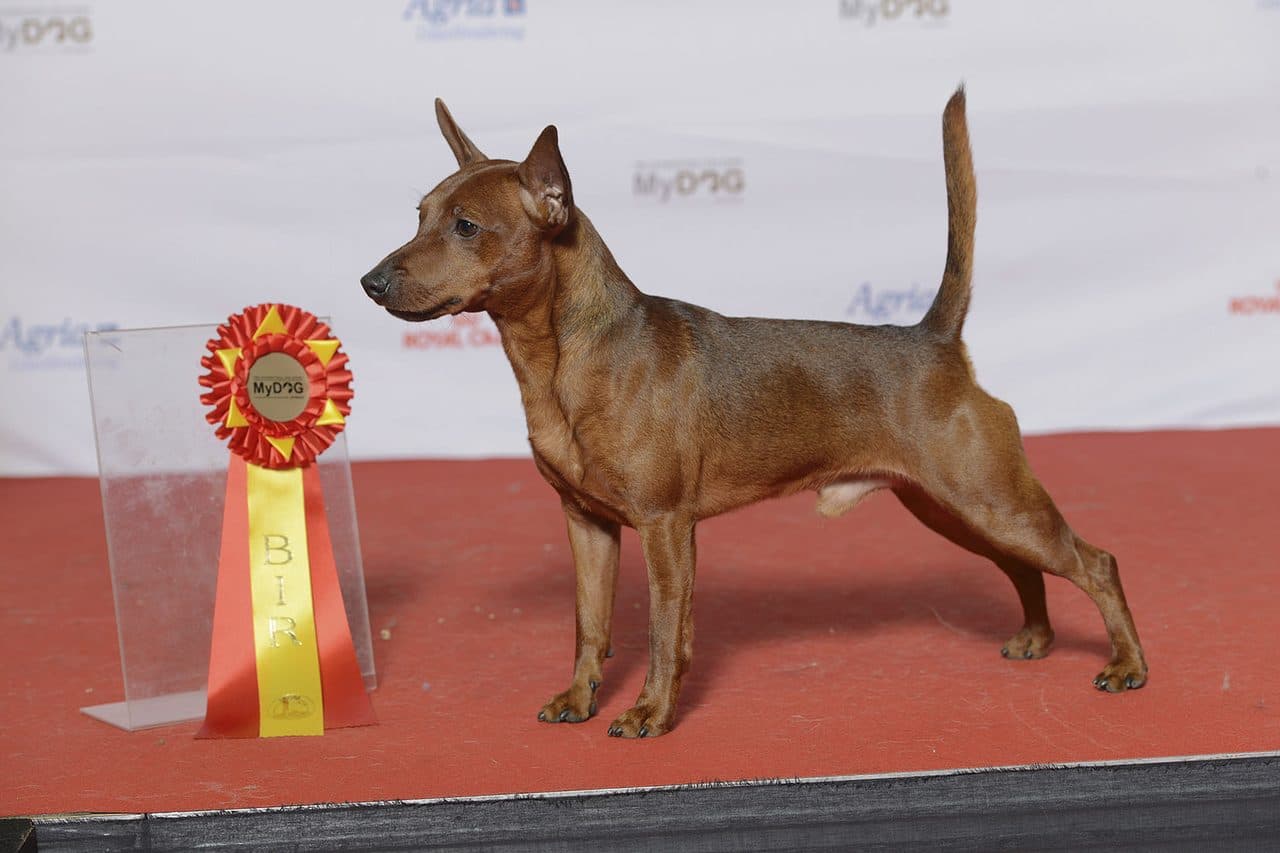
Pinscher Miniatura
"King of the toys" — dignified, athletic bearing. NOT a mini Doberman (a separate, older breed). Lively, alert, brave for its size. Easy-care short coat.
Foto: Wikipedia Commons · CC BY-SA
Ideal for
- ✓Small flats
- ✓Older people
- ✓Urban families
Reconsider if
- ×Very young children (fragile)
- ×Households with large, clumsy dogs
Notify me when a Pinscher Miniatura is up for adoption
We'll only email you when a verified rescue posts one available. No spam, unsubscribe in 1 click.
We'll only use your email for this alert. More info in our privacy policy.
Is the Pinscher Miniatura a good match for you?
Indicative rating from 1 (low) to 5 (high).
💶 Estimated cost of ownership
40-70 €/month
Food for a small breed 15-25 €; antiparasitics 8-15 €; prorated vaccines and check-ups 15-20 €; dental hygiene and accessories (coat) 5-15 €. Low base cost due to its size.
History and origin
Recognised by the FCI. Originally from Germany. "King of the toys" — dignified, athletic bearing.
Temperament and character
Cheerful, sociable, attached to its human. Sensitive. Intelligent. A barker if 'small dog syndrome' is not trained out.
Living together
Children: with careful older ones (fragile). **Other dogs:** fine with those of its own size. **Cats:** usually lives well with them.
Life stages of the Pinscher Miniatura
Each stage has its own care priorities. Life expectancy: 12-16 años.
Puppy
0-12 months
Socialisation of the 'king of the toys', energetic and bold; watching for lameness (Legg-Calvé-Perthes); protection from the cold.
Young
1-3 years
Daily exercise and mental stimulation to drain its energy; firm training; monitoring of the kneecaps.
Adult
3-9 years
Dental care, weight control and ophthalmological check (retinal atrophy).
Senior
9+ years
Eye and joint check-ups; maintaining activity and weight.
Care
Exercise: 30-45 min/day (several short walks).
Brushing: according to coat (some daily, others weekly).
Dental hygiene is critical: crowded teeth.
Vet: annual check-up + attention to patellar luxation.
Care in detail
🍽️ Nutrition
Quality food for small breeds with measured portions; it is active but small and gains weight easily. In puppies, split the food into several meals to prevent blood sugar drops.
✂️ Grooming
Short, glossy, low-maintenance coat: a weekly brush is enough. It needs a coat in winter and on walks in the cold because of its scant protection.
🎓 Training
Intelligent and athletic; learns quickly with positive reinforcement. It is key to work early on bark control and boundaries to prevent small dog syndrome.
🏃 Exercise
High for its size: 30-45 minutes a day across several walks plus play. It is lively and needs to burn off energy despite its stature.
Breed-specific health
Patellar luxation. Dental problems. Hypoglycaemia (puppies). Life expectancy 12-16 years.
🩺 Health predispositions of this breed
Conditions this breed is more predisposed to. Knowing about them helps with prevention and early detection. A predisposition does not mean the animal will develop them.
Common diseases in dogs
Learn the symptoms, prevention and when to see the vet. Reviewed indicative information that does not replace a veterinary consultation.
Screening and prevention for the Pinscher Miniatura
Recommended tests and screenings
- ✓Patellar luxation assessment
- ✓Hip radiograph (Legg-Calvé-Perthes disease)
- ✓Ophthalmological examination (retinal atrophy)
- ✓Periodic dental check
- ✓Blood glucose in puppies
Prevention
Weight control to protect the kneecaps; regular dental hygiene because of its small mouth and crowded teeth; in puppies, frequent meals to prevent hypoglycaemia; a coat in winter because of its short hair.
Check-up schedule
Annual check-up with assessment of the kneecaps and mouth; periodic eye monitoring.
Warning signs
- !Skipping in the gait or intermittent weight-bearing on a leg (kneecap)
- !Persistent lameness in puppies (femoral head necrosis)
- !Weakness, tremors or disorientation from fasting (hypoglycaemia in puppies)
- !Bad breath, tartar or tooth loss
- !Stumbling in low light (retinal atrophy)
Pinscher Miniatura gallery

Frequently asked questions about the Pinscher Miniatura
- How long does a Pinscher Miniatura live? ▾
- The life expectancy of the Pinscher Miniatura is 12-16 años. A good diet, adequate exercise, annual veterinary check-ups and preventive care can help reach the upper end of that range.
- How much does a Pinscher Miniatura weigh? ▾
- An adult Pinscher Miniatura weighs between 4-6 kg, depending on its sex, genetics and condition. It is pequeño.
- Where does the Pinscher Miniatura breed come from? ▾
- The Pinscher Miniatura originates from Alemania. Recognised by the FCI. Originally from Germany. "King of the toys" — dignified, athletic bearing.
- How much exercise does a Pinscher Miniatura need? ▾
- The Pinscher Miniatura has alta energy. **Exercise:** 30-45 min/day (several short walks).
- Is the Pinscher Miniatura good with children? ▾
- **Children:** with careful older ones (fragile). **Other dogs:** fine with those of its own size. **Cats:** usually lives well with them.
- Who is the Pinscher Miniatura NOT recommended for? ▾
- It isn't the right breed for: Very young children (fragile). Households with large, clumsy dogs. It's important to choose a breed that's compatible with your lifestyle.
- What health problems does the Pinscher Miniatura have? ▾
- Patellar luxation. Dental problems. Hypoglycaemia (puppies). Life expectancy 12-16 years.
- Is it a miniature Doberman? ▾
- No. Despite the resemblance, the Miniature Pinscher is a separate breed and older than the Doberman; they share a German origin but neither descends from the other.
- Does it bark a lot? ▾
- It tends to be a barker and alert. With early training and enough exercise this is kept in check, but small dog syndrome should be prevented.
- Does it get cold? ▾
- Yes. Its short coat and low body fat make it feel the cold; it needs a coat in winter and on walks in low temperatures.
- Is it fragile with children? ▾
- It is small and delicate; it lives better with older, careful children. Play should be supervised to avoid falls and knocks.
- How much exercise does it need? ▾
- More than it seems: 30-45 minutes a day between walks and play. It is very energetic and athletic for its size.
Learn more about dogs
Practical veterinary guides to support your Pinscher Miniatura.
Sources and references
Content compiled from official breed standards and leading veterinary sources.
Want to adopt a pinscher miniatura?
There are pinscher miniaturas in rescue shelters looking for a family. Filter by breed in the catalogue.