

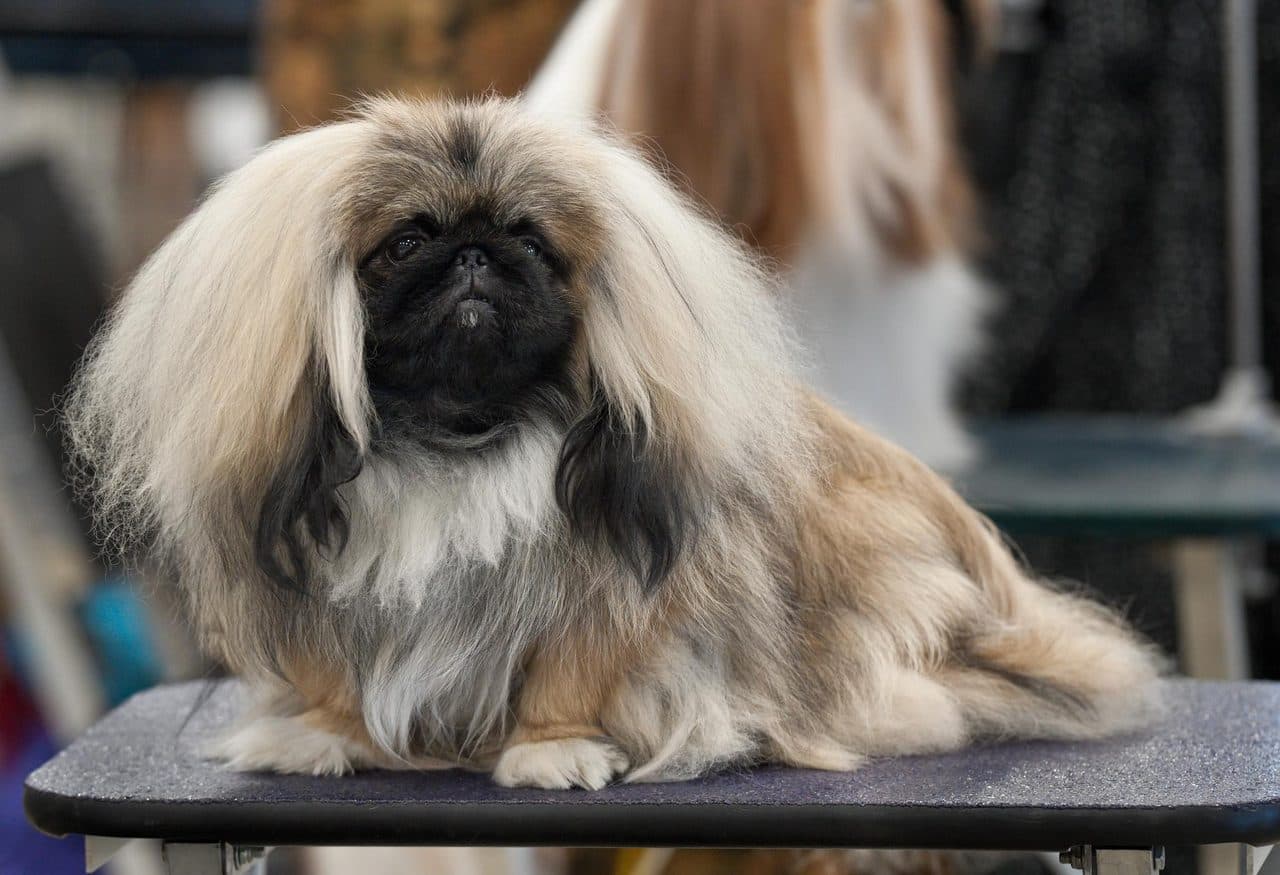
Pekinés
Imperial Chinese lion dog. Dignified, independent, almost feline character. Long, abundant coat. Flat face = brachycephalic with respiratory problems. Calm at home.
Foto: Wikipedia Commons · CC BY-SA
Ideal for
- ✓Older people
- ✓Small flats
- ✓Those who want an independent dog
Reconsider if
- ×Very active families
- ×Warm climates (they suffer in the heat)
- ×Rough children
Notify me when a Pekinés is up for adoption
We'll only email you when a verified rescue posts one available. No spam, unsubscribe in 1 click.
We'll only use your email for this alert. More info in our privacy policy.
Is the Pekinés a good match for you?
Indicative rating from 1 (low) to 5 (high).
💶 Estimated cost of ownership
45-85 €/month
Food for a small size 20-30 €; grooming 15-25 €; antiparasitics 8-15 €; pro-rated vaccinations and check-ups 15-20 €. Brachycephalic and ocular surgeries can represent a high one-off expense.
History and origin
Bred in imperial China for centuries as a palace dog. Looted by British soldiers in 1860, taken to Europe and given to Queen Victoria.
Recognised by the FCI within group 5 (spitz and primitive breeds). A dense double coat adapted to cold climates: in warm climates it requires precautions (shade, water, avoiding midday walks in summer).
Temperament and character
Dignified, independent, loyal to one family. Reserved with strangers. NOT submissive. Brave. Low exercise demands. Needs daily mental stimulation — scent games, food-stuffed Kongs and short tricks channel its energy better than physical exercise alone. Responds best to positive reinforcement: physical punishment creates fear, anxiety and reactivity — coercive methods are NOT recommended by veterinary behaviourists. Sensitive to its family's mood: it detects tension and picks up on it.
Living together
Children: with calm older people. Other dogs: indifferent or dominant. Cats: tolerates them.
Life stages of the Pekinés
Each stage has its own care priorities. Life expectancy: 12-15 años.
Puppy
0-9 months
Avoid heat and exertion because of its brachycephalic anatomy; care of the facial folds and the prominent eyes; gentle socialisation.
Junior
9 months-1.5 years
Assess the airways and ocular protection; care of the long coat and weight control.
Adult
1.5-9 years
Heatstroke prevention, ocular protection (corneal ulcers, risk of proptosis) and spinal monitoring; never overweight.
Senior
9+ years
Respiratory, ocular and spinal monitoring; very moderate exercise and a cool environment.
Care
Exercise: 30-45 min/day split into at least 2 sessions. Calm walks + mental play.
Brushing: 2-3 times/week; intensive during the moults (spring and autumn).
Feeding: quality feed appropriate to the life stage (puppy/adult/senior) and size. Weight control: obesity is the main preventable cause of joint problems.
Vet: annual check-up with preventive blood work from 5 years of age (7 years in giant breeds); twice a year from the age of 8.
Low exercise (30 min/day). Daily brushing (the coat tangles). Cleaning of the facial folds. Avoid extreme heat. Weight control.
Care in detail
🍽️ Nutrition
Quality feed for small breeds, with a measured ration because its low activity predisposes it to obesity, which worsens its breathing and its back.
✂️ Grooming
Long, abundant coat: daily brushing to prevent knots and intensive during moults. Daily cleaning of the facial fold and the perianal area.
🎓 Training
Independent and not very submissive, almost feline; it learns with patience and positive reinforcement, never with punishment. Mental stimulation suits it better than physical exercise.
🏃 Exercise
Very low: 30-45 minutes of calm walking a day during the cooler hours. Always avoid exercise in the heat.
Breed-specific health
Brachycephalic syndrome (breathing). Disc herniation. Corneal ulcers (prominent eyes). Cardiac problems. Life expectancy 12-15 years. Life expectancy 12-15 years with proper care. Pre-breeding tests recommended in responsible breeders (hip dysplasia + cardio + ophthalmology depending on the breed's pathologies). When adopting, ask the shelter for a vet report on the current condition.
🩺 Health predispositions of this breed
Conditions this breed is more predisposed to. Knowing about them helps with prevention and early detection. A predisposition does not mean the animal will develop them.
Common diseases in dogs
Learn the symptoms, prevention and when to see the vet. Reviewed indicative information that does not replace a veterinary consultation.
Screening and prevention for the Pekinés
Recommended tests and screenings
- ✓Respiratory assessment of brachycephalic syndrome (BOAS)
- ✓Ophthalmological examination (ulcers and corneal prominence)
- ✓Auscultation / echocardiography
- ✓Spinal radiography (disc herniation)
- ✓Complete blood count and pre-anaesthetic biochemistry
Prevention
Avoid heat, excess weight and exertion because of its brachycephalic breathing; use a harness instead of a collar; daily cleaning of the facial folds and monitoring of the prominent eyes for ulcers and knocks.
Check-up schedule
Annual check-up with a respiratory, ocular and cardiac assessment; preventive blood work from 5 years of age.
Warning signs
- !Noisy breathing, snoring, choking or a blue tongue (respiratory emergency in the heat)
- !A red, watering or half-closed eye (corneal ulcer)
- !Back pain, refusal to jump or weakness in the legs (disc herniation)
- !Coughing or fatigue (heart disease)
- !Bad smell or redness in the facial folds
Frequently asked questions about the Pekinés
- How long does a Pekinés live? ▾
- The life expectancy of the Pekinés is 12-15 años. A good diet, adequate exercise, annual veterinary check-ups and preventive care can help reach the upper end of that range.
- How much does a Pekinés weigh? ▾
- An adult Pekinés weighs between 3.5-6.5 kg, depending on its sex, genetics and condition. It is toy.
- Where does the Pekinés breed come from? ▾
- The Pekinés originates from China. Bred in imperial China for centuries as a palace dog. Looted by British soldiers in 1860, taken to Europe and given to Queen Victoria.
- How much exercise does a Pekinés need? ▾
- The Pekinés has baja energy. **Exercise:** 30-45 min/day split into at least 2 sessions. Calm walks + mental play.
- Is the Pekinés good with children? ▾
- Children: with calm older people. Other dogs: indifferent or dominant. Cats: tolerates them.
- Who is the Pekinés NOT recommended for? ▾
- It isn't the right breed for: Very active families. Warm climates (they suffer in the heat). Rough children. It's important to choose a breed that's compatible with your lifestyle.
- What health problems does the Pekinés have? ▾
- Brachycephalic syndrome (breathing). Disc herniation. Corneal ulcers (prominent eyes). Cardiac problems. Life expectancy 12-15 years. Life expectancy 12-15 years with proper care. Pre-breeding tests recommended in responsible breeders (hip dysplasia + cardio + ophthalmology depending on the breed's pathologies). When adopting, ask the shelter for a vet report on the current condition.
- Why does it breathe noisily? ▾
- It is a brachycephalic breed (flat face), which narrows its airways. In the heat or with exertion it breathes with difficulty; it is best to avoid both and to watch its weight.
- Does it need a lot of exercise? ▾
- No. It is a low-energy dog: 30-45 minutes of calm walking a day is enough, preferably during the cooler hours and with a harness.
- Is it good with children? ▾
- Better with calm older people. It is dignified and independent and does not tolerate rough handling; with young children it should always be supervised.
- Why do its eyes need so much care? ▾
- Its large, prominent eyes are very exposed and ulcerate easily from knocks or dryness. They must be monitored and taken to the vet at any sign of redness.
- Can it cope with summer? ▾
- Badly. Its flat face and dense coat make it very susceptible to heatstroke; it needs shade, water and air conditioning in warm climates.
Related and similar breeds
Learn more about dogs
Practical veterinary guides to support your Pekinés.
Sources and references
Content compiled from official breed standards and leading veterinary sources.
Want to adopt a pekinés?
There are pekinéss in rescue shelters looking for a family. Filter by breed in the catalogue.