

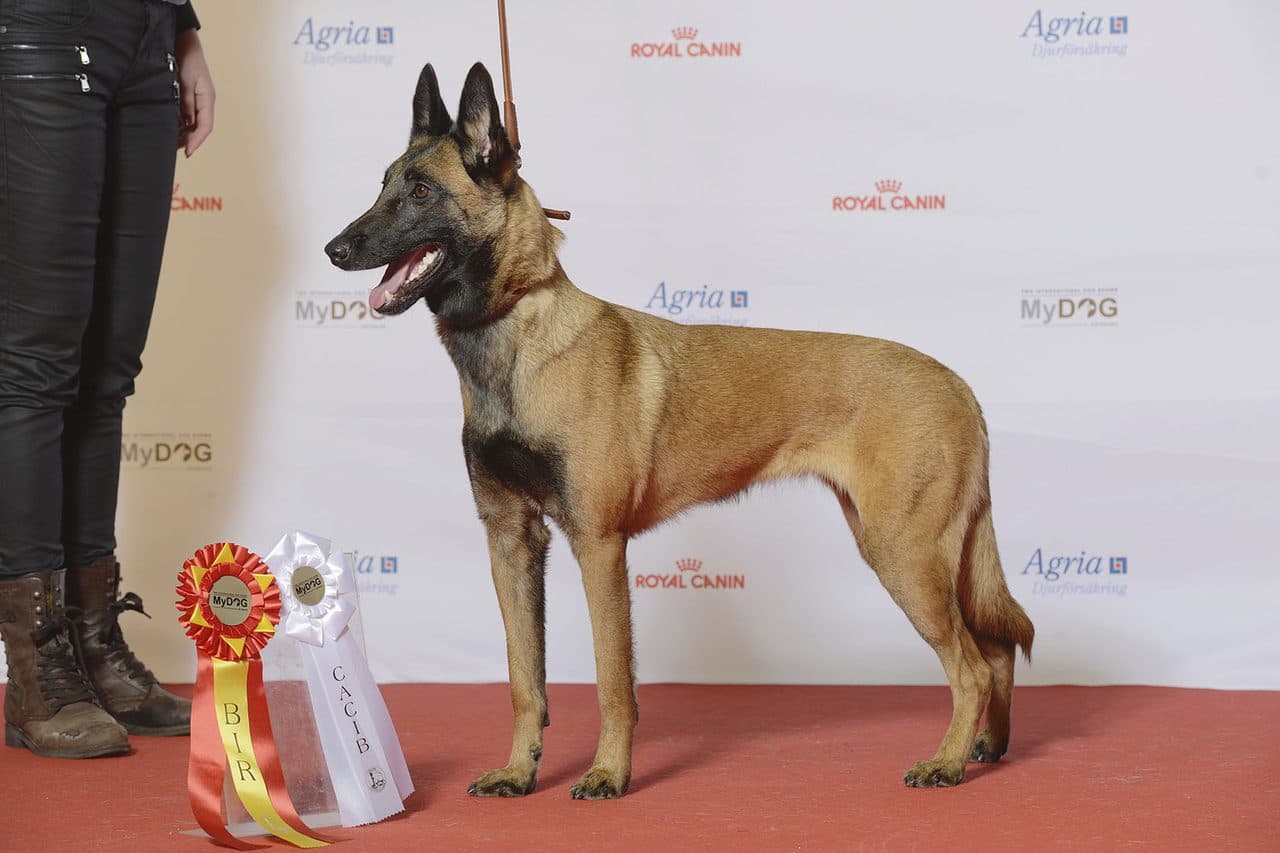
Pastor Belga Malinois
A canine athlete. Extremely high intelligence. Boundless energy. Police/military/sporting work. NOT a normal family dog: it needs a mental and physical "job" or it becomes destructive and reactive.
Foto: Wikipedia Commons · CC BY-SA
Ideal for
- ✓Serious canine sports enthusiasts
- ✓Police/military work
- ✓Those who devote hours to the dog
Reconsider if
- ×Ordinary families
- ×Flats
- ×Those who don't train daily
- ×Beginners
Notify me when a Pastor Belga Malinois is up for adoption
We'll only email you when a verified rescue posts one available. No spam, unsubscribe in 1 click.
We'll only use your email for this alert. More info in our privacy policy.
Is the Pastor Belga Malinois a good match for you?
Indicative rating from 1 (low) to 5 (high).
💶 Estimated cost of ownership
80-140 €/month
Food €40-65, veterinary provision €20-35, sporting/training equipment €15-30, deworming/accessories €10-15.
History and origin
One of the four varieties of the Belgian Shepherd. Bred in the late 19th century in the area around Malines (Belgium) for herding. Today it dominates in security forces thanks to its workability.
Recognised by the FCI within Group 1 (herding dogs). In the UK it is kept both as a rural working herder and as an urban companion. It learns complex tasks quickly and is a benchmark in canine sports (agility, obedience, mondioring).
Temperament and character
Intense, watchful, loyal. Its drive to work is obsessive. Sensitive: very easily ruined by harsh methods. Needs a daily "task". Needs daily mental stimulation — scent games, food Kongs and short trick sessions channel its energy better than physical exercise alone. Responds best to positive reinforcement: physical punishment breeds fear, anxiety and reactivity — coercive methods are NOT recommended by veterinary behaviourists. Sensitive to its family's mood: it picks up on tension and takes it on.
Living together
Children: with family experience. Other dogs: variable. Cats: with socialisation.
Life stages of the Pastor Belga Malinois
Each stage has its own care priorities. Life expectancy: 12-14 años.
Puppy
0-15 months
Broad socialisation, early mental stimulation and controlled growth.
Junior
15 months-2 years
Work, advanced obedience and channelling of its enormous energy.
Adult
2-6 years
Intense physical/mental exercise and joint monitoring.
Senior
6+ years
Control of dysplasia and retina, and maintenance of muscle mass.
Care
Exercise: 90-120 min/day split across at least 2 sessions. Off-lead time in a safe area is essential for high-energy breeds.
Brushing: 2-3 times/week; intensive during the moulting seasons (spring and autumn).
Feeding: quality food suited to life stage (puppy/adult/senior) and size. Weight control: obesity is the leading preventable cause of joint problems.
Vet: annual check-up with preventive blood work from age 5 (7 in giant breeds); twice a year from age 8.
Exercise 2-3 h/day + constant mental training. A chewer (specific toys). Professional training. Early socialisation.
Care in detail
🍽️ Nutrition
High-performance food for a working dog, adjusted to its intense activity. Weight control despite the high energy expenditure.
✂️ Grooming
Brushing 2-3 times a week, more intensive during moults. Short coat, easy to maintain.
🎓 Training
One of the most trainable and intelligent dogs there is. It needs a daily 'task' (canine sports, chew/bite work, obedience). Very sensitive: positive methods only; harsh ones ruin it.
🏃 Exercise
2-3 h/day of physical exercise plus constant mental training. It is not a conventional companion dog: it needs a 'job'.
Breed-specific health
Hip dysplasia. Epilepsy. Pannus (chronic keratitis). Retinal atrophy. Life expectancy 12-14 years. Life expectancy 12-14 years with proper care. Pre-breeding tests recommended in responsible kennels (dysplasia + cardiac + ophthalmology according to the breed's conditions). When adopting, ask the shelter for a vet report on the current health status.
🩺 Health predispositions of this breed
Conditions this breed is more predisposed to. Knowing about them helps with prevention and early detection. A predisposition does not mean the animal will develop them.
Common diseases in dogs
Learn the symptoms, prevention and when to see the vet. Reviewed indicative information that does not replace a veterinary consultation.
Screening and prevention for the Pastor Belga Malinois
Recommended tests and screenings
- ✓Hip and elbow dysplasia radiography
- ✓Ophthalmological examination (retinal atrophy)
- ✓Specific ocular assessment (pannus/chronic keratitis)
- ✓History/observation of epilepsy
- ✓Complete blood work
Prevention
Daily physical and mental work (without it, destructive and reactive behaviours appear), early socialisation and professional training. Eye protection against solar radiation (pannus). Controlled growth in the puppy.
Check-up schedule
Annual check-up with blood work; ophthalmological controls if it works outdoors or shows ocular changes.
Warning signs
- !Seizure episodes (epilepsy)
- !Redness/pigmentation on the cornea (pannus)
- !Lameness or joint pain (dysplasia)
- !Destructive behaviours or stereotypies from lack of activity
Pastor Belga Malinois gallery

Frequently asked questions about the Pastor Belga Malinois
- How long does a Pastor Belga Malinois live? ▾
- The life expectancy of the Pastor Belga Malinois is 12-14 años. A good diet, adequate exercise, annual veterinary check-ups and preventive care can help reach the upper end of that range.
- How much does a Pastor Belga Malinois weigh? ▾
- An adult Pastor Belga Malinois weighs between 20-30 kg, depending on its sex, genetics and condition. It is grande.
- Where does the Pastor Belga Malinois breed come from? ▾
- The Pastor Belga Malinois originates from Bélgica. One of the four varieties of the Belgian Shepherd. Bred in the late 19th century in the area around Malines (Belgium) for herding. Today it dominates in security forces thanks to its workability.
- How much exercise does a Pastor Belga Malinois need? ▾
- The Pastor Belga Malinois has muy alta energy. **Exercise:** 90-120 min/day split across at least 2 sessions. Off-lead time in a safe area is essential for high-energy breeds.
- Is the Pastor Belga Malinois good with children? ▾
- Children: with family experience. Other dogs: variable. Cats: with socialisation.
- Who is the Pastor Belga Malinois NOT recommended for? ▾
- It isn't the right breed for: Ordinary families. Flats. Those who don't train daily. Beginners. It's important to choose a breed that's compatible with your lifestyle.
- What health problems does the Pastor Belga Malinois have? ▾
- Hip dysplasia. Epilepsy. Pannus (chronic keratitis). Retinal atrophy. Life expectancy 12-14 years. Life expectancy 12-14 years with proper care. Pre-breeding tests recommended in responsible kennels (dysplasia + cardiac + ophthalmology according to the breed's conditions). When adopting, ask the shelter for a vet report on the current health status.
- Does it work as a normal family dog? ▾
- Generally no. It has enormous energy and drive to work; without a daily 'job' (canine sports, advanced obedience) it becomes destructive and reactive. It is a dog for very active and committed people.
- How much exercise does it really need? ▾
- 2-3 hours of physical activity a day plus constant mental stimulation. Physical exercise alone is not enough: it needs to solve tasks and train to stay balanced.
- Why is it used so much in the police and army? ▾
- For its intelligence, working capacity, agility and dedication. It learns complex tasks very fast, which makes it unbeatable in detection, tracking and protection.
- Can it live in a flat? ▾
- Not advisable. It needs space and, above all, a great deal of daily activity. In a flat without an energy outlet it develops anxiety and problem behaviours.
Related and similar breeds
Learn more about dogs
Practical veterinary guides to support your Pastor Belga Malinois.
Sources and references
Content compiled from official breed standards and leading veterinary sources.
Want to adopt a pastor belga malinois?
There are pastor belga malinoiss in rescue shelters looking for a family. Filter by breed in the catalogue.