

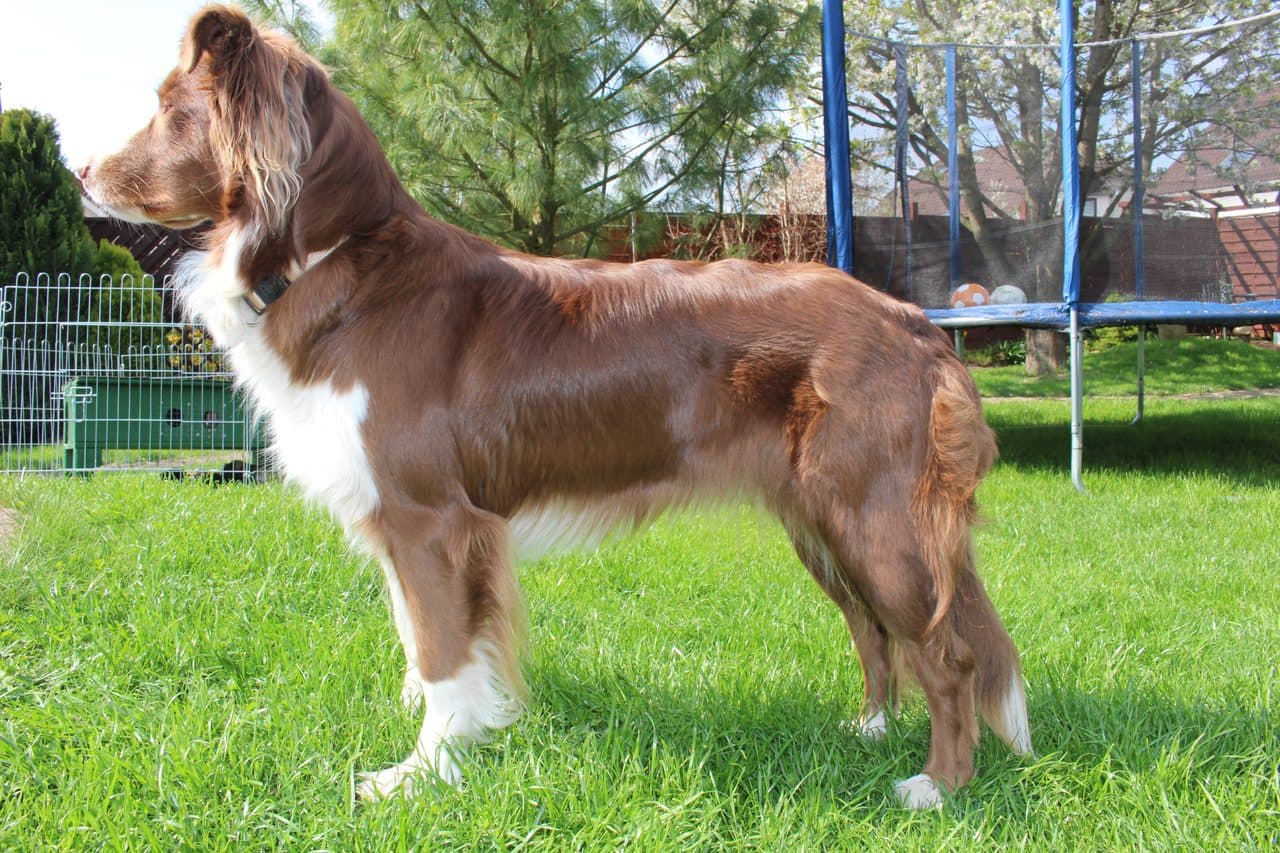
Pastor Australiano
An athlete and a worker. Extremely high intelligence (top 10 according to Coren). Characteristic merle coat (blue/red mottling). NOT for the sedentary: it needs 2 h/day of exercise + mental training or it becomes destructive.
Foto: Wikipedia Commons · CC BY-SA
Ideal for
- ✓Very active families
- ✓Homes with a garden
- ✓Dog sports (agility, obedience)
Reconsider if
- ×Sedentary families
- ×Flats without daily exercise
- ×Homes left alone for many hours (it suffers)
Notify me when a Pastor Australiano is up for adoption
We'll only email you when a verified rescue posts one available. No spam, unsubscribe in 1 click.
We'll only use your email for this alert. More info in our privacy policy.
Is the Pastor Australiano a good match for you?
Indicative rating from 1 (low) to 5 (high).
💶 Estimated cost of ownership
60-110 €/month
Feeding: 30-50 € · Preventive vet care: 18-35 € · Grooming and accessories: 10-20 € · Insurance and extras: 5-20 €
History and origin
Despite its name, it was developed in the western United States during the 19th century as a herding dog for ranchers, from dogs that arrived with flocks from Australia and Europe. Very intelligent, energetic and versatile, with the frequent MDR1 mutation.
Temperament and character
Intelligent, hard-working, loyal to its family. It needs mental AND physical stimulation — boredom is the main cause of behavioural problems. Excellent with positive training.
Living together
Children: good with its own. **Other dogs:** sociable with socialisation. **Other animals:** with early socialisation.
Life stages of the Pastor Australiano
Each stage has its own care priorities. Life expectancy: 12-15 años.
Puppy
0-1 year
MDR1 genetic test before medicating; early ophthalmological examination; socialisation and early mental stimulation.
Young
1-2 years
High demand for physical and mental exercise; hip radiographs; ocular baseline (retinal anomaly/atrophy).
Adult
2-8 years
Caution with MDR1-sensitive drugs; hip monitoring; ocular surveillance and for epileptic seizures.
Senior
8+ years
Review of vision and mobility; joint management; maintaining mental stimulation with adapted exercise.
Care
Exercise: 90-120 min/day divided up. Off-lead time in a safe area is essential.
Brushing: 2-3 times/week; daily during moult.
Feeding: quality food in keeping with its physical work.
Vet: annual check-up + blood work from age 5.
Care in detail
🍽️ Nutrition
Quality food adjusted to its high energy expenditure and actual level of work, in 2 meals. Watch its weight despite its activity.
✂️ Grooming
Brushing 2-3 times a week, daily during moult; a semi-long coat that sheds a fair amount, especially in spring and autumn. Note: merle individuals may be associated with deafness/blindness.
🎓 Training
Top 10 in the world for intelligence: it learns at an astonishing speed and excels in dog sports. It needs mental AND physical stimulation; boredom is its main source of behavioural problems.
🏃 Exercise
90-120 minutes daily across physical exercise and mental work, ideally with off-lead time in a safe area. Not a breed for the sedentary or for a flat without activity.
Breed-specific health
Hip/elbow dysplasia. Progressive retinal atrophy (genetic test recommended). Life expectancy 12-15 years with proper care.
🩺 Health predispositions of this breed
Conditions this breed is more predisposed to. Knowing about them helps with prevention and early detection. A predisposition does not mean the animal will develop them.
Common diseases in dogs
Learn the symptoms, prevention and when to see the vet. Reviewed indicative information that does not replace a veterinary consultation.
Screening and prevention for the Pastor Australiano
Recommended tests and screenings
- ✓MDR1 genetic test (drug sensitivity)
- ✓Genetic test for progressive retinal atrophy and CEA
- ✓Hip and elbow dysplasia radiograph
- ✓Ophthalmological examination
Prevention
Inform the vet of the MDR1 status before treatments, daily mental stimulation to prevent destructive behaviour and joint monitoring.
Check-up schedule
Annual check-up with an ophthalmological examination; preventive blood work from age 5.
Warning signs
- !Vision problems or stumbling (retina/CEA)
- !Lameness or stiffness (dysplasia)
- !Repetitive behaviours from boredom
- !Abnormal reactions to drugs (MDR1)
Frequently asked questions about the Pastor Australiano
- How long does a Pastor Australiano live? ▾
- The life expectancy of the Pastor Australiano is 12-15 años. A good diet, adequate exercise, annual veterinary check-ups and preventive care can help reach the upper end of that range.
- How much does a Pastor Australiano weigh? ▾
- An adult Pastor Australiano weighs between 16-32 kg, depending on its sex, genetics and condition. It is mediano-grande.
- Where does the Pastor Australiano breed come from? ▾
- The Pastor Australiano originates from Estados Unidos (a pesar del nombre). Despite its name, it was developed in the western United States during the 19th century as a herding dog for ranchers, from dogs that arrived with flocks from Australia and Europe. Very intelligent, energetic and versatile, with the frequent MDR1 mutation.
- How much exercise does a Pastor Australiano need? ▾
- The Pastor Australiano has muy alta energy. **Exercise:** 90-120 min/day divided up. Off-lead time in a safe area is essential.
- Is the Pastor Australiano good with children? ▾
- **Children:** good with its own. **Other dogs:** sociable with socialisation. **Other animals:** with early socialisation.
- Who is the Pastor Australiano NOT recommended for? ▾
- It isn't the right breed for: Sedentary families. Flats without daily exercise. Homes left alone for many hours (it suffers). It's important to choose a breed that's compatible with your lifestyle.
- What health problems does the Pastor Australiano have? ▾
- Hip/elbow dysplasia. Progressive retinal atrophy (genetic test recommended). Life expectancy 12-15 years with proper care.
- Is it suited to living in a flat? ▾
- It is not ideal. Its very high energy and need for mental work mean it suffers and becomes destructive in a flat without intense daily exercise.
- Is it easy to train? ▾
- Very much so: it is among the most intelligent breeds and learns extremely quickly with positive methods. That is why it excels in agility and obedience, but it also needs that mental challenge to stay balanced.
- What is the MDR1 gene and why does it matter? ▾
- It is a mutation common in shepherd breeds that causes sensitivity to certain drugs (some antiparasitics and anaesthetics). It is worth testing for it and informing the vet before any treatment.
- Does it cope well with being left alone? ▾
- Badly. It is very attached and suffers with prolonged solitude; without company or an outlet it develops anxiety and destructive behaviours.
- Does the merle coat carry health risks? ▾
- Crossing two merle individuals can produce puppies with deafness and blindness problems. A responsible breeder never carries out that cross.
Learn more about dogs
Practical veterinary guides to support your Pastor Australiano.
Sources and references
Content compiled from official breed standards and leading veterinary sources.
Want to adopt a pastor australiano?
There are pastor australianos in rescue shelters looking for a family. Filter by breed in the catalogue.