

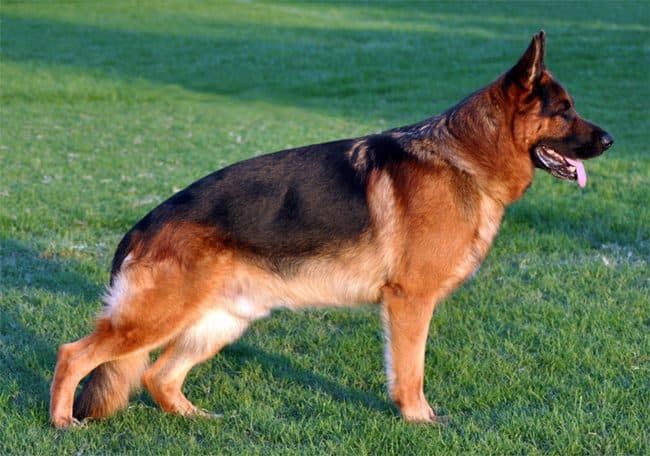
Pastor Alemán
The working breed par excellence. Top intelligence, extreme loyalty, unmatched versatility: police, guide, therapy, search and rescue, family. But with serious hereditary problems (dysplasia) that limit its life expectancy.
Foto: Wikipedia Commons · CC BY-SA
Ideal for
- ✓Active families
- ✓Homes with a garden
- ✓People experienced with dogs
- ✓Workers with time for training
Reconsider if
- ×Small flats
- ×Sedentary people
- ×Households with several strangers daily (if unsocialised)
Notify me when a Pastor Alemán is up for adoption
We'll only email you when a verified rescue posts one available. No spam, unsubscribe in 1 click.
We'll only use your email for this alert. More info in our privacy policy.
Is the Pastor Alemán a good match for you?
Indicative rating from 1 (low) to 5 (high).
💶 Estimated cost of ownership
60-100 €/month
Feeding: 35-55 € · Vet and prevention: 20-30 € · Insurance and accessories: 10-20 €
History and origin
Created in 1899 by Max von Stephanitz in Germany. He aimed to perfect the ideal herding dog: intelligence, strength, faithfulness. The First World War brought it to worldwide attention. In the UK it has been a leading choice for police and security work for decades.
Temperament and character
Top intelligence (ranked no. 3 in obedience by Coren). Extreme loyalty to its family. Reserved with strangers but not automatically aggressive. It needs both mental and physical work. Without stimulation it gets bored and develops problems.
Living together
Children: excellent if socialised with them from a puppy. Other animals: it depends, better if raised with them. Being left alone: they do NOT like it, they can develop destructive behaviour.
Life stages of the Pastor Alemán
Each stage has its own care priorities. Life expectancy: 9-13 años.
Puppy
0-12 months
Slow, controlled growth to protect the hips and elbows; buy from lines with low dysplasia; firm and early socialisation.
Junior
1-2 years
Work and advanced obedience; radiographic joint screening; a digestible diet given its gastrointestinal sensitivity.
Adult
2-7 years
Structured exercise, management of food sensitivity and prevention of gastric torsion (split meals).
Senior
7+ years
Monitor degenerative myelopathy (genetic test), osteoarthritis and hindquarter weakness; physiotherapy and a senior diet.
Care
Exercise: 2-3 hours minimum. Mental work is essential (search work, advanced obedience, agility). Feeding: high-protein large-breed food. Grooming: 2-3 times/week, heavy shedding. Early socialisation is CRITICAL.
Care in detail
🍽️ Nutrition
Quality large-breed food suited to the life stage, with joint supplements and weight control. Split into 2 meals to reduce the risk of gastric torsion.
✂️ Grooming
Brushing 2-3 times a week, daily during the spring and autumn moults owing to its dense double coat.
🎓 Training
A top breed in obedience: it learns quickly with positive reinforcement. It needs daily mental work (search work, advanced obedience, agility) and early socialisation is essential.
🏃 Exercise
2-3 hours daily across walks, off-lead running in a safe area and mental work; a shepherd without stimulation develops behavioural problems.
Breed-specific health
Hip and elbow dysplasia (high incidence, buy from lines with low CHD). Degenerative myelopathy (genetic test). Gastric torsion. Digestive problems (food sensitivity). Life expectancy 9-13 years.
🩺 Health predispositions of this breed
Conditions this breed is more predisposed to. Knowing about them helps with prevention and early detection. A predisposition does not mean the animal will develop them.
Common diseases in dogs
Learn the symptoms, prevention and when to see the vet. Reviewed indicative information that does not replace a veterinary consultation.
Screening and prevention for the Pastor Alemán
Recommended tests and screenings
- ✓Official hip and elbow dysplasia radiographs
- ✓Genetic test for degenerative myelopathy (SOD1/DM)
- ✓Echocardiography and cardiac examination
- ✓Blood work with a pancreatic profile in cases of chronic diarrhoea (exocrine pancreatic insufficiency)
Prevention
Buy from lines with certified hips and elbows, manage weight to avoid overloading the joints, split food into 2 meals and avoid intense exercise after eating to reduce the risk of gastric torsion.
Check-up schedule
Annual check-up until age 5 with preventive blood work; from then on twice a year, monitoring the joints and digestive system.
Warning signs
- !Lameness or difficulty getting up
- !Weakness or lack of coordination in the hindquarters (myelopathy)
- !Abdominal distension with unproductive retching (gastric torsion, emergency)
- !Chronic diarrhoea or weight loss despite a good appetite
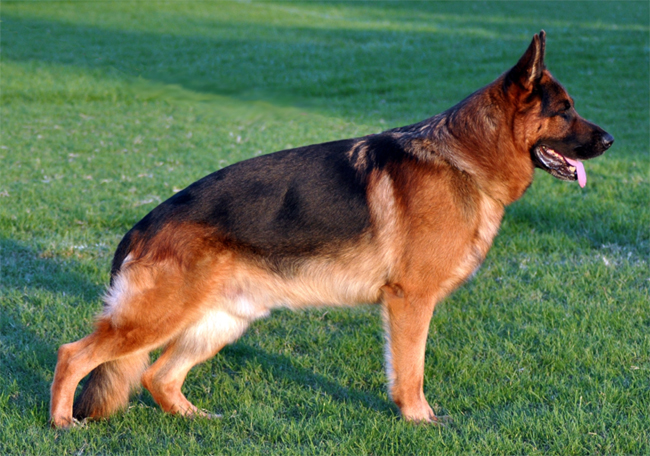
Pastor Alemán gallery
Frequently asked questions about the Pastor Alemán
- How long does a Pastor Alemán live? ▾
- The life expectancy of the Pastor Alemán is 9-13 años. A good diet, adequate exercise, annual veterinary check-ups and preventive care can help reach the upper end of that range.
- How much does a Pastor Alemán weigh? ▾
- An adult Pastor Alemán weighs between 22-40 kg, depending on its sex, genetics and condition. It is grande.
- Where does the Pastor Alemán breed come from? ▾
- The Pastor Alemán originates from Alemania. Created in 1899 by Max von Stephanitz in Germany. He aimed to perfect the ideal herding dog: intelligence, strength, faithfulness. The First World War brought it to worldwide attention. In the UK it has been a leading choice for police and security work for decades.
- How much exercise does a Pastor Alemán need? ▾
- The Pastor Alemán has alta energy. Exercise: 2-3 hours minimum. Mental work is essential (search work, advanced obedience, agility). Feeding: high-protein large-breed food. Grooming: 2-3 times/week, heavy shedding. Early socialisation is CRITICAL.
- Is the Pastor Alemán good with children? ▾
- Children: excellent if socialised with them from a puppy. Other animals: it depends, better if raised with them. Being left alone: they do NOT like it, they can develop destructive behaviour.
- Who is the Pastor Alemán NOT recommended for? ▾
- It isn't the right breed for: Small flats. Sedentary people. Households with several strangers daily (if unsocialised). It's important to choose a breed that's compatible with your lifestyle.
- What health problems does the Pastor Alemán have? ▾
- Hip and elbow dysplasia (high incidence, buy from lines with low CHD). Degenerative myelopathy (genetic test). Gastric torsion. Digestive problems (food sensitivity). Life expectancy 9-13 years.
- Is the German Shepherd aggressive? ▾
- Not by nature. Well socialised it is balanced and reserved with strangers without aggression. Reactivity arises from a lack of socialisation or coercive handling.
- Can it live in a flat? ▾
- It is not ideal. It tolerates a flat if it gets 2-3 hours of daily exercise and mental work, but a house with a garden suits its energy much better.
- Why do they have so many hip problems? ▾
- Hip and elbow dysplasia is hereditary and common in the breed. Buying from lines with radiographed and certified parents greatly reduces the risk.
- Does it shed a lot? ▾
- Yes, a huge amount. It has a double coat and sheds heavily twice a year; it needs frequent brushing and a vacuum cleaner to hand.
- Is it a good dog with children? ▾
- Excellent if socialised with them from a puppy: it is patient and protective, though given its size it is wise to supervise with very young children.
Related and similar breeds
Learn more about dogs
Practical veterinary guides to support your Pastor Alemán.
Sources and references
Content compiled from official breed standards and leading veterinary sources.
Want to adopt a pastor alemán?
There are pastor alemáns in rescue shelters looking for a family. Filter by breed in the catalogue.