

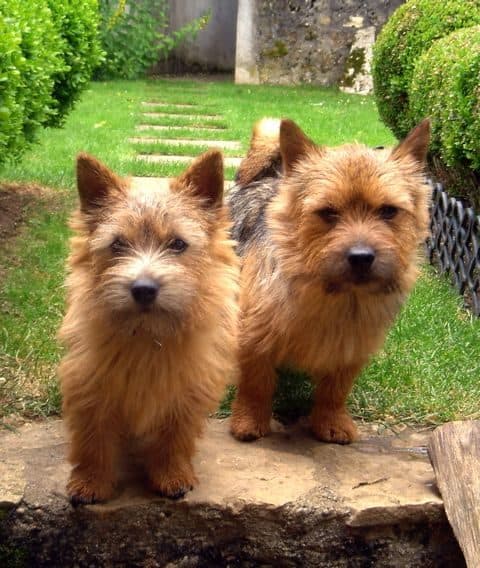
Norwich Terrier
Prick-eared terrier (Norwich) — the counterpart of the Norfolk. Same bold, compact character. Wiry coat.
Foto: Wikipedia Commons · CC BY-SA
Ideal for
- ✓Active families
- ✓Anyone wanting a charismatic dog in a small package
Reconsider if
- ×Homes with pet rodents
Notify me when a Norwich Terrier is up for adoption
We'll only email you when a verified rescue posts one available. No spam, unsubscribe in 1 click.
We'll only use your email for this alert. More info in our privacy policy.
Is the Norwich Terrier a good match for you?
Indicative rating from 1 (low) to 5 (high).
💶 Estimated cost of ownership
45-80 €/month
High-quality food for a small breed 20-35 €; grooming with stripping (prorated) 10-20 €; parasite control 10-15 €; prorated vaccinations and check-ups 15-20 €.
History and origin
Recognised by the FCI. Originating from England (Norwich). Prick-eared terrier (Norwich) — the counterpart of the Norfolk.
Temperament and character
Intelligent, loyal and well balanced when properly socialised and trained. Needs daily mental stimulation. Responds best to positive reinforcement. Physical punishment breeds fear and reactivity.
Living together
Children: with respectful older kids. **Other dogs:** variable. **Rodents:** high prey drive.
Life stages of the Norwich Terrier
Each stage has its own care priorities. Life expectancy: 12-15 años.
Puppy
0-12 months
Socialisation, basic training and a wiry-coat care routine; monitor the upper airways.
Young adult
1-3 years
Daily exercise and play that channels its high energy and hunting instinct.
Adult
3-9 years
Weight control, joint health and general check-ups.
Senior
9+ years
Respiratory, dental and joint check-ups; a senior diet.
Care
Exercise: 60-90 min/day + scent games.
Brushing: 2-3 times/week; hand-stripping every 8-10 weeks if the coat is wiry.
Feeding: matched to its high energy.
Vet: annual check-up.
Care in detail
🍽️ Nutrition
Quality food for active small breeds, with the portion adjusted to its size and measured treats to prevent excess weight, which aggravates any respiratory problem.
✂️ Grooming
Wiry coat maintained by hand-stripping every 2-3 months and weekly brushing. Hand-stripping preserves the texture; scissoring softens and dulls the coat.
🎓 Training
Intelligent, sociable and somewhat more manageable than other terriers; it responds well to positive reinforcement. It is advisable to moderate barking and reinforce recall because of its hunting instinct.
🏃 Exercise
High for its size: about 60 minutes daily of walking, play and scent work. It enjoys tracking activities, avoiding overexertion in the heat.
Breed-specific health
Conditions common to the breed according to the FCI group. Life expectancy 12-15 years with proper care. Annual vet check-up + blood work from 5 years of age.
🩺 Health predispositions of this breed
Conditions this breed is more predisposed to. Knowing about them helps with prevention and early detection. A predisposition does not mean the animal will develop them.
Common diseases in dogs
Learn the symptoms, prevention and when to see the vet. Reviewed indicative information that does not replace a veterinary consultation.
Screening and prevention for the Norwich Terrier
Recommended tests and screenings
- ✓Upper airway respiratory assessment (brachycephalic obstructive airway syndrome/UAS)
- ✓Patellar luxation assessment
- ✓Hip dysplasia radiography
- ✓Auscultation / echocardiography
- ✓Regular dental check
Prevention
Monitor breathing given its predisposition to upper airway syndrome (UAS), avoiding excess weight, heat and extreme exertion; regular dental hygiene; weight control to protect the patellae and hips.
Check-up schedule
Annual check-up with cardiac auscultation and respiratory assessment; more frequent monitoring from 7 years of age.
Warning signs
- !Noisy breathing, snoring or choking on exertion or in the heat
- !Skipping gait or intermittent weight-bearing on one leg (patella)
- !Bad breath or dental tartar
- !Cough or exercise intolerance
- !Itching or hair loss
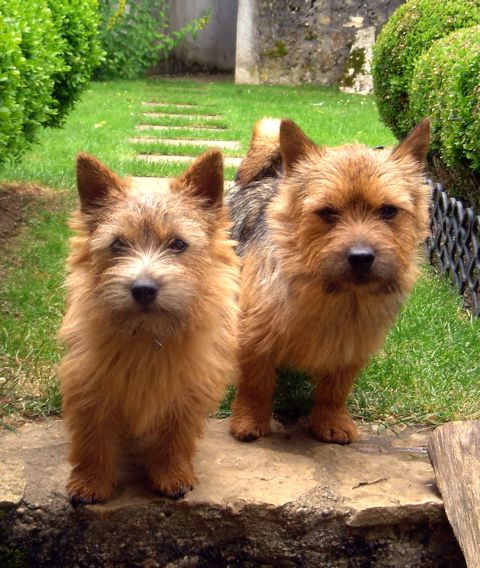
Norwich Terrier gallery
Frequently asked questions about the Norwich Terrier
- How long does a Norwich Terrier live? ▾
- The life expectancy of the Norwich Terrier is 12-15 años. A good diet, adequate exercise, annual veterinary check-ups and preventive care can help reach the upper end of that range.
- How much does a Norwich Terrier weigh? ▾
- An adult Norwich Terrier weighs between 5-6 kg, depending on its sex, genetics and condition. It is pequeño.
- Where does the Norwich Terrier breed come from? ▾
- The Norwich Terrier originates from Inglaterra (Norwich). Recognised by the FCI. Originating from England (Norwich). Prick-eared terrier (Norwich) — the counterpart of the Norfolk.
- How much exercise does a Norwich Terrier need? ▾
- The Norwich Terrier has alta energy. **Exercise:** 60-90 min/day + scent games.
- Is the Norwich Terrier good with children? ▾
- **Children:** with respectful older kids. **Other dogs:** variable. **Rodents:** high prey drive.
- Who is the Norwich Terrier NOT recommended for? ▾
- It isn't the right breed for: Homes with pet rodents. It's important to choose a breed that's compatible with your lifestyle.
- What health problems does the Norwich Terrier have? ▾
- Conditions common to the breed according to the FCI group. Life expectancy 12-15 years with proper care. Annual vet check-up + blood work from 5 years of age.
- What is the difference from the Norfolk Terrier? ▾
- They were the same breed until 1964. The Norwich has erect ears and the Norfolk drop ears; otherwise they share temperament, size and care.
- Is it good for a flat? ▾
- Yes. Its compact size makes it ideal for a flat, as long as it gets its daily hour of exercise and mental stimulation.
- Why does it sometimes breathe noisily? ▾
- The breed has some predisposition to upper airway syndrome. It is advisable to avoid excess weight and heat and to consult the vet if the noise is habitual.
- Does it bark a lot? ▾
- It is alert and warns readily. With training and enough stimulation barking can be kept in check.
- Does it live well with cats? ▾
- With socialisation from puppyhood it usually lives well with household cats, but it retains a hunting instinct towards rodents and small animals.
Learn more about dogs
Practical veterinary guides to support your Norwich Terrier.
Sources and references
Content compiled from official breed standards and leading veterinary sources.
Want to adopt a norwich terrier?
There are norwich terriers in rescue shelters looking for a family. Filter by breed in the catalogue.