

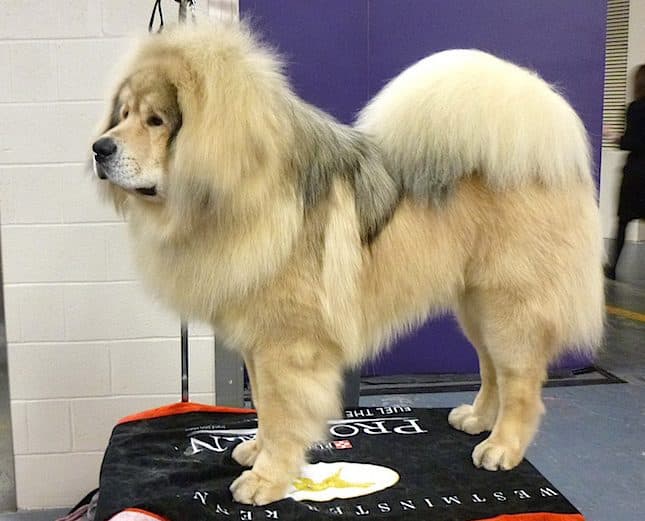
Mastín Tibetano
Traditional guardian of Tibetan monasteries. Dense coat adapted to altitude. Independent and territorial character. NOT for beginners. Night mode: owner of an active dog at night.
Foto: Wikipedia Commons · CC BY-SA
Ideal for
- ✓Families with space
- ✓Cool climates
Reconsider if
- ×Small flats
- ×Warm climates without air conditioning
Notify me when a Mastín Tibetano is up for adoption
We'll only email you when a verified rescue posts one available. No spam, unsubscribe in 1 click.
We'll only use your email for this alert. More info in our privacy policy.
Is the Mastín Tibetano a good match for you?
Indicative rating from 1 (low) to 5 (high).
💶 Estimated cost of ownership
110-190 €/month
Giant-breed food 50-85 €; health and third-party liability insurance 30-50 €; grooming/brushing and antiparasitics 20-30 €; pro-rated vaccinations and check-ups 20-30 €. Anaesthetics and radiographs are expensive because of its size.
History and origin
Recognised by the FCI. Native to Tibet. Traditional guardian of Tibetan monasteries.
Temperament and character
Intelligent, loyal, well-balanced when properly socialised and trained. Requires daily mental stimulation. Responds best to positive reinforcement. Physical punishment causes fear and reactivity.
Living together
Children: good with its own family. **Other dogs:** sociable with socialisation. **Cats:** with early socialisation.
Life stages of the Mastín Tibetano
Each stage has its own care priorities. Life expectancy: 10-14 años.
Puppy
0-24 months
Slow giant-breed growth: controlled diet, moderate exercise without overloading the joints, and firm early socialisation.
Young adult
2-4 years
Late maturation; reinforcing the management of its guardian and independent character; weight control.
Adult
4-7 years
Joint maintenance, weight control and hip, elbow and thyroid check-ups.
Senior
7+ years
Close joint monitoring, senior diet and periodic cardiac and endocrine check-ups.
Care
Exercise: moderate (45-60 min/day), avoid jumping during growth.
Brushing: 2-3 times/week.
Feeding: giant-breed food; weight control is critical.
Vet: annual cardiological check-up from 4 years.
Care in detail
🍽️ Nutrition
Giant-breed food with controlled calcium during growth. They tend to self-regulate their intake and eat less than expected for their size; monitor the weight all the same and split the food into 2 meals.
✂️ Grooming
Very dense double coat: brushing 2-3 times a week, intensifying during the heavy annual moult. It should not be clipped, as the coat protects it from cold and sun.
🎓 Training
Independent and territorial; it needs early socialisation and an experienced owner. It tends to be active and watchful at night. Positive reinforcement and patience, never coercive methods.
🏃 Exercise
Low to moderate: 45-60 minutes of calm walking a day and a fenced space. Avoid exercise during the hot hours.
Breed-specific health
Conditions common to the breed according to the FCI group. Life expectancy 10-14 years with appropriate care. Annual vet check-up + blood work from 5 years.
🩺 Health predispositions of this breed
Conditions this breed is more predisposed to. Knowing about them helps with prevention and early detection. A predisposition does not mean the animal will develop them.
Common diseases in dogs
Learn the symptoms, prevention and when to see the vet. Reviewed indicative information that does not replace a veterinary consultation.
Screening and prevention for the Mastín Tibetano
Recommended tests and screenings
- ✓Hip and elbow dysplasia radiography
- ✓Ophthalmological examination (entropion)
- ✓Thyroid function (T4/TSH)
- ✓Genetic test for hereditary neuropathy (CIDN)
- ✓Complete blood count and biochemistry
Prevention
Slow growth on giant-breed food and controlled weight to protect the hips; frequent brushing of the dense coat to avoid matting and heatstroke; thyroid monitoring in adults.
Check-up schedule
Annual check-up with joint and cardiological monitoring from 4 years; blood work with periodic thyroid profile.
Warning signs
- !Lameness or difficulty getting up
- !Apathy, weight gain or symmetrical hair loss (hypothyroidism)
- !Squinting eyes or watery eyes (entropion)
- !Weakness or lack of coordination in puppies (neuropathy)
- !Heavy panting or lethargy in the heat
Mastín Tibetano gallery

Frequently asked questions about the Mastín Tibetano
- How long does a Mastín Tibetano live? ▾
- The life expectancy of the Mastín Tibetano is 10-14 años. A good diet, adequate exercise, annual veterinary check-ups and preventive care can help reach the upper end of that range.
- How much does a Mastín Tibetano weigh? ▾
- An adult Mastín Tibetano weighs between 50-80 kg, depending on its sex, genetics and condition. It is gigante.
- Where does the Mastín Tibetano breed come from? ▾
- The Mastín Tibetano originates from Tíbet. Recognised by the FCI. Native to Tibet. Traditional guardian of Tibetan monasteries.
- How much exercise does a Mastín Tibetano need? ▾
- The Mastín Tibetano has baja energy. **Exercise:** moderate (45-60 min/day), avoid jumping during growth.
- Is the Mastín Tibetano good with children? ▾
- **Children:** good with its own family. **Other dogs:** sociable with socialisation. **Cats:** with early socialisation.
- Who is the Mastín Tibetano NOT recommended for? ▾
- It isn't the right breed for: Small flats. Warm climates without air conditioning. It's important to choose a breed that's compatible with your lifestyle.
- What health problems does the Mastín Tibetano have? ▾
- Conditions common to the breed according to the FCI group. Life expectancy 10-14 years with appropriate care. Annual vet check-up + blood work from 5 years.
- Is it a dog for beginners? ▾
- No. It is independent, territorial and very strong; it requires experience, early socialisation and clear boundaries from puppyhood.
- Why is it active at night? ▾
- It retains its instinct as a monastery guardian, where it kept watch during the night. It is common for it to bark and patrol at nightfall.
- Does it cope with heat? ▾
- Poorly. Its coat is designed for the high Tibetan mountains; it needs shade, water and cool climates, avoiding exercise in summer.
- Does it shed a lot? ▾
- It has a very heavy annual moult in which it loses a large amount of undercoat; for the rest of the year shedding is moderate with regular brushing.
- Does it get along with other dogs? ▾
- It can be dominant, especially with dogs of the same sex. With early socialisation it coexists, but it usually prefers to be the only dog.
Learn more about dogs
Practical veterinary guides to support your Mastín Tibetano.
Sources and references
Content compiled from official breed standards and leading veterinary sources.
Want to adopt a mastín tibetano?
There are mastín tibetanos in rescue shelters looking for a family. Filter by breed in the catalogue.