

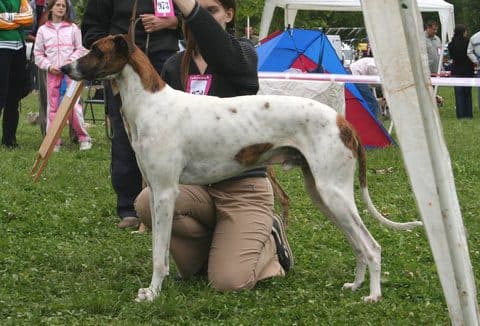
Galgo Húngaro (Magyar Agár)
The Hungarian greyhound. Extraordinary stamina — historically it accompanied riders for whole days at a time. Robust and healthy.
Foto: Wikipedia Commons · CC BY-SA
Ideal for
- ✓Calm families
- ✓Flats with daily walks + sprints
Reconsider if
- ×Households with rabbits/cats
- ×Extreme climates without a coat
Notify me when a Galgo Húngaro (Magyar Agár) is up for adoption
We'll only email you when a verified rescue posts one available. No spam, unsubscribe in 1 click.
We'll only use your email for this alert. More info in our privacy policy.
Is the Galgo Húngaro (Magyar Agár) a good match for you?
Indicative rating from 1 (low) to 5 (high).
💶 Estimated cost of ownership
50-85 €/month
Food for a large dog (28-48 €), vet and prevention (15-30 €), insurance and large-breed antiparasitics (8-18 €), sighthound accessories (a wide collar, a coat) (5-12 €). A rustic, healthy breed, with few extraordinary expenses apart from emergencies.
History and origin
Recognised by the FCI. Originating in Hungary. The Hungarian greyhound.
Temperament and character
Intelligent, loyal, well-balanced when well socialised and trained. Needs daily mental stimulation. Responds best to positive reinforcement. Physical punishment breeds fear and reactivity.
Living together
Children: good with respectful ones. **Other dogs:** sociable with its own type. **Cats/rabbits:** high prey drive, NO.
Life stages of the Galgo Húngaro (Magyar Agár)
Each stage has its own care priorities. Life expectancy: 12-14 años.
Puppy
0-15 months
Socialisation; controlled exercise during the growth of this hardy sighthound.
Young adult
1-4 years
Free galloping and endurance trotting; channelling its stamina; protection from the cold owing to its short coat.
Adult
4-9 years
Digestive monitoring (gastric dilatation) with split meals; general reviews.
Senior
9+ years
Cardiac and joint check-ups; senior diet and a padded bed.
Care
Exercise: long walks + off-lead sprints.
Brushing: a quick weekly brush.
**A coat in winter.
Veterinarian: documented anaesthetic sensitivity — always inform them.
Care in detail
🍽️ Nutrition
A quality food for a large, active dog, in 2 meals, avoiding exertion around mealtimes. Adjust the ration to its lean musculature: it is an endurance athlete that should never look obese.
✂️ Grooming
A short, dense, hard-wearing coat of minimal upkeep: a weekly brush with a grooming mitt. Moderate shedding. The occasional bath. Check paw pads and ears after running in the field.
🎓 Training
Balanced, loyal and somewhat independent, with a hunting instinct: early socialisation and positive training with patience. More tractable than other sighthounds, but recall is difficult when it is in pursuit. Work in secure areas.
🏃 Exercise
High: it is a great-endurance greyhound that needs to gallop and, above all, to trot long distances. 1-1.5 hours a day of walking and running in a safe area. Calm at home once it has burned off its energy.
Breed-specific health
Conditions common to the breed according to its FCI group. Life expectancy 12-14 years with proper care. Annual vet review + blood work from the age of 5.
🩺 Health predispositions of this breed
Conditions this breed is more predisposed to. Knowing about them helps with prevention and early detection. A predisposition does not mean the animal will develop them.
Common diseases in dogs
Learn the symptoms, prevention and when to see the vet. Reviewed indicative information that does not replace a veterinary consultation.
Screening and prevention for the Galgo Húngaro (Magyar Agár)
Recommended tests and screenings
- ✓Cardiac auscultation and echocardiography (sighthound heart conditions)
- ✓Monitoring for gastric torsion (deep chest)
- ✓Hip radiography in breeding stock
- ✓Ophthalmological evaluation
- ✓Sighthound-specific anaesthetic protocol
Prevention
It is a rustic and fairly healthy breed, but like every sighthound it requires anaesthetic caution: warn the vet. Because of its deep chest, avoid exercise around mealtimes (risk of torsion). It needs to run to stay balanced and socialisation to manage its hunting instinct.
Check-up schedule
Annual check-up with cardiac auscultation; hip radiography in breeding stock. Preventive blood work from the age of 5-6 with sighthound reference values. Cardiac monitoring in seniors.
Warning signs
- !Swollen abdomen and unproductive retching (gastric torsion — EMERGENCY)
- !Fatigue, coughing or fainting on exertion (heart disease)
- !Lameness or joint stiffness
- !Slow or abnormal recovery from anaesthesia
Frequently asked questions about the Galgo Húngaro (Magyar Agár)
- How long does a Galgo Húngaro (Magyar Agár) live? ▾
- The life expectancy of the Galgo Húngaro (Magyar Agár) is 12-14 años. A good diet, adequate exercise, annual veterinary check-ups and preventive care can help reach the upper end of that range.
- How much does a Galgo Húngaro (Magyar Agár) weigh? ▾
- An adult Galgo Húngaro (Magyar Agár) weighs between 22-31 kg, depending on its sex, genetics and condition. It is grande.
- Where does the Galgo Húngaro (Magyar Agár) breed come from? ▾
- The Galgo Húngaro (Magyar Agár) originates from Hungría. Recognised by the FCI. Originating in Hungary. The Hungarian greyhound.
- How much exercise does a Galgo Húngaro (Magyar Agár) need? ▾
- The Galgo Húngaro (Magyar Agár) has alta energy. **Exercise:** long walks + off-lead sprints.
- Is the Galgo Húngaro (Magyar Agár) good with children? ▾
- **Children:** good with respectful ones. **Other dogs:** sociable with its own type. **Cats/rabbits:** high prey drive, NO.
- Who is the Galgo Húngaro (Magyar Agár) NOT recommended for? ▾
- It isn't the right breed for: Households with rabbits/cats. Extreme climates without a coat. It's important to choose a breed that's compatible with your lifestyle.
- What health problems does the Galgo Húngaro (Magyar Agár) have? ▾
- Conditions common to the breed according to its FCI group. Life expectancy 12-14 years with proper care. Annual vet review + blood work from the age of 5.
- How does it differ from other greyhounds? ▾
- The Magyar Agár stands out for its stamina: historically it accompanied riders over long days. It is somewhat more robust and balanced than other sighthounds, combining speed with great endurance.
- Can it live with cats? ▾
- It is difficult: its prey drive is strong and it tends to chase cats, rabbits and small animals. Coexistence requires socialisation from puppyhood and is never guaranteed.
- How much exercise does it need? ▾
- A fair amount: as well as walks, it needs to gallop and trot over long distances in a safe area. Once it has burned off its energy it is a calm, sleepy dog at home.
- Does it need special care with anaesthesia? ▾
- Yes, like all sighthounds: it metabolises certain anaesthetics differently and has little body fat. It is wise to warn the vet so that sighthound-adapted protocols are used.
- Is it a good breed for families? ▾
- Yes, for active families: it is loyal, balanced and good with its own people. It needs to be able to run daily and to be socialised, but at home it is clean, calm and low-maintenance in terms of coat.
Learn more about dogs
Practical veterinary guides to support your Galgo Húngaro (Magyar Agár).
Sources and references
Content compiled from official breed standards and leading veterinary sources.
Want to adopt a galgo húngaro (magyar agár)?
There are galgo húngaro (magyar agár)s in rescue shelters looking for a family. Filter by breed in the catalogue.