

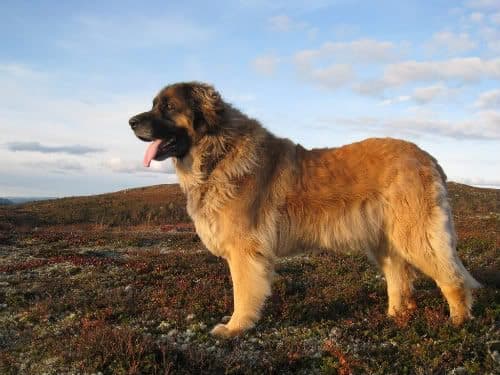
Leonberger
A serene giant with a lion-like mane. Sweet, patient temperament. Excellent with children. Like other giant breeds, it has a short lifespan. A good water dog and a calm guardian.
Foto: Wikipedia Commons · CC BY-SA
Ideal for
- ✓Families with space
- ✓Cool climates
- ✓Anyone seeking a gentle giant
Reconsider if
- ×Small flats
- ×Warm climates without air conditioning
- ×Anyone who cannot accept a short lifespan
Notify me when a Leonberger is up for adoption
We'll only email you when a verified rescue posts one available. No spam, unsubscribe in 1 click.
We'll only use your email for this alert. More info in our privacy policy.
Is the Leonberger a good match for you?
Indicative rating from 1 (low) to 5 (high).
💶 Estimated cost of ownership
100-170 €/month
Giant-breed food (55-95 €), vet, cardiology and orthopaedics prorated (20-40 €), health insurance and large-dog antiparasitics (10-25 €), grooming/intensive brushing during moults (10-25 €). The emergencies typical of giants (torsion, joints, tumours) make health insurance highly advisable.
History and origin
Recognised by the FCI. Originating in Germany (Leonberg). A serene giant with a lion-like mane.
Temperament and character
Calm, patient, loyal. Excellent with well-behaved children. Needs extensive socialisation because of its imposing size.
Living together
Children: good with its own. **Other dogs:** sociable with socialisation. **Other animals:** with early socialisation.
Life stages of the Leonberger
Each stage has its own care priorities. Life expectancy: 8-10 años.
Puppy
0-18 months
Controlled growth (giant-breed diet) and low-impact exercise to protect hips and elbows; extensive socialisation.
Young
1.5-3 years
Moderate, consistent exercise; split meals and post-meal rest to prevent gastric torsion.
Adult
3-6 years
Weight control, cardiac and joint monitoring; polyneuropathy/myelopathy screening if signs appear.
Senior
6+ years
Oncological monitoring (osteosarcoma), joint support and frequent cardiac check-ups.
Care
Exercise: moderate (45-60 min/day), avoiding jumping during growth.
Brushing: 2-3 times a week.
Feeding: giant-breed food; weight control is critical.
Vet: annual cardiac check-up from the age of 4.
Care in detail
🍽️ Nutrition
Giant-breed food with controlled calcium/phosphorus during growth, in 2-3 meals, avoiding exertion around mealtimes. Strict weight control so as not to overload the heart and joints of a giant.
✂️ Grooming
Long, dense double coat with a lion-like mane: thorough brushing 3-4 times a week and daily during the two major moults, when it sheds a great deal of hair. Pay attention to knots behind the ears, on the mane and on the trousers. Occasional bath with complete drying.
🎓 Training
Surprisingly manageable for its size: sweet, well-balanced and eager to please, it learns well with positive reinforcement. Early socialisation and training are essential given its strength. An excellent water dog and family dog.
🏃 Exercise
Moderate but important given its size: 1-1.5 hours a day of calm walking and, where possible, swimming, which it loves and which protects its joints. Avoid jumping and running during growth. Never exercise it in the heat.
Breed-specific health
Hip/elbow dysplasia. Bloat (gastric torsion). Heart conditions. Life expectancy 8-10 years (short due to size).
🩺 Health predispositions of this breed
Conditions this breed is more predisposed to. Knowing about them helps with prevention and early detection. A predisposition does not mean the animal will develop them.
Common diseases in dogs
Learn the symptoms, prevention and when to see the vet. Reviewed indicative information that does not replace a veterinary consultation.
Screening and prevention for the Leonberger
Recommended tests and screenings
- ✓Leonberger polyneuropathy DNA genetic test (LPN1, LPN2, LEMP)
- ✓Official hip and elbow dysplasia radiography
- ✓Echocardiography and cardiac auscultation
- ✓Monitoring for gastric torsion (deep chest)
- ✓Oncological monitoring (osteosarcoma) and ophthalmological check
Prevention
Buy from breeders whose parents are tested for polyneuropathy (LPN1/LPN2/LEMP), hips, elbows and heart. Because of its large size and deep chest, avoid exercise around mealtimes (risk of gastric torsion) and protect the growing joints. It is very sensitive to heat: take care of it in summer.
Check-up schedule
Annual check-up including heart and joints; hip/elbow radiography at one year. Preventive blood work from the age of 4-5 (short lifespan) and every six months from the age of 6. Watch for lameness (osteosarcoma).
Warning signs
- !Swollen abdomen and unsuccessful attempts to vomit (gastric torsion — EMERGENCY)
- !Hindquarter weakness, abnormal gait or exercise intolerance (polyneuropathy)
- !Persistent lameness or swelling in a leg (risk of osteosarcoma)
- !Fatigue, coughing or fainting on exertion (heart disease)
Leonberger gallery

Frequently asked questions about the Leonberger
- How long does a Leonberger live? ▾
- The life expectancy of the Leonberger is 8-10 años. A good diet, adequate exercise, annual veterinary check-ups and preventive care can help reach the upper end of that range.
- How much does a Leonberger weigh? ▾
- An adult Leonberger weighs between 40-75 kg, depending on its sex, genetics and condition. It is gigante.
- Where does the Leonberger breed come from? ▾
- The Leonberger originates from Alemania (Leonberg). Recognised by the FCI. Originating in Germany (Leonberg). A serene giant with a lion-like mane.
- How much exercise does a Leonberger need? ▾
- The Leonberger has media energy. **Exercise:** moderate (45-60 min/day), avoiding jumping during growth.
- Is the Leonberger good with children? ▾
- **Children:** good with its own. **Other dogs:** sociable with socialisation. **Other animals:** with early socialisation.
- Who is the Leonberger NOT recommended for? ▾
- It isn't the right breed for: Small flats. Warm climates without air conditioning. Anyone who cannot accept a short lifespan. It's important to choose a breed that's compatible with your lifestyle.
- What health problems does the Leonberger have? ▾
- Hip/elbow dysplasia. Bloat (gastric torsion). Heart conditions. Life expectancy 8-10 years (short due to size).
- Is it good with children? ▾
- Excellent: it is one of the sweetest and most patient giants, often called a "nanny". Its size calls for supervision with small children to avoid accidental knocks, but its temperament is ideal.
- Why does it live so short a life? ▾
- Like almost all giants, its average life expectancy is only 8-10 years, due to a higher incidence of heart problems, gastric torsion and bone cancer. A breeder with test results and a controlled weight help to extend it.
- Does it shed a lot? ▾
- A great deal, especially during the two annual moults. Its long double coat requires frequent brushing and regular vacuuming; it is not a breed for a hair-free home.
- Does it cope with heat? ▾
- Poorly: its dense coat and large size make it very sensitive to heat. In summer, exercise it in the cool hours, provide shade and water and, if it likes them, baths to cool off.
- Can it live in a flat? ▾
- It is not ideal because of its size and shedding. It needs space and, preferably, access to outdoors. It is calm indoors, but its bulk greatly conditions life in a flat.
Learn more about dogs
Practical veterinary guides to support your Leonberger.
Sources and references
Content compiled from official breed standards and leading veterinary sources.
- WikipediaLeonberger ↗
- AKCLeonberger ↗
- FCIFCI Standard No. 145 ↗
Want to adopt a leonberger?
There are leonbergers in rescue shelters looking for a family. Filter by breed in the catalogue.