

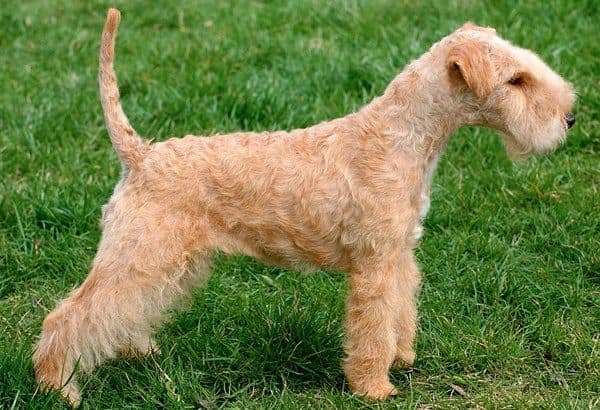
Lakeland Terrier
An English terrier from the Lake District. A traditional fox hunter. Its harsh coat requires hand-stripping. Bold, alert, sociable character.
Foto: Wikipedia Commons · CC BY-SA
Ideal for
- ✓Active families
- ✓Those wanting a charismatic dog in a small package
Reconsider if
- ×Households with pet rodents
Notify me when a Lakeland Terrier is up for adoption
We'll only email you when a verified rescue posts one available. No spam, unsubscribe in 1 click.
We'll only use your email for this alert. More info in our privacy policy.
Is the Lakeland Terrier a good match for you?
Indicative rating from 1 (low) to 5 (high).
💶 Estimated cost of ownership
50-80 €/month
Good-quality food (18-30 €), vet and preventive care (15-25 €), grooming/hand-stripping every 8-12 weeks (15-30 €), insurance and accessories (5-15 €). Professional hand-stripping is the distinctive expense of harsh-coated terriers.
History and origin
Recognised by the FCI. Originating in England (the Lake District). An English terrier from the Lake District.
Temperament and character
Intelligent, loyal and balanced when well socialised and trained. Needs daily mental stimulation. Responds best to positive reinforcement. Physical punishment breeds fear and reactivity.
Living together
Children: with older, respectful ones. **Other dogs:** variable. **Rodents:** high prey drive.
Life stages of the Lakeland Terrier
Each stage has its own care priorities. Life expectancy: 12-15 años.
Puppy
0-12 months
Socialisation, managing the strong terrier temperament and getting used to coat stripping.
Young adult
1-3 years
Plenty of exercise and play; channel the hunting instinct and high energy.
Adult
3-9 years
Eye examinations (lens luxation), weight control and coat care.
Senior
9+ years
Regular ophthalmological check-ups, dental care and a senior diet.
Care
Exercise: 60-90 min/day + scent games.
Brushing: 2-3 times/week; hand-stripping every 8-10 weeks for the harsh coat.
Feeding: matched to its high energy.
Vet: annual check-up.
Care in detail
🍽️ Nutrition
Good-quality food matched to its activity level, in 2 meals. Watch the portion size and treats to keep a lean weight that doesn't strain the kneecaps or joints.
✂️ Grooming
A harsh, wiry coat that sheds minimally: it requires hand-stripping (manual plucking) every 8-12 weeks to keep its texture and colour; clipping softens it. Weekly brushing and cleaning of the beard after meals.
🎓 Training
Bold, cheerful and independent, with a marked prey drive: early, consistent positive training. Work on recall and sociability with other dogs. It is somewhat stubborn: short, varied and motivating sessions.
🏃 Exercise
High: 1-1.5 hours daily of walking, running and mental play. It likes to dig and explore. Be careful letting it off the lead because of its hunting drive; work in secure areas.
Breed-specific health
Conditions common to the breed according to the FCI group. Life expectancy 12-15 years with proper care. Annual vet check-up + blood work from 5 years of age.
🩺 Health predispositions of this breed
Conditions this breed is more predisposed to. Knowing about them helps with prevention and early detection. A predisposition does not mean the animal will develop them.
Common diseases in dogs
Learn the symptoms, prevention and when to see the vet. Reviewed indicative information that does not replace a veterinary consultation.
Screening and prevention for the Lakeland Terrier
Recommended tests and screenings
- ✓PLL genetic DNA test (primary lens luxation)
- ✓Patellar luxation examination (kneecap)
- ✓Hip radiograph where Legg-Calvé-Perthes is suspected
- ✓Ophthalmological evaluation (cataracts, distichiasis)
- ✓Von Willebrand disease screening in affected lines
Prevention
Buy from breeders with PLL testing of the parents: lens luxation can cause glaucoma and blindness. Check the kneecaps and eyes regularly. Its energy and prey drive require daily exercise and socialisation for a balanced life together.
Check-up schedule
Annual check-up with eye and kneecap examination. More frequent ophthalmological checks if it is a PLL carrier. Preventive blood work from 7 years of age.
Warning signs
- !Red, painful eye or a displaced pupil (lens luxation — an ocular EMERGENCY)
- !Kneecap slipping or intermittent lameness
- !Progressive lameness in one hind leg in puppies (Legg-Calvé-Perthes)
- !Prolonged bleeding after a wound or surgery (von Willebrand)
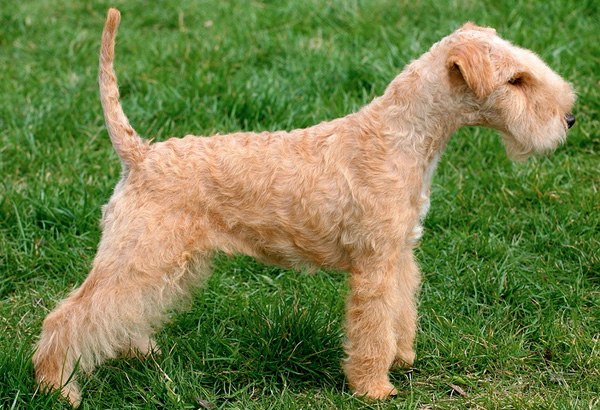
Lakeland Terrier gallery
Frequently asked questions about the Lakeland Terrier
- How long does a Lakeland Terrier live? ▾
- The life expectancy of the Lakeland Terrier is 12-15 años. A good diet, adequate exercise, annual veterinary check-ups and preventive care can help reach the upper end of that range.
- How much does a Lakeland Terrier weigh? ▾
- An adult Lakeland Terrier weighs between 7-8 kg, depending on its sex, genetics and condition. It is pequeño.
- Where does the Lakeland Terrier breed come from? ▾
- The Lakeland Terrier originates from Inglaterra (Lake District). Recognised by the FCI. Originating in England (the Lake District). An English terrier from the Lake District.
- How much exercise does a Lakeland Terrier need? ▾
- The Lakeland Terrier has alta energy. **Exercise:** 60-90 min/day + scent games.
- Is the Lakeland Terrier good with children? ▾
- **Children:** with older, respectful ones. **Other dogs:** variable. **Rodents:** high prey drive.
- Who is the Lakeland Terrier NOT recommended for? ▾
- It isn't the right breed for: Households with pet rodents. It's important to choose a breed that's compatible with your lifestyle.
- What health problems does the Lakeland Terrier have? ▾
- Conditions common to the breed according to the FCI group. Life expectancy 12-15 years with proper care. Annual vet check-up + blood work from 5 years of age.
- Does it shed? ▾
- Very little if it is hand-stripped regularly. Its harsh coat retains the dead hair, which must be plucked out by hand; in return, it leaves hardly any hair around the house.
- What is hand-stripping and is it compulsory? ▾
- It means plucking the dead hair from the harsh coat by hand every 8-12 weeks. It maintains the wiry texture and colour. It isn't strictly compulsory, but clipping softens and dulls the coat over time.
- How much exercise does it need? ▾
- Quite a lot: it is an active hunting terrier that needs 1-1.5 hours daily of walking, running and play. Without an outlet it becomes a barker and a digger.
- Does it live with cats or rodents? ▾
- It is difficult because of its strong prey drive. With cats it may be tolerated if raised alongside them; with rodents and rabbits it is inadvisable.
- Is it good with children? ▾
- With older, respectful children, yes, thanks to its cheerful, brave character. Its energy and firmness call for supervision and consistent training.
Learn more about dogs
Practical veterinary guides to support your Lakeland Terrier.
Sources and references
Content compiled from official breed standards and leading veterinary sources.
Want to adopt a lakeland terrier?
There are lakeland terriers in rescue shelters looking for a family. Filter by breed in the catalogue.