

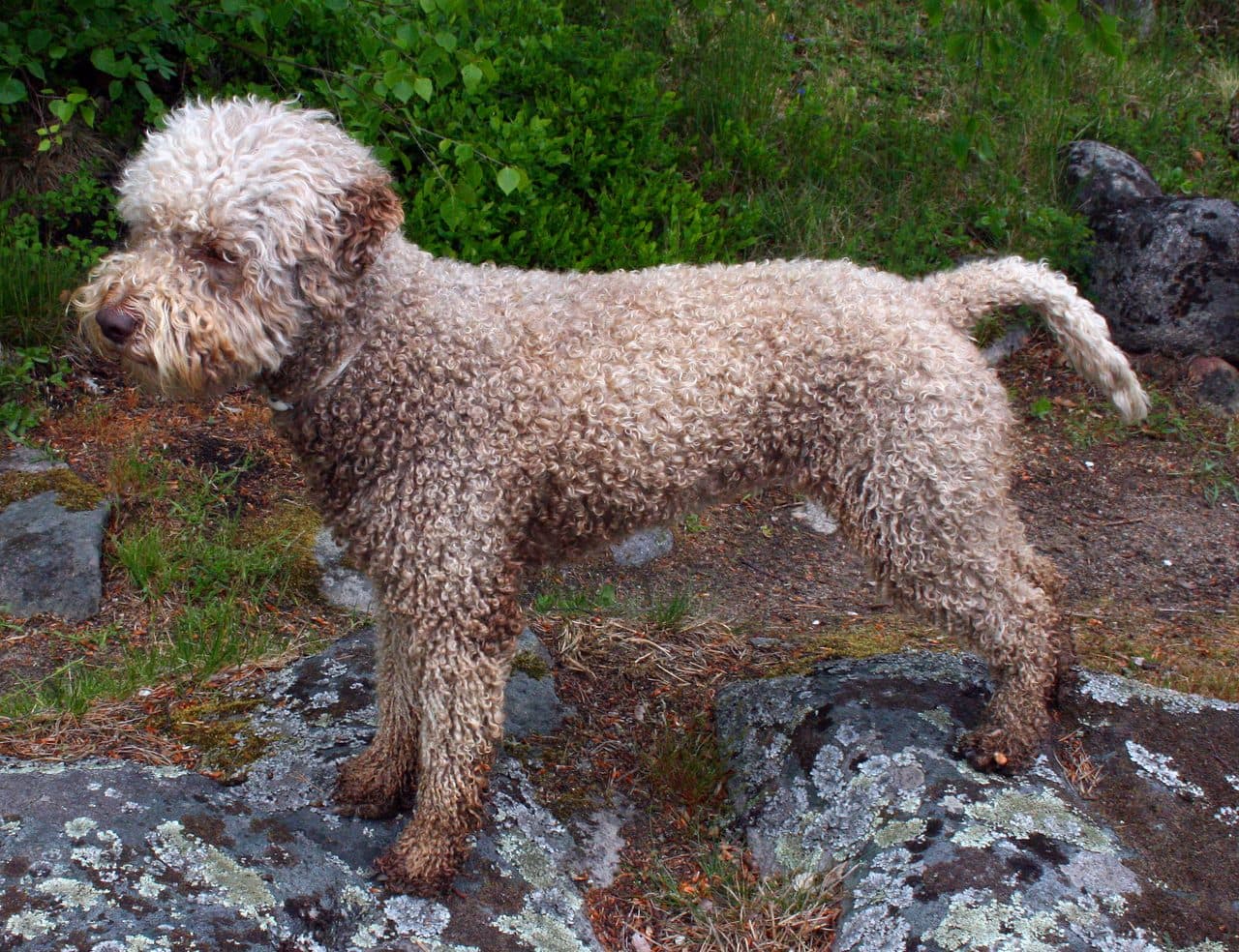
Lagotto Romagnolo
The only officially recognised truffle-hunting dog. Dense curly coat. Cheerful, hard-working, intelligent character. Hypoallergenic. Excellent with children. Long-lived. Growing more popular every year thanks to its extraordinary sense of smell.
Foto: Wikipedia Commons · CC BY-SA
Ideal for
- ✓Active families with access to water
- ✓Those looking for an intelligent dog
Reconsider if
- ×Those unwilling to devote time to the curly coat
Notify me when a Lagotto Romagnolo is up for adoption
We'll only email you when a verified rescue posts one available. No spam, unsubscribe in 1 click.
We'll only use your email for this alert. More info in our privacy policy.
Is the Lagotto Romagnolo a good match for you?
Indicative rating from 1 (low) to 5 (high).
💶 Estimated cost of ownership
55-90 €/month
Good-quality food (25-40 €), vet and preventive care (15-30 €), grooming/clipping every 6-8 weeks (15-30 €), insurance and accessories (5-15 €). The periodic clipping of the curly coat is the characteristic expense.
History and origin
Recognised by the FCI. Originating in Italy (Romagna). The only officially recognised truffle-hunting dog.
Temperament and character
Intelligent, cheerful, hard-working. Forms a deep bond with the family. Hypoallergenic (curly hair rather than a shedding coat). Learns quickly.
Living together
Children: depends on the individual. **Other dogs:** depends on socialisation. **Cats:** with socialisation.
Life stages of the Lagotto Romagnolo
Each stage has its own care priorities. Life expectancy: 14-17 años.
Puppy
0-12 months
Socialisation and scent stimulation (truffle dog); watch for the characteristic benign juvenile epilepsy.
Young
1-3 years
Exercise and search work; curly-coat maintenance and ear cleaning.
Adult
3-9 years
Weight control, joint health and ophthalmological examination (retinal atrophy).
Senior
9+ years
Neurological and eye check-ups; joint support and maintenance of cognitive activity.
Care
Exercise: 90 min/day + mental stimulation.
Coat: do NOT brush; clip the whole coat 1-2 times/year or a groom every 8 weeks.
Feeding: good-quality standard diet.
Vet: annual check-up.
Care in detail
🍽️ Nutrition
Good-quality food matched to its medium-high activity level, in 2 meals. Watch the portion size: excess weight goes unnoticed under the curly coat. Deduct training treats from the daily ration.
✂️ Grooming
A curly, woolly coat that sheds very little (suitable for many allergy sufferers): it isn't brushed like straight hair but clipped every 1-2 months to keep the curl healthy and prevent matting. Dry the ears and skin well after it gets wet; this is a water dog.
🎓 Training
One of the most intelligent and hard-working breeds: it learns extremely fast with positive reinforcement and enjoys scent work (truffle searching, nosework). It needs a mental "job"; when bored it digs and barks. Excellent for canine sports.
🏃 Exercise
High: 1-1.5 hours daily combining physical exercise and, above all, scent and mental work. It loves water. Puppy: moderate exercise with no jumping. Senior: keep up the scent searching even as the pace slows.
Breed-specific health
Hip dysplasia. Retinal atrophy. Hypothyroidism. Life expectancy 14-17 years.
🩺 Health predispositions of this breed
Conditions this breed is more predisposed to. Knowing about them helps with prevention and early detection. A predisposition does not mean the animal will develop them.
Common diseases in dogs
Learn the symptoms, prevention and when to see the vet. Reviewed indicative information that does not replace a veterinary consultation.
Screening and prevention for the Lagotto Romagnolo
Recommended tests and screenings
- ✓BFJE genetic DNA test (benign familial juvenile epilepsy)
- ✓LSD genetic DNA test (lysosomal storage disease)
- ✓Official hip dysplasia radiograph
- ✓Ophthalmological evaluation (progressive retinal atrophy)
- ✓Thyroid screening (hypothyroidism)
Prevention
Buy from breeders whose parent dogs have been tested for BFJE, LSD, hips and eyes: these are inherited disorders with a DNA test available. Its curly coat traps moisture and dirt: check the ears and skin after working in the field. Make the most of its extraordinary sense of smell with scent-search games.
Check-up schedule
Annual check-up with eye and joint examination; hip radiograph at one year. Blood work with thyroid screening from 5-6 years of age. Watch for seizures in puppies (BFJE, which usually resolves).
Warning signs
- !Seizures or absence episodes, especially in puppies (juvenile epilepsy)
- !Tremors, incoordination or developmental delay (lysosomal disease)
- !Weight gain, lethargy or hair loss (hypothyroidism)
- !Stumbling or bumping into things in low light (retinal atrophy)
Lagotto Romagnolo gallery

Frequently asked questions about the Lagotto Romagnolo
- How long does a Lagotto Romagnolo live? ▾
- The life expectancy of the Lagotto Romagnolo is 14-17 años. A good diet, adequate exercise, annual veterinary check-ups and preventive care can help reach the upper end of that range.
- How much does a Lagotto Romagnolo weigh? ▾
- An adult Lagotto Romagnolo weighs between 11-16 kg, depending on its sex, genetics and condition. It is mediano.
- Where does the Lagotto Romagnolo breed come from? ▾
- The Lagotto Romagnolo originates from Italia (Romaña). Recognised by the FCI. Originating in Italy (Romagna). The only officially recognised truffle-hunting dog.
- How much exercise does a Lagotto Romagnolo need? ▾
- The Lagotto Romagnolo has alta energy. **Exercise:** 90 min/day + mental stimulation.
- Is the Lagotto Romagnolo good with children? ▾
- **Children:** depends on the individual. **Other dogs:** depends on socialisation. **Cats:** with socialisation.
- Who is the Lagotto Romagnolo NOT recommended for? ▾
- It isn't the right breed for: Those unwilling to devote time to the curly coat. It's important to choose a breed that's compatible with your lifestyle.
- What health problems does the Lagotto Romagnolo have? ▾
- Hip dysplasia. Retinal atrophy. Hypothyroidism. Life expectancy 14-17 years.
- Is it true that it hunts truffles? ▾
- Yes: it is the only breed specifically bred and recognised for truffle searching. Its sense of smell is extraordinary and today it is also used in nosework and detection.
- Is it hypoallergenic? ▾
- Its curly coat sheds barely at all and many allergy sufferers tolerate it well, but no dog is completely hypoallergenic. Test your tolerance by spending time with one before deciding.
- How do you care for its curly coat? ▾
- It isn't brushed like straight hair: it is clipped every 1-2 months and any mats are teased apart with the fingers. The ears and skin must be dried well when it gets wet, because it loves water.
- Does it need a lot of mental exercise? ▾
- A great deal. It is a very intelligent working dog: without scent or mental tasks it gets bored and develops behaviours such as digging or barking. Search games are ideal.
- Is it good for families? ▾
- Yes: balanced, affectionate, long-lived and minimally shedding, it fits well into active families that give it exercise and mental stimulation. It is an increasingly popular breed for this reason.
Learn more about dogs
Practical veterinary guides to support your Lagotto Romagnolo.
Sources and references
Content compiled from official breed standards and leading veterinary sources.
- WikipediaLagotto Romagnolo ↗
- AKCLagotto Romagnolo ↗
- FCIFCI Standard No. 298 ↗
Want to adopt a lagotto romagnolo?
There are lagotto romagnolos in rescue shelters looking for a family. Filter by breed in the catalogue.