

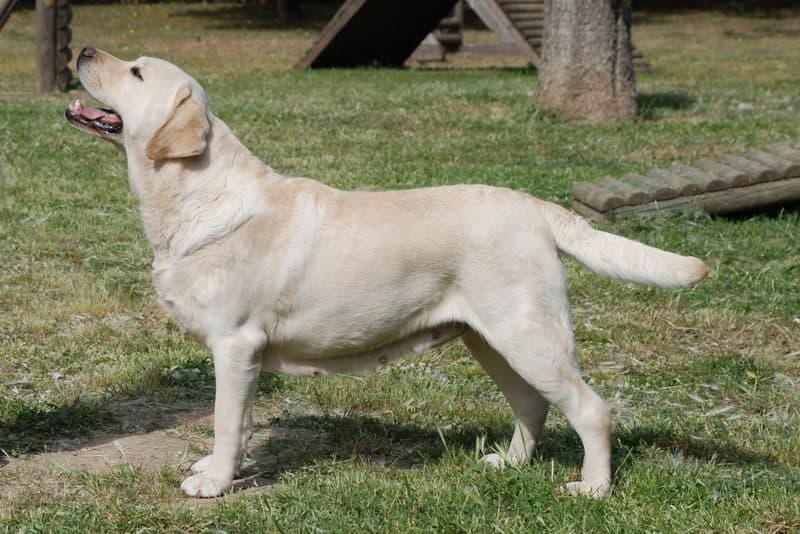
Labrador Retriever
The most popular breed in the UK and many other countries. Originally a Canadian fisherman's dog, today the family dog par excellence. Friendly, well-balanced and easy to train — but prone to obesity and joint problems.
Foto: Andrew Skolnick · Wikipedia Commons · CC BY-SA 2.0
Ideal for
- ✓Families with children over 5 years old
- ✓Homes with space
- ✓Active people (long walks)
- ✓A first family pet
Reconsider if
- ×Sedentary people or those short on time
- ×Very small flats with no outdoor access
- ×Anyone who will not control the diet
Notify me when a Labrador Retriever is up for adoption
We'll only email you when a verified rescue posts one available. No spam, unsubscribe in 1 click.
We'll only use your email for this alert. More info in our privacy policy.
Is the Labrador Retriever a good match for you?
Indicative rating from 1 (low) to 5 (high).
💶 Estimated cost of ownership
70-120 €/month
Mid-to-high range large-breed food (30-50 €), pro-rated vaccinations and annual veterinary check-up (15-25 €), internal and external antiparasitics (12-18 €), third-party liability/health insurance (10-25 €). No grooming costs, but budget extra for possible hip and ear treatments.
History and origin
The Labrador emerged on the island of Newfoundland (Canada) in the 18th century. Local fishermen bred a dog able to help in the water: hauling nets, retrieving escaping fish and swimming long distances in icy waters.
In the 19th century it was imported to England by the British aristocracy, who refined it for small-game shooting. The British Kennel Club officially recognised it in 1903.
Today it is the most popular breed in the world: in the UK it accounts for roughly 15-20% of registered dogs.
Temperament and character
Well-balanced, friendly temperament. Sociable with people (including strangers, so a poor guard dog). Tolerant of children when properly trained. Energetic and playful until 6-8 years of age. Intelligent (ranked no. 7 in obedience). A passion for water. Hyperactive as a puppy (1-3 years). A tendency to eat compulsively.
Living together
Children: excellent with children aged 5+. Other dogs: very sociable. Cats: lives well with them given early socialisation. Being alone: they dislike it. Separation anxiety if left alone for many hours.
Life stages of the Labrador Retriever
Each stage has its own care priorities. Life expectancy: 10-14 años.
Puppy
0–6 months
Early socialisation, vaccination and deworming, basic training with positive reinforcement. Avoid high-impact exercise to protect the growing joints.
Junior
6–18 months
Plenty of energy: daily exercise and mental stimulation to prevent destructive behaviour. Watch the diet — the tendency to gain weight starts early.
Adult
1.5–7 years
2–3 h/day of exercise and controlled weight. Annual veterinary check-up; consider hip/elbow testing if intended for breeding.
Senior
7 years and over
Six-monthly check-ups, senior diet, management of osteoarthritis and weight. Monitor vision (cataracts) and mobility.
Care
Exercise: at least 2-3 hours daily. Long walks + active play, ideally swimming. Feeding: large-breed food with 25-28% protein, in a CONTROLLED amount (prone to obesity). Grooming: brushing 2-3 times a week during heavy moulting. Space: prefers a house with a garden.
Care in detail
🍽️ Nutrition
Large-breed food with 25-28% protein and a portion measured with a scoop or scales: the Labrador eats compulsively and gains weight easily. Split the food into 2 meals and deduct treats from the daily ration.
✂️ Grooming
A double, waterproof coat that sheds all year round, with two heavy moults. Brush 2-3 times a week (daily during moulting) and bathe only when necessary so as not to damage the protective coat.
🎓 Training
One of the easiest breeds to train (top 7 in obedience). It learns quickly with positive reinforcement and food as a motivator; its puppy energy should be channelled early to prevent destructive behaviour.
🏃 Exercise
It needs 2-3 hours of exercise daily: long walks, retrieving games and, ideally, swimming, which it loves and which protects its joints. Without enough exertion it develops obesity and anxiety.
Breed-specific health
Hereditary problems: hip and elbow dysplasia (common), obesity (POMC gene identified), progressive retinal atrophy (PRA), hereditary cataracts, chronic otitis, gastric torsion (GDV). Life expectancy: 10-14 years with proper weight control.
🩺 Health predispositions of this breed
Conditions this breed is more predisposed to. Knowing about them helps with prevention and early detection. A predisposition does not mean the animal will develop them.
Common diseases in dogs
Learn the symptoms, prevention and when to see the vet. Reviewed indicative information that does not replace a veterinary consultation.
Screening and prevention for the Labrador Retriever
Recommended tests and screenings
- ✓Official hip dysplasia radiograph (HD scoring)
- ✓Official elbow dysplasia radiograph (ED scoring)
- ✓Genetic test for progressive retinal atrophy (prcd-PRA by DNA)
- ✓Annual ophthalmological examination (hereditary cataracts)
- ✓EIC genetic test (exercise-induced collapse)
- ✓CNM genetic test (centronuclear myopathy)
Prevention
Strict weight control from puppyhood (the breed carries the POMC gene that drives appetite), low-impact exercise until growth is complete to protect the joints, regular ear cleaning to prevent otitis, and careful monitoring of food quantity.
Check-up schedule
Annual veterinary check-up in adulthood, with hip/elbow radiographs if intended for breeding; preventive blood work from 5 years of age and six-monthly check-ups from 7-8 years.
Warning signs
- !Lameness or stiffness on rising (dysplasia/osteoarthritis)
- !Rapid weight gain or an insatiable appetite
- !Head shaking, foul smell or redness of the ears (otitis)
- !Stumbling or bumping into things at dusk (early sign of PRA)
- !A swollen, tense abdomen with unproductive retching (gastric torsion, a life-threatening emergency)
Labrador Retriever gallery

Frequently asked questions about the Labrador Retriever
- How long does a Labrador Retriever live? ▾
- The life expectancy of the Labrador Retriever is 10-14 años. A good diet, adequate exercise, annual veterinary check-ups and preventive care can help reach the upper end of that range.
- How much does a Labrador Retriever weigh? ▾
- An adult Labrador Retriever weighs between 25-36 kg, depending on its sex, genetics and condition. It is grande.
- Where does the Labrador Retriever breed come from? ▾
- The Labrador Retriever originates from Canadá (Terranova). The Labrador emerged on the island of Newfoundland (Canada) in the 18th century. Local fishermen bred a dog able to help in the water: hauling nets, retrieving escaping fish and swimming long distances in icy waters.
- How much exercise does a Labrador Retriever need? ▾
- The Labrador Retriever has alta energy. Exercise: at least 2-3 hours daily. Long walks + active play, ideally swimming. Feeding: large-breed food with 25-28% protein, in a CONTROLLED amount (prone to obesity). Grooming: brushing 2-3 times a week during heavy moulting. Space: prefers a house with a garden.
- Is the Labrador Retriever good with children? ▾
- Children: excellent with children aged 5+. Other dogs: very sociable. Cats: lives well with them given early socialisation. Being alone: they dislike it. Separation anxiety if left alone for many hours.
- Who is the Labrador Retriever NOT recommended for? ▾
- It isn't the right breed for: Sedentary people or those short on time. Very small flats with no outdoor access. Anyone who will not control the diet. It's important to choose a breed that's compatible with your lifestyle.
- What health problems does the Labrador Retriever have? ▾
- Hereditary problems: hip and elbow dysplasia (common), obesity (POMC gene identified), progressive retinal atrophy (PRA), hereditary cataracts, chronic otitis, gastric torsion (GDV). Life expectancy: 10-14 years with proper weight control.
- Can a Labrador live in a flat? ▾
- Yes, provided it gets 2-3 hours of real exercise outside the home each day. It is a large, very active dog: without enough exertion it becomes bored, gains weight and can turn destructive. It prefers a house with a garden, but the decisive factor is exercise, not square metres.
- Why do Labradors put on so much weight? ▾
- Many carry a mutation in the POMC gene that increases appetite and reduces the feeling of fullness. That is why they always seem hungry. The solution is to measure the ration, not to be swayed by their pleading look, and to deduct treats from the daily food.
- Do they shed a lot? ▾
- Yes. They have a double coat and moult all year round, with two intense peaks in spring and autumn. Brushing 2-3 times a week (daily during moulting) greatly reduces the hair around the house, but you should accept there will always be some.
- Is it a good guard dog? ▾
- No. It is sociable and friendly even with strangers, whom it usually greets with a wagging tail. It will alert you by its size and bark, but its temperament is neither protective nor wary: it is a family companion, not a guard dog.
- At what age does a Labrador calm down? ▾
- They usually keep a high, playful energy level until 6-8 years of age; the first 1-3 years are especially intense. Emotional maturity arrives around 2-3 years, but full calmness takes longer than in other breeds.
Related and similar breeds
Learn more about dogs
Practical veterinary guides to support your Labrador Retriever.
Sources and references
Content compiled from official breed standards and leading veterinary sources.
Want to adopt a labrador retriever?
There are labrador retrievers in rescue shelters looking for a family. Filter by breed in the catalogue.