

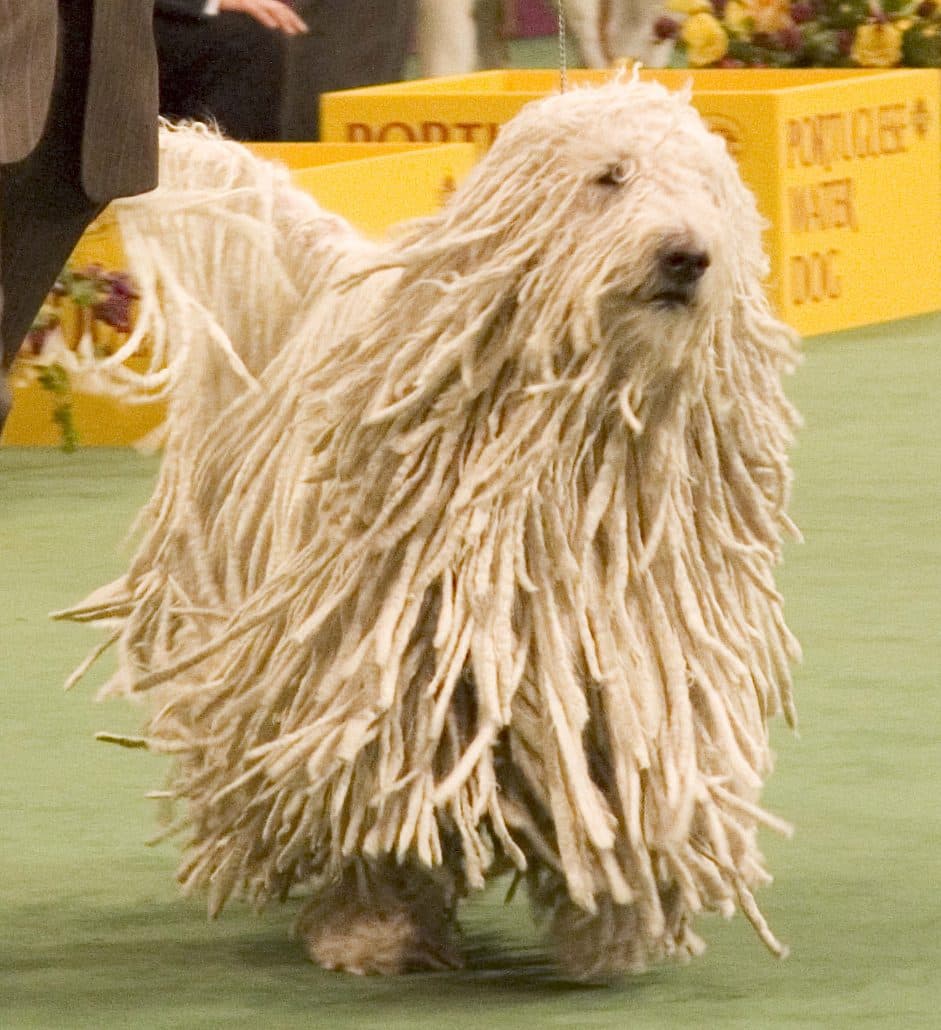
Komondor
A Hungarian livestock guardian with a unique white corded coat (it looks like a mop). The cords protect it from the cold and from a wolf's teeth. Independent and self-reliant, NOT for beginners.
Foto: Wikipedia Commons · CC BY-SA
Ideal for
- ✓Very active families
- ✓Homes with a garden
- ✓Canine sports (agility, obedience)
Reconsider if
- ×Sedentary families
- ×Homes with no daily exercise
- ×Homes where it is left alone for many hours (it suffers)
Notify me when a Komondor is up for adoption
We'll only email you when a verified rescue posts one available. No spam, unsubscribe in 1 click.
We'll only use your email for this alert. More info in our privacy policy.
Is the Komondor a good match for you?
Indicative rating from 1 (low) to 5 (high).
💶 Estimated cost of ownership
90-150 €/month
Giant-breed food (50-85 €), vet and prevention (20-35 €), insurance and large-size antiparasitics (10-20 €), specialist cording grooming plus a lot of equipment/maintenance time (10-25 €). Caring for the corded coat is the distinguishing cost and effort.
History and origin
Recognised by the FCI. Native to Hungary. A Hungarian livestock guardian with a unique white corded coat (it looks like a mop).
Temperament and character
Intelligent, hard-working, loyal to its family. It needs mental AND physical stimulation — boredom is the main cause of behavioural problems. Excellent with positive training.
Living together
Children: good with its own family. **Other dogs:** sociable with socialisation. **Other animals:** with early socialisation.
Life stages of the Komondor
Each stage has its own care priorities. Life expectancy: 10-12 años.
Puppy
0-18 months
Broad socialisation of this independent, protective livestock guardian; controlled growth and initial formation of the cords.
Young
1.5-3 years
Moderate exercise and firm handling; care of the cords and divided meals (risk of torsion).
Adult
3-6 years
Weight control, joint health (hips) and eyelid examination (entropion); coat hygiene.
Senior
6+ years
Joint support, general check-ups and maintaining comfort in a giant breed.
Care
Exercise: 90-120 min/day divided into sessions. Off-lead time in a safe area is essential.
Brushing: 2-3 times/week; daily during moult.
Feeding: quality food suited to its physical activity.
Vet: annual check-up + blood work from age 5.
Care in detail
🍽️ Nutrition
Giant-breed food with controlled minerals during growth, in 2-3 meals. Avoid exertion around mealtimes. A lean weight to protect the joints; the coat is very deceptive about the dog's true condition.
✂️ Grooming
A white coat that naturally forms cords (dreadlocks) and is not brushed: they must be separated by hand so they do not mat, and the skin kept dry and clean. Drying after a bath takes hours or days. It barely sheds, but maintenance is very labour-intensive.
🎓 Training
Independent, territorial and wary of strangers due to its guarding work: NOT suitable for beginners. It requires intensive, early socialisation and consistent positive training. It obeys out of respect, not blind submission; it thinks for itself.
🏃 Exercise
Moderate but consistent: 1-1.5 hours of daily walking in a safe environment. It is not a sporting dog but a patient guardian. It needs space (a fenced garden), not flat living. It copes poorly with heat because of its coat.
Breed-specific health
Hip/elbow dysplasia. Progressive retinal atrophy (genetic test recommended). Life expectancy 10-12 years with proper care.
🩺 Health predispositions of this breed
Conditions this breed is more predisposed to. Knowing about them helps with prevention and early detection. A predisposition does not mean the animal will develop them.
Common diseases in dogs
Learn the symptoms, prevention and when to see the vet. Reviewed indicative information that does not replace a veterinary consultation.
Screening and prevention for the Komondor
Recommended tests and screenings
- ✓Official hip and elbow dysplasia radiograph
- ✓Ophthalmological evaluation (retinal atrophy, entropion)
- ✓Monitoring for gastric torsion (deep chest)
- ✓Dermatological examination of the skin beneath the cords
- ✓Cardiac auscultation
Prevention
Its corded coat requires careful hygiene to prevent moisture and skin infections beneath the cords. Buy from breeders with hip- and elbow-tested parents. Because of its size and deep chest, avoid exercise around mealtimes (risk of torsion). It is an independent guardian: it needs expert socialisation.
Check-up schedule
Annual check-up with joint, eye and skin examination; hip/elbow radiograph at one year. Frequent inspection of the skin between the cords. Preventive blood work from age 5-6.
Warning signs
- !Bloated abdomen and unsuccessful attempts to vomit (gastric torsion — EMERGENCY)
- !Bad smell, moisture, redness or sores on the skin beneath the cords
- !Lameness or joint stiffness (dysplasia)
- !Persistent watering or eye irritation (entropion)
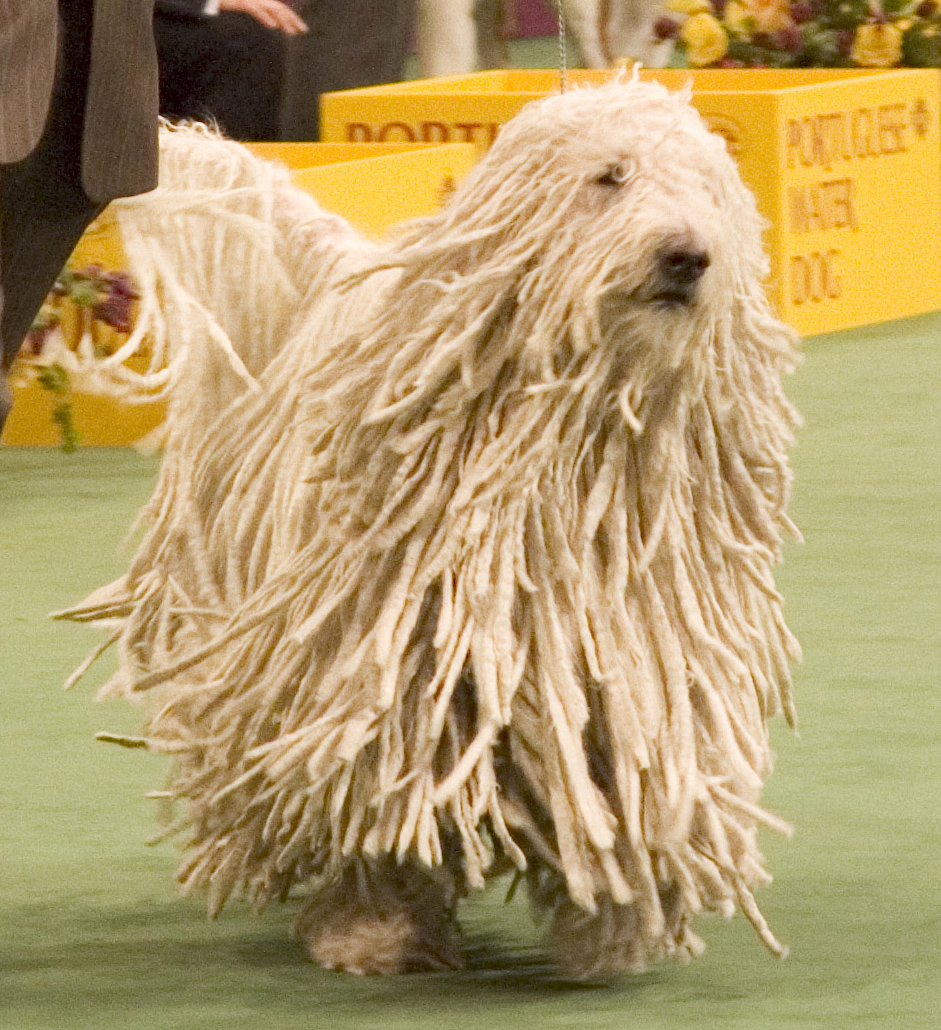
Komondor gallery
Frequently asked questions about the Komondor
- How long does a Komondor live? ▾
- The life expectancy of the Komondor is 10-12 años. A good diet, adequate exercise, annual veterinary check-ups and preventive care can help reach the upper end of that range.
- How much does a Komondor weigh? ▾
- An adult Komondor weighs between 40-60 kg, depending on its sex, genetics and condition. It is gigante.
- Where does the Komondor breed come from? ▾
- The Komondor originates from Hungría. Recognised by the FCI. Native to Hungary. A Hungarian livestock guardian with a unique white corded coat (it looks like a mop).
- How much exercise does a Komondor need? ▾
- The Komondor has media energy. **Exercise:** 90-120 min/day divided into sessions. Off-lead time in a safe area is essential.
- Is the Komondor good with children? ▾
- **Children:** good with its own family. **Other dogs:** sociable with socialisation. **Other animals:** with early socialisation.
- Who is the Komondor NOT recommended for? ▾
- It isn't the right breed for: Sedentary families. Homes with no daily exercise. Homes where it is left alone for many hours (it suffers). It's important to choose a breed that's compatible with your lifestyle.
- What health problems does the Komondor have? ▾
- Hip/elbow dysplasia. Progressive retinal atrophy (genetic test recommended). Life expectancy 10-12 years with proper care.
- How do you care for that corded coat? ▾
- The cords form on their own, but they must be separated by hand periodically so they do not mat, and the skin must be kept dry and clean. After a bath, complete drying can take days: it is one of the most labour-intensive coats there is.
- Is it suitable for beginners? ▾
- No. It is an independent, territorial and very strong livestock guardian that makes its own decisions. Without experience, early socialisation and calm leadership it can become difficult to handle.
- Can it live in a flat? ▾
- It is not suitable. It needs space and, preferably, a fenced garden to watch over. In a flat it gets bored and its guarding instinct has no outlet.
- Is it aggressive? ▾
- Not by default: with its family it is calm and protective. It is wary of strangers and other dogs, so socialisation and control of its environment are essential.
- Does it shed a lot? ▾
- Barely: the hair stays trapped in the cords instead of falling out. In return, all that retained hair requires the labour-intensive maintenance of the corded coat.
Learn more about dogs
Practical veterinary guides to support your Komondor.
Sources and references
Content compiled from official breed standards and leading veterinary sources.
- WikipediaKomondor ↗
- AKCKomondor ↗
- FCIFCI Standard No. 53 ↗
Want to adopt a komondor?
There are komondors in rescue shelters looking for a family. Filter by breed in the catalogue.