

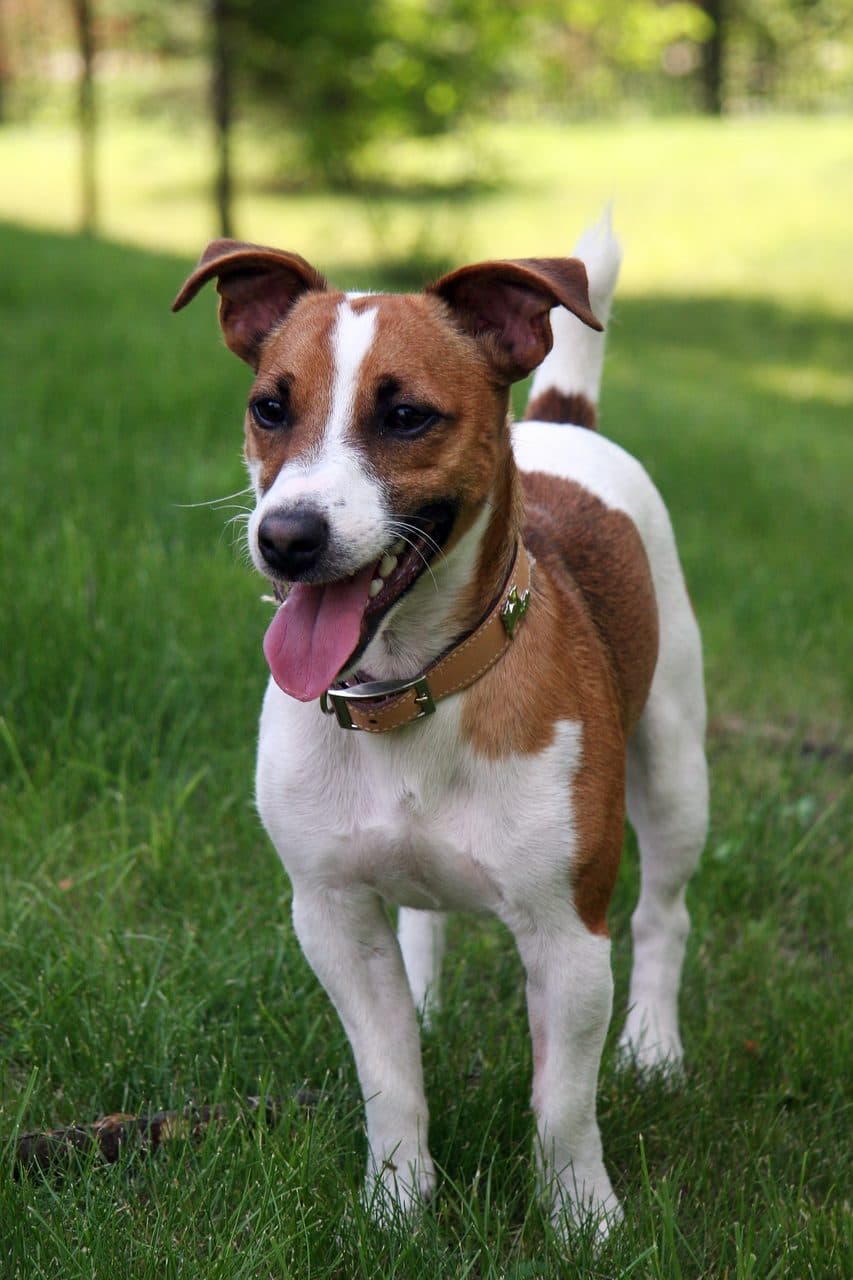
Jack Russell Terrier
Small but ENORMOUS in energy. Intelligent, brave, a born hunter. NOT an easy dog despite its size. "Small dog syndrome" if not trained. Lives a long time.
Foto: Wikipedia Commons · CC BY-SA
Ideal for
- ✓Very active families
- ✓Those who want a sporty dog in a small format
- ✓Homes without small animals
Reconsider if
- ×Flats without exercise
- ×Homes with cats/rabbits
- ×Those who want a "calm" dog
Notify me when a Jack Russell Terrier is up for adoption
We'll only email you when a verified rescue posts one available. No spam, unsubscribe in 1 click.
We'll only use your email for this alert. More info in our privacy policy.
Is the Jack Russell Terrier a good match for you?
Indicative rating from 1 (low) to 5 (high).
💶 Estimated cost of ownership
40-70 €/month
Food for a small dog (15-25 €), pro-rated vaccinations and annual check-up (12-18 €), internal and external parasite control (8-14 €), optional insurance (8-15 €). Low grooming, but keep a margin for ophthalmological and kneecap check-ups.
History and origin
Created by the Reverend John Russell in the 19th century to hunt foxes: small enough to enter burrows, brave enough to face down the fox.
Recognised by the FCI within Group 9 (companion dogs). Its small size makes flat living easier, but "small" is not a synonym for "needs no training": small dog syndrome (excessive barking, fear, reactivity) is common when the same routine as for a large dog is not applied.
Temperament and character
Energetic, alert, bold. Very high prey drive. Intelligent and manipulative. Needs structure and exercise. A barker. Needs daily mental stimulation — scent games, food-stuffed Kongs and short trick sessions channel the energy better than physical exercise alone. Responds best to positive reinforcement: physical punishment creates fear, anxiety and reactivity — coercive methods are NOT recommended by veterinary behaviourists. Sensitive to the mood of its family: it picks up on tension and catches it.
Living together
Children: older and energetic ones. Other dogs: variable, dominant. Cats/rodents: high risk.
Life stages of the Jack Russell Terrier
Each stage has its own care priorities. Life expectancy: 13-16 años.
Puppy
0-9 months
Broad socialisation and firm training (terrier character); channelling energy and appropriate chewing; eye examination.
Junior
9 months-1.5 years
Plenty of physical and mental exercise to avoid destructive behaviours; kneecap monitoring.
Adult
1.5-9 years
Intense daily exercise, eye examination (cataracts, retinal atrophy) and kneecap monitoring; a very long-lived and robust breed.
Senior
9+ years
Maintaining adapted activity, eye and joint monitoring and weight control.
Care
Exercise: 90-120 min/day split into at least 2 sessions. Off-lead time in a safe area is essential for high-energy breeds.
Brushing: 2-3 times/week; intensive during moulting seasons (spring and autumn).
Feeding: quality food suited to the life stage (puppy/adult/senior) and size. Weight control: obesity is the leading preventable cause of joint problems.
Vet: annual check-up with preventive blood work from age 5 (7 years in giant breeds); twice a year from age 8.
Exercise 1-2 h/day + mental games. Firm and consistent training. Weekly brushing (rough/smooth/broken coat depending on the variety). DO NOT leave loose with small animals.
Care in detail
🍽️ Nutrition
Quality food for an active small dog, with a measured portion despite its size: they burn a lot of energy, but obesity is still a risk if treats are overused. Split into 2 meals.
✂️ Grooming
A low-maintenance coat (smooth, rough or broken depending on the variety). Weekly brushing; the rough-coated variety may need occasional stripping. Sheds moderately and steadily.
🎓 Training
Intelligent, bold and a little manipulative: it needs structure, clear boundaries and consistency. It responds very well to positive reinforcement and dog sports (agility, obedience), but without firm training small dog syndrome appears.
🏃 Exercise
Very high energy in a small format: 1-2 hours of physical exercise a day plus mental games. It loves challenges, tracking and search toys. Without enough outlet it becomes destructive and a barker.
Breed-specific health
Patellar luxation. Congenital deafness. Retinal atrophy. Cushing's. Lives 13-16 years (long-lived). Life expectancy 13-16 years with proper care. Pre-breeding tests recommended at responsible breeders (dysplasia + cardiac + ophthalmology depending on the breed's conditions). When adopting, ask the shelter for a vet report on the current condition.
🩺 Health predispositions of this breed
Conditions this breed is more predisposed to. Knowing about them helps with prevention and early detection. A predisposition does not mean the animal will develop them.
Common diseases in dogs
Learn the symptoms, prevention and when to see the vet. Reviewed indicative information that does not replace a veterinary consultation.
Screening and prevention for the Jack Russell Terrier
Recommended tests and screenings
- ✓Orthopaedic evaluation for patellar (kneecap) luxation
- ✓BAER hearing test (congenital deafness, associated with the white coat)
- ✓Annual ophthalmological examination (primary lens luxation, cataracts, PRA)
- ✓PLL genetic test (primary lens luxation)
- ✓Genetic test for spinocerebellar ataxia / myelopathy (SCA)
- ✓Endocrine assessment where Cushing's is suspected in the adult/senior dog
Prevention
Plenty of daily physical and mental exercise to channel its energy and prevent problem behaviours, firm and consistent training from puppyhood to prevent small dog syndrome, and careful management of coexistence with small animals due to its strong prey drive.
Check-up schedule
Annual check-up with assessment of the kneecaps and eyes; preventive blood work from age 5-6 and six-monthly reviews in the senior dog. It is a long-lived breed (13-16 years), so attention to ageing is prolonged.
Warning signs
- !Intermittent lameness or hopping on three legs (patellar luxation)
- !A painful, red eye or a change in the appearance of the lens (lens luxation, an emergency)
- !Not responding to sounds (deafness, frequent in very white dogs)
- !Increased thirst, urination and a distended abdomen (Cushing's)
- !Excessive barking, reactivity or fear (small dog syndrome from lack of training)
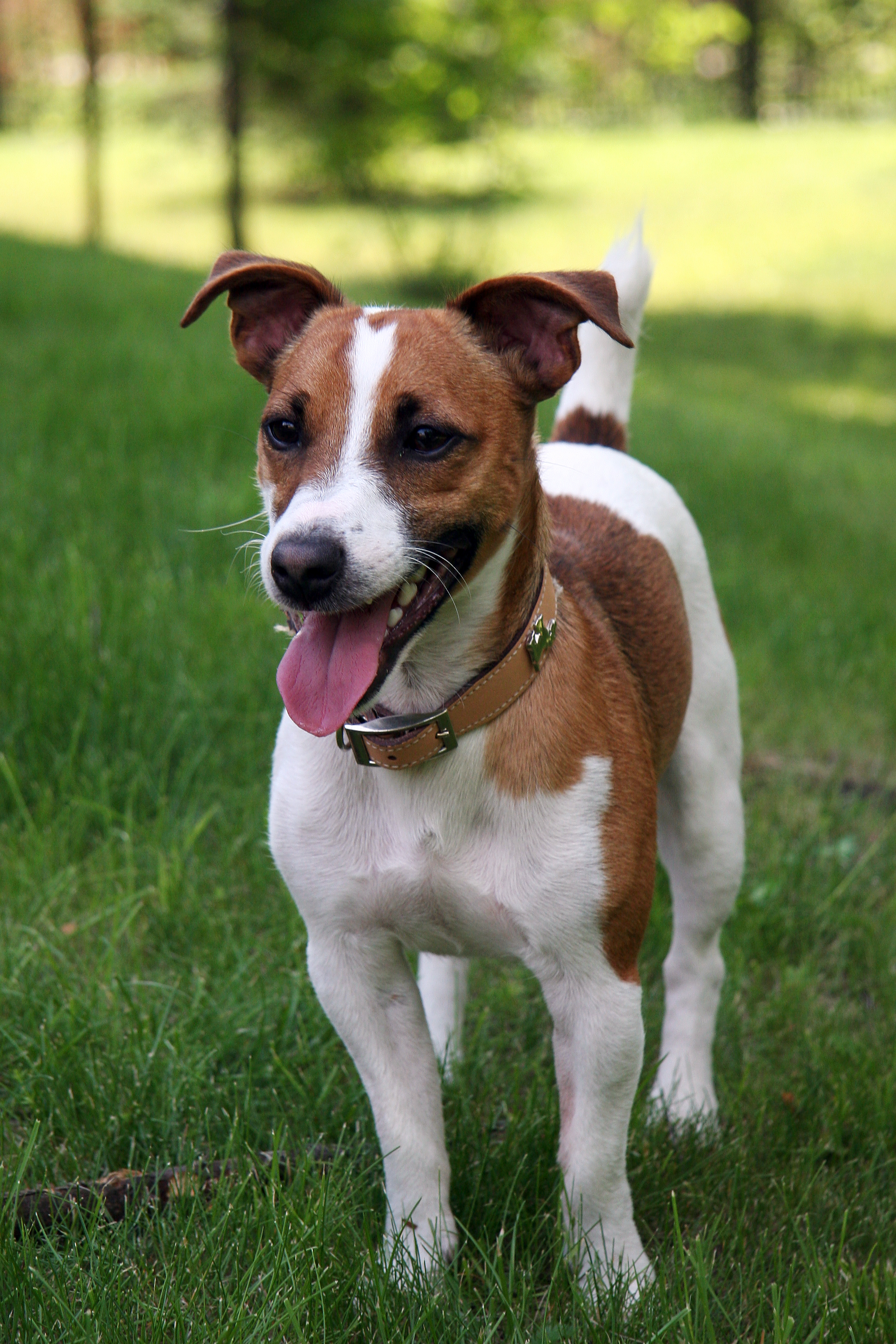
Jack Russell Terrier gallery
Frequently asked questions about the Jack Russell Terrier
- How long does a Jack Russell Terrier live? ▾
- The life expectancy of the Jack Russell Terrier is 13-16 años. A good diet, adequate exercise, annual veterinary check-ups and preventive care can help reach the upper end of that range.
- How much does a Jack Russell Terrier weigh? ▾
- An adult Jack Russell Terrier weighs between 5-8 kg, depending on its sex, genetics and condition. It is pequeño.
- Where does the Jack Russell Terrier breed come from? ▾
- The Jack Russell Terrier originates from Reino Unido. Created by the Reverend John Russell in the 19th century to hunt foxes: small enough to enter burrows, brave enough to face down the fox.
- How much exercise does a Jack Russell Terrier need? ▾
- The Jack Russell Terrier has muy alta energy. **Exercise:** 90-120 min/day split into at least 2 sessions. Off-lead time in a safe area is essential for high-energy breeds.
- Is the Jack Russell Terrier good with children? ▾
- Children: older and energetic ones. Other dogs: variable, dominant. Cats/rodents: high risk.
- Who is the Jack Russell Terrier NOT recommended for? ▾
- It isn't the right breed for: Flats without exercise. Homes with cats/rabbits. Those who want a "calm" dog. It's important to choose a breed that's compatible with your lifestyle.
- What health problems does the Jack Russell Terrier have? ▾
- Patellar luxation. Congenital deafness. Retinal atrophy. Cushing's. Lives 13-16 years (long-lived). Life expectancy 13-16 years with proper care. Pre-breeding tests recommended at responsible breeders (dysplasia + cardiac + ophthalmology depending on the breed's conditions). When adopting, ask the shelter for a vet report on the current condition.
- Is it an easy dog because it is small? ▾
- No. Despite its size it is a hunting terrier with a great deal of energy, courage and instinct. It needs as much exercise and training as a large dog. Anyone looking for a calm lapdog has the wrong breed.
- Can it live with cats, rabbits or rodents? ▾
- It is high risk. It was bred to hunt foxes and has a very marked prey drive towards small animals. Coexistence with cats, rabbits or rodents is problematic and, in general, not advised.
- What is small dog syndrome? ▾
- It is the set of behaviours (excessive barking, reactivity, fear, disobedience) that appears when a small dog is not given boundaries or a routine because it is considered harmless. The Jack Russell develops it easily if it is not trained as firmly as a large dog.
- How long does a Jack Russell live? ▾
- It is a very long-lived breed: between 13 and 16 years, and even more with good care. That means a long commitment and maintaining its activity level and veterinary check-ups throughout a long life.
- Is it a good breed for families with young children? ▾
- Better with older, energetic children. It is brave and playful, but its intensity, its tendency to bark and its determined character fit less well with very young children. It needs supervision and an active family that can meet its high demand for exercise.
Related and similar breeds
Learn more about dogs
Practical veterinary guides to support your Jack Russell Terrier.
Sources and references
Content compiled from official breed standards and leading veterinary sources.
Want to adopt a jack russell terrier?
There are jack russell terriers in rescue shelters looking for a family. Filter by breed in the catalogue.