

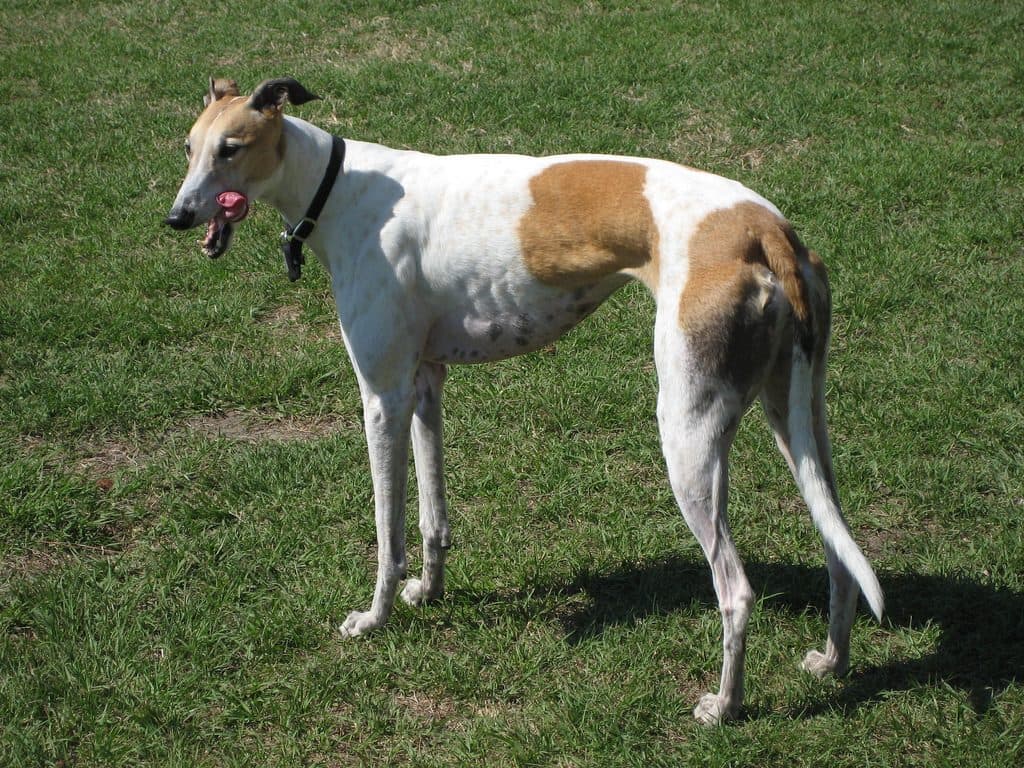
Greyhound (Galgo Inglés)
The sprinter of the canine world (70 km/h). Slender and elegant. Surprisingly calm at home: "elite athletes plus the sofa". A victim of exploitation on racing tracks (now banned in many countries).
Foto: Wikipedia Commons · CC BY-SA
Ideal for
- ✓Calm families
- ✓Flats (yes, they fit in well)
- ✓Homes without cats or rabbits
Reconsider if
- ×Homes with small animals
- ×Extreme climates without protection
Notify me when a Greyhound (Galgo Inglés) is up for adoption
We'll only email you when a verified rescue posts one available. No spam, unsubscribe in 1 click.
We'll only use your email for this alert. More info in our privacy policy.
Is the Greyhound (Galgo Inglés) a good match for you?
Indicative rating from 1 (low) to 5 (high).
💶 Estimated cost of ownership
60-110 €/month
Food: 30-50 € · Preventive vet care: 20-40 € · Grooming and accessories: 10-20 € · Insurance and extras: 5-20 €
History and origin
One of the oldest breeds (Egypt, Persia). Mentioned in medieval English literature. Reselected in England for racing and hunting.
The plight of hunting greyhounds abandoned at the end of the season is well documented, and prompted regional protection laws. Adopting a rescue greyhound from a shelter helps reduce this tragedy. An endurance athlete of pure speed: short sprints, long rest at home.
Temperament and character
Calm at home (a "couch dog"). Affectionate and sensitive. VERY high prey drive. Reserved with strangers. Needs socialisation. Needs daily mental stimulation — scent games, food-stuffed Kongs and short trick sessions channel its energy better than physical exercise alone. Responds best to positive reinforcement: physical punishment causes fear, anxiety and reactivity — coercive methods are NOT recommended by veterinary behaviourists. Sensitive to its family's mood: it picks up on tension and mirrors it.
Living together
Children: good with older children. Other dogs: sociable with dogs of its own size. Cats/rabbits: HIGH risk.
Life stages of the Greyhound (Galgo Inglés)
Each stage has its own care priorities. Life expectancy: 10-14 años.
Puppy
0-15 months
Socialisation, controlled growth and care of its thin skin.
Junior
15 months-2 years
Controlled running exercise and training.
Adult
2-7 years
Prevention of gastric torsion, dental health and cardiac care.
Senior
7+ years
Osteosarcoma screening, frequent cardiac and dental checks.
Care
Exercise: daily walks plus short, intense runs in a secure area. Padded bed (little body fat). A coat in winter (thin coat). Dental care.
Care in detail
🍽️ Nutrition
Quality food for medium/large breeds; as it carries little body fat, watch that it does not become too thin, and look after its teeth, which are prone to tartar.
✂️ Grooming
Minimal: very short coat, a weekly brush or wipe-down is enough. Needs a soft bed and a coat in winter because of its scant body fat.
🎓 Training
Sensitive and calm, it responds well to positive reinforcement. Its greatest challenge is prey drive: recall near cats or small animals is very hard to guarantee.
🏃 Exercise
It is a sprinter, not a distance runner: calm daily walks plus the occasional short, intense run in a fenced, secure area. At home it is a "couch dog".
Breed-specific health
Heart disease. Osteosarcoma. Bloat. Anaesthetic sensitivity syndrome. Hypothyroidism. Life expectancy 10-14 years. Life expectancy 10-14 years with proper care. Pre-breeding testing is recommended in responsible kennels (hip dysplasia plus cardiac and ophthalmic screening according to the breed's known conditions). When adopting, ask the shelter for a vet report on the dog's current condition.
🩺 Health predispositions of this breed
Conditions this breed is more predisposed to. Knowing about them helps with prevention and early detection. A predisposition does not mean the animal will develop them.
Common diseases in dogs
Learn the symptoms, prevention and when to see the vet. Reviewed indicative information that does not replace a veterinary consultation.
Screening and prevention for the Greyhound (Galgo Inglés)
Recommended tests and screenings
- ✓Echocardiography (heart disease)
- ✓Pre-anaesthetic panel (sensitivity to anaesthesia)
- ✓Thyroid profile
- ✓Blood count with breed-specific reference ranges
Prevention
Always warn the vet about its anaesthetic sensitivity, provide a padded bed given its low body fat, a coat in winter and regular dental care.
Check-up schedule
Annual check-up with blood work; periodic cardiac and oral assessment.
Warning signs
- !Persistent lameness or bone pain (osteosarcoma)
- !Lumps on the limbs
- !Cold intolerance or shivering
- !Lethargy and weight gain (thyroid)
Frequently asked questions about the Greyhound (Galgo Inglés)
- How long does a Greyhound (Galgo Inglés) live? ▾
- The life expectancy of the Greyhound (Galgo Inglés) is 10-14 años. A good diet, adequate exercise, annual veterinary check-ups and preventive care can help reach the upper end of that range.
- How much does a Greyhound (Galgo Inglés) weigh? ▾
- An adult Greyhound (Galgo Inglés) weighs between 25-32 kg, depending on its sex, genetics and condition. It is grande.
- Where does the Greyhound (Galgo Inglés) breed come from? ▾
- The Greyhound (Galgo Inglés) originates from Reino Unido (origen antiguo). One of the oldest breeds (Egypt, Persia). Mentioned in medieval English literature. Reselected in England for racing and hunting.
- How much exercise does a Greyhound (Galgo Inglés) need? ▾
- The Greyhound (Galgo Inglés) has media energy. Exercise: daily walks plus short, intense runs in a secure area. Padded bed (little body fat). A coat in winter (thin coat). Dental care.
- Is the Greyhound (Galgo Inglés) good with children? ▾
- Children: good with older children. Other dogs: sociable with dogs of its own size. Cats/rabbits: HIGH risk.
- Who is the Greyhound (Galgo Inglés) NOT recommended for? ▾
- It isn't the right breed for: Homes with small animals. Extreme climates without protection. It's important to choose a breed that's compatible with your lifestyle.
- What health problems does the Greyhound (Galgo Inglés) have? ▾
- Heart disease. Osteosarcoma. Bloat. Anaesthetic sensitivity syndrome. Hypothyroidism. Life expectancy 10-14 years. Life expectancy 10-14 years with proper care. Pre-breeding testing is recommended in responsible kennels (hip dysplasia plus cardiac and ophthalmic screening according to the breed's known conditions). When adopting, ask the shelter for a vet report on the dog's current condition.
- Does it need a huge amount of exercise? ▾
- Less than it seems. It is a sprint athlete: daily walks and the occasional short run in a secure area are enough. The rest of the day it is very calm and sleepy.
- Can it live with cats? ▾
- With high risk. Its prey drive is very strong; some individuals live with the household cats after a careful introduction, but it can never be guaranteed. Check with the shelter.
- Why does it get so cold? ▾
- It has very little body fat and an extremely short coat, so it needs a coat in winter and a padded bed to avoid suffering from the cold or from hard surfaces.
- Is it suitable for a flat? ▾
- Yes, surprisingly. Its calmness at home makes it a very good flat companion as long as it gets its daily walks and runs.
- Why must the vet be warned before anaesthesia? ▾
- Because of their low body fat and particular metabolism, greyhounds are more sensitive to anaesthesia. The vet must adjust breed-specific protocols.
Related and similar breeds
Learn more about dogs
Practical veterinary guides to support your Greyhound (Galgo Inglés).
Sources and references
Content compiled from official breed standards and leading veterinary sources.
Want to adopt a greyhound (galgo inglés)?
There are greyhound (galgo inglés)s in rescue shelters looking for a family. Filter by breed in the catalogue.