

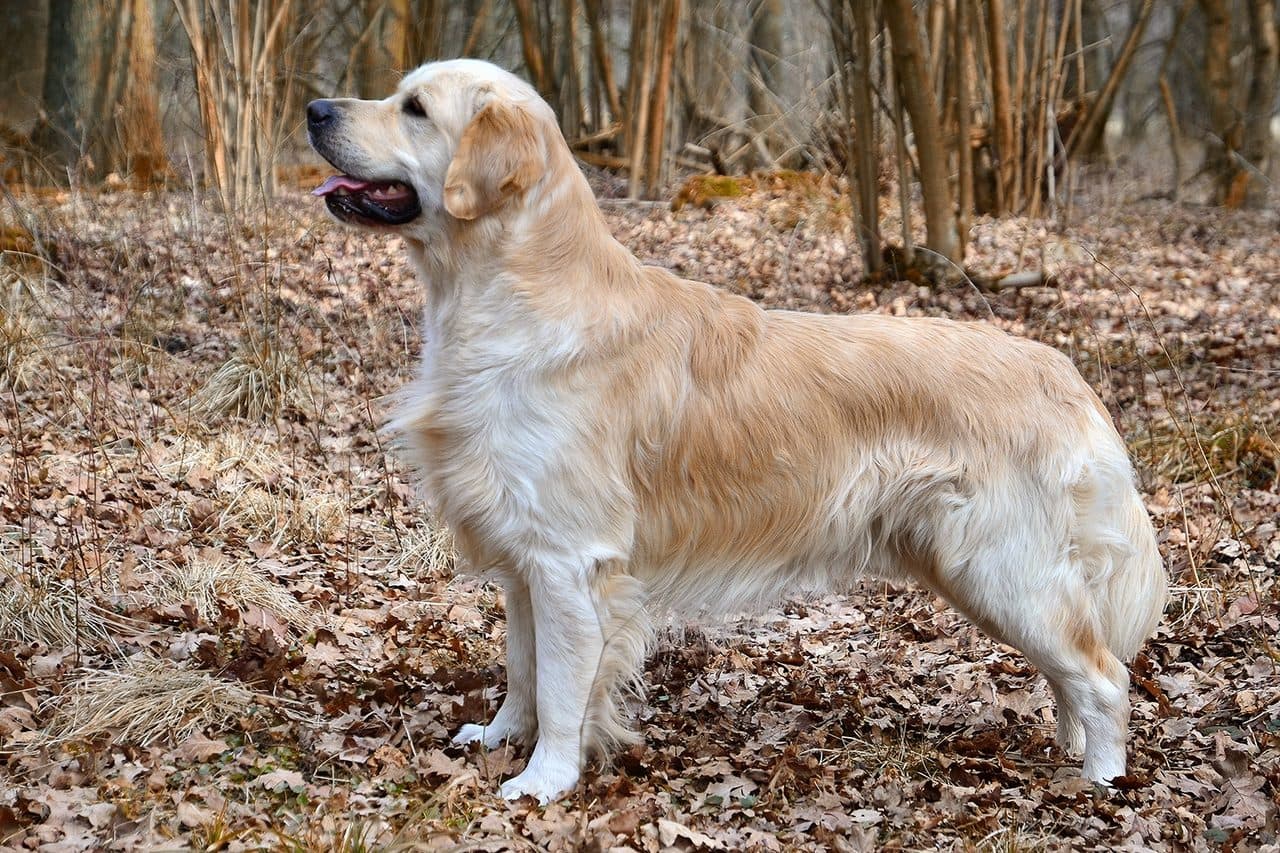
Golden Retriever
The archetypal family breed: sweet, patient, loyal, easy to train. Excellent with children. Cousin of the Labrador. But with serious hereditary problems (cancer in 60% of adults) that reduce life expectancy.
Foto: Wikipedia Commons · CC BY-SA
Ideal for
- ✓Families with children
- ✓Homes with a garden
- ✓Active people
- ✓First experience with dogs
Reconsider if
- ×Small flats
- ×Those who cannot brush it regularly
- ×People with no time for long walks
Notify me when a Golden Retriever is up for adoption
We'll only email you when a verified rescue posts one available. No spam, unsubscribe in 1 click.
We'll only use your email for this alert. More info in our privacy policy.
Is the Golden Retriever a good match for you?
Indicative rating from 1 (low) to 5 (high).
💶 Estimated cost of ownership
80-140 €/month
Large-breed food (50-80 €), vet and prevention prorated (20-40 €, higher due to the oncological risk), health insurance advisable (15-30 €), grooming and antiparasitics (10-25 €). Set aside a fund for possible cancer treatments.
History and origin
Created by Lord Tweedmouth in Scotland in the mid-19th century by crossing the Tweed Water Spaniel with the Wavy-Coated Retriever. Originally for hunting waterfowl. Today it is the quintessential family breed in Europe and the USA.
Temperament and character
Sweet, patient, patient with children. Sociable with humans and dogs. Intelligent (Coren's breed no. 4). Easy to train. Loves to swim and retrieve. Energetic until 6-8 years of age.
Living together
Children: excellent. Other dogs: very sociable. Cats: fine with socialisation. Being alone: does not tolerate well.
Life stages of the Golden Retriever
Each stage has its own care priorities. Life expectancy: 10-12 años.
Puppy
0-12 months
Controlled growth for hips and elbows; early socialisation; establish a healthy-weight routine.
Junior
1-2 years
Exercise and obedience; radiographic joint check; ocular examination for cataracts.
Adult
2-7 years
Active oncological surveillance (palpation of lumps, check-ups), ideal weight and gentle aquatic exercise for the joints.
Senior
7+ years
Cancer screening a priority (lymphoma, haemangiosarcoma), frequent blood tests and management of osteoarthritis.
Care
Exercise: 2-3 hours daily. Grooming: 3 times/week (long coat, sheds heavily). Feeding: large-breed food with weight control. Space: garden preferable.
Care in detail
🍽️ Nutrition
Large-breed food with weight control, in 2 meals. Watch the calories: the golden tends towards obesity and "is always hungry". Chondroprotective supplements are useful from adulthood due to the joint load. Avoid intense exercise right after eating (risk of bloat/torsion).
✂️ Grooming
A long double coat that sheds heavily (among the heaviest). Brushing 3-4 times a week and daily during moults. Bath every 6-8 weeks. Dry and check the ears well after swimming to prevent ear infections. Do not clip the coat: it regulates the dog's temperature.
🎓 Training
One of the easiest and most rewarding dogs to train (Coren's no. 4). Sociable and eager to please; ideal for first-time owners. Positive reinforcement and early socialisation. It loves to retrieve objects and swim: use this to exercise it and bond with it.
🏃 Exercise
2 hours of daily exercise: long walks, swimming and retrieving games. Puppy: controlled exercise, no jumps or stairs until growth is complete. Adult: swimming is perfect for its joints. Senior: gentle walks and low-impact swimming.
Breed-specific health
CANCER: the most serious problem. ~60% of goldens die of cancer (lymphoma, haemangiosarcoma, mast cell tumour). Hip and elbow dysplasia. Cataracts. Life expectancy 10-12 years (limited by cancer).
🩺 Health predispositions of this breed
Conditions this breed is more predisposed to. Knowing about them helps with prevention and early detection. A predisposition does not mean the animal will develop them.
Common diseases in dogs
Learn the symptoms, prevention and when to see the vet. Reviewed indicative information that does not replace a veterinary consultation.
Screening and prevention for the Golden Retriever
Recommended tests and screenings
- ✓Hip and elbow dysplasia — official radiograph (from 12 months of age)
- ✓Annual ophthalmological assessment (hereditary cataracts, PRA)
- ✓PRA-prcd / ICT — genetic DNA test
- ✓Cardiology: auscultation/echocardiography (subaortic stenosis)
- ✓Dermatological check-ups (atopy is common in the breed)
- ✓Oncological surveillance: palpation and attention to lumps due to the high cancer risk
Prevention
Buy from breeders with official hip, elbow, eye and heart testing. Keep a lean weight throughout life (obesity worsens the joints and tumour predisposition). Check the skin and ears frequently and palpate for lumps: early detection of cancer is key in this breed.
Check-up schedule
Annual check-up with oncological palpation; six-monthly from 7 years of age. Hip/elbow radiograph at one year. Dental cleanings and periodic weight control.
Warning signs
- !New lumps, masses or swellings under the skin (cancer risk)
- !Fatigue, pale gums or a distended abdomen (haemangiosarcoma)
- !Lameness or joint stiffness
- !Intense itching, recurrent ear infections or hair loss (atopy)
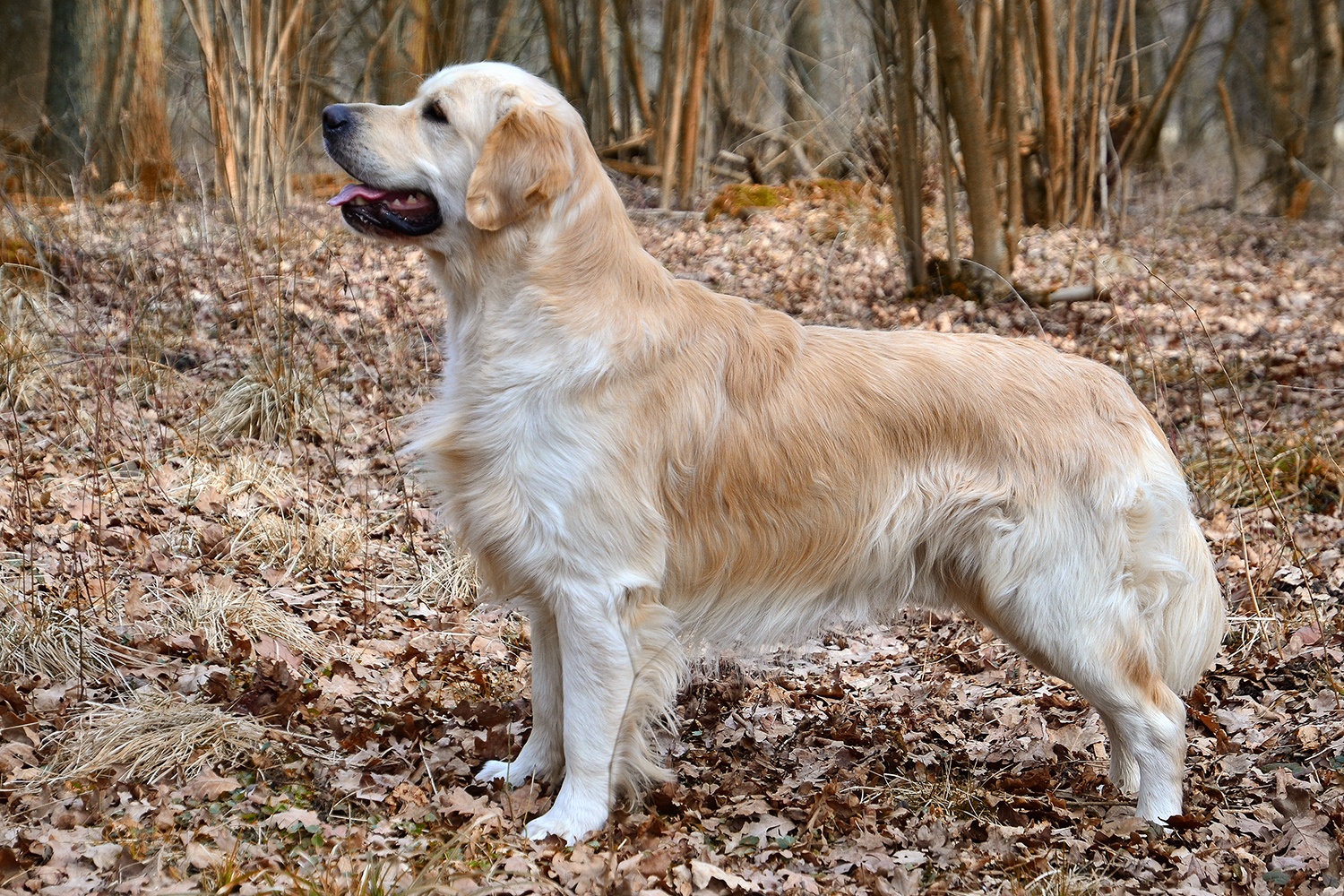
Golden Retriever gallery
Frequently asked questions about the Golden Retriever
- How long does a Golden Retriever live? ▾
- The life expectancy of the Golden Retriever is 10-12 años. A good diet, adequate exercise, annual veterinary check-ups and preventive care can help reach the upper end of that range.
- How much does a Golden Retriever weigh? ▾
- An adult Golden Retriever weighs between 25-34 kg, depending on its sex, genetics and condition. It is grande.
- Where does the Golden Retriever breed come from? ▾
- The Golden Retriever originates from Escocia. Created by Lord Tweedmouth in Scotland in the mid-19th century by crossing the Tweed Water Spaniel with the Wavy-Coated Retriever. Originally for hunting waterfowl. Today it is the quintessential family breed in Europe and the USA.
- How much exercise does a Golden Retriever need? ▾
- The Golden Retriever has alta energy. Exercise: 2-3 hours daily. Grooming: 3 times/week (long coat, sheds heavily). Feeding: large-breed food with weight control. Space: garden preferable.
- Is the Golden Retriever good with children? ▾
- Children: excellent. Other dogs: very sociable. Cats: fine with socialisation. Being alone: does not tolerate well.
- Who is the Golden Retriever NOT recommended for? ▾
- It isn't the right breed for: Small flats. Those who cannot brush it regularly. People with no time for long walks. It's important to choose a breed that's compatible with your lifestyle.
- What health problems does the Golden Retriever have? ▾
- CANCER: the most serious problem. ~60% of goldens die of cancer (lymphoma, haemangiosarcoma, mast cell tumour). Hip and elbow dysplasia. Cataracts. Life expectancy 10-12 years (limited by cancer).
- Is it good for a first-time family? ▾
- It is one of the best options: sweet, patient, sociable and very easy to train. It just needs daily exercise and for you to tolerate its heavy shedding.
- Why is there so much talk about cancer in the breed? ▾
- The golden has a high hereditary predisposition (studies estimate that more than half die of cancer). That is why a lean weight, check-ups and palpating lumps in time are key.
- Does it shed a lot? ▾
- A great deal: it is one of the heaviest-shedding breeds. Frequent brushing and a hand vacuum. Its coat should not be clipped.
- Does it need a lot of exercise? ▾
- About 2 hours daily. It loves to swim and retrieve, perfect low-impact activities for its joints.
- Does it tolerate being left alone? ▾
- So-so: it is very attached and does not cope well with prolonged solitude. It can develop separation anxiety if left alone for many hours.
Related and similar breeds
Learn more about dogs
Practical veterinary guides to support your Golden Retriever.
Sources and references
Content compiled from official breed standards and leading veterinary sources.
Want to adopt a golden retriever?
There are golden retrievers in rescue shelters looking for a family. Filter by breed in the catalogue.