

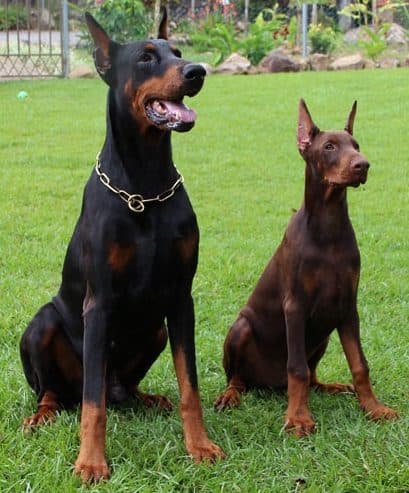
Doberman
Elegant, athletic, loyal. Intelligent and fast. Protective but NOT aggressive when well trained. An unfair reputation: well bred, it is a sweet, sensitive family dog.
Foto: Wikipedia Commons · CC BY-SA
Ideal for
- ✓Active, experienced families
- ✓Anyone doing canine sports
- ✓Homes with a garden
Reconsider if
- ×First-time owners
- ×Anyone who leaves the dog alone for many hours (it suffers)
- ×Small flats without exercise
Notify me when a Doberman is up for adoption
We'll only email you when a verified rescue posts one available. No spam, unsubscribe in 1 click.
We'll only use your email for this alert. More info in our privacy policy.
Is the Doberman a good match for you?
Indicative rating from 1 (low) to 5 (high).
💶 Estimated cost of ownership
60-100 €/month
Food: 35-50 € · Vet and cardiac screening: 20-35 € · Insurance and accessories: 10-20 €
History and origin
Created by Karl Friedrich Louis Dobermann (a tax collector) in Apolda in the late 19th century as a personal protection dog. A mix of pinscher, rottweiler, weimaraner and others.
Recognised by the FCI. In the UK, ownership is subject to general dangerous-dogs legislation in some cases (check the Dangerous Dogs Act 1991 and relevant local regulations). Its historical selection for guarding work calls for early training and broad socialisation so the temperament is channelled positively.
Temperament and character
Devoted, watchful, brave. Very attached to its family (a "velcro dog"). Sensitive: physical punishment ruins the dog. It needs company and mental stimulation. It needs daily mental stimulation — scent games, food-stuffed Kongs and short trick sessions channel its energy better than physical exercise alone. It responds best to positive reinforcement: physical punishment generates fear, anxiety and reactivity — coercive methods are NOT recommended by veterinary behaviourists. Sensitive to its family's mood: it picks up on tension and takes it on.
Living together
Children: very good with its own. Other dogs: dominant with males. Cats: acceptable if raised together from a puppy.
Life stages of the Doberman
Each stage has its own care priorities. Life expectancy: 10-13 años.
Puppy
0-12 months
Socialisation and firm, positive training; protection from the cold (thin coat); controlled growth.
Junior
1-2 years
Advanced obedience and exercise; von Willebrand test before any surgery; first cardiac check-up.
Adult
2-7 years
Annual Holter/cardiac echo due to high risk of dilated cardiomyopathy; thyroid function and monitoring for cervical instability (wobbler).
Senior
7+ years
Close cardiac monitoring (DCM is a leading cause of death), blood work and mobility management.
Care
Exercise: 60-90 min/day split into at least 2 sessions. Off-lead time in a secure area is essential for high-energy breeds.
Brushing: 2-3 times/week; more intensive during the moulting seasons (spring and autumn).
Feeding: quality food suited to life stage (puppy/adult/senior) and size. Weight control: obesity is the leading preventable cause of joint problems.
Vet: annual check-up with preventive blood work from 5 years of age (7 years in giant breeds); twice a year from age 8.
Exercise 1.5 h/day + training. Short coat = minimal brushing, but they feel the cold (a coat in winter). Positive training. Company: it cannot cope with prolonged solitude.
Care in detail
🍽️ Nutrition
Quality food for large breeds suited to the life stage, with weight control. Split into 2 meals to reduce the risk of bloat.
✂️ Grooming
Short, easy coat: weekly brushing is enough. It feels the cold, so a coat in winter is advisable.
🎓 Training
Very intelligent and quick to learn, but sensitive: physical punishment ruins it. Positive reinforcement, daily mental stimulation and broad socialisation.
🏃 Exercise
60-90 minutes daily in 2 sessions, with off-lead time in a secure area and games. It is a 'velcro dog' that needs company as well as exercise.
Breed-specific health
Dilated cardiomyopathy (common). Wobbler syndrome. Von Willebrand's disease. Hypothyroidism. Life expectancy 10-13 years. Life expectancy 10-13 years with proper care. Pre-breeding tests are recommended by responsible breeders (hip dysplasia + cardiac + ophthalmology screening according to the breed's conditions). When adopting, ask the rescue for an up-to-date vet report on the dog's current condition.
🩺 Health predispositions of this breed
Conditions this breed is more predisposed to. Knowing about them helps with prevention and early detection. A predisposition does not mean the animal will develop them.
Common diseases in dogs
Learn the symptoms, prevention and when to see the vet. Reviewed indicative information that does not replace a veterinary consultation.
Screening and prevention for the Doberman
Recommended tests and screenings
- ✓Echocardiography and Holter monitoring for dilated cardiomyopathy
- ✓Genetic test for Von Willebrand's disease (vWD)
- ✓Thyroid panel (hypothyroidism)
- ✓Cervical MRI/X-ray if Wobbler syndrome is suspected
Prevention
Periodic cardiac screening due to the high incidence of dilated cardiomyopathy, coagulation testing before surgery, weight control and a coat in winter because of its short coat.
Check-up schedule
Annual check-up with cardiac screening from a young age; from 5 years of age, periodic echocardiography/Holter monitoring.
Warning signs
- !Coughing, exercise intolerance or fainting (heart disease)
- !Instability, incoordination or a 'drunken' gait (Wobbler)
- !Prolonged bleeding or bruising (Von Willebrand's)
- !Lethargy, weight gain or poor skin/coat condition (thyroid)
Doberman gallery

Frequently asked questions about the Doberman
- How long does a Doberman live? ▾
- The life expectancy of the Doberman is 10-13 años. A good diet, adequate exercise, annual veterinary check-ups and preventive care can help reach the upper end of that range.
- How much does a Doberman weigh? ▾
- An adult Doberman weighs between 27-45 kg, depending on its sex, genetics and condition. It is grande.
- Where does the Doberman breed come from? ▾
- The Doberman originates from Alemania (Apolda). Created by Karl Friedrich Louis Dobermann (a tax collector) in Apolda in the late 19th century as a personal protection dog. A mix of pinscher, rottweiler, weimaraner and others.
- How much exercise does a Doberman need? ▾
- The Doberman has alta energy. **Exercise:** 60-90 min/day split into at least 2 sessions. Off-lead time in a secure area is essential for high-energy breeds.
- Is the Doberman good with children? ▾
- Children: very good with its own. Other dogs: dominant with males. Cats: acceptable if raised together from a puppy.
- Who is the Doberman NOT recommended for? ▾
- It isn't the right breed for: First-time owners. Anyone who leaves the dog alone for many hours (it suffers). Small flats without exercise. It's important to choose a breed that's compatible with your lifestyle.
- What health problems does the Doberman have? ▾
- Dilated cardiomyopathy (common). Wobbler syndrome. Von Willebrand's disease. Hypothyroidism. Life expectancy 10-13 years. Life expectancy 10-13 years with proper care. Pre-breeding tests are recommended by responsible breeders (hip dysplasia + cardiac + ophthalmology screening according to the breed's conditions). When adopting, ask the rescue for an up-to-date vet report on the dog's current condition.
- Is the Doberman a dangerous dog? ▾
- It has an unfair reputation. Well bred and socialised, it is a loyal, sensitive family dog; its reputation comes from its historical use as a protection dog, not from any innate aggression.
- Can it be left alone for many hours? ▾
- Badly. It is extremely attached ('velcro dog') and suffers with prolonged solitude, potentially developing anxiety and destructiveness.
- Which health problem is the most important? ▾
- Dilated cardiomyopathy, which is common and serious in the breed. Periodic cardiac screening (echocardiography and Holter monitoring) from a young age is advisable.
- Is it suitable for someone without experience? ▾
- It is not the best first choice: it needs consistent, positive leadership, plenty of exercise and socialisation. It rewards those who devote time and training to it.
- Does it have legal restrictions in the UK? ▾
- It is not a banned breed under national law, but some regions or insurers may impose requirements; it is advisable to check local regulations.
Related and similar breeds
Learn more about dogs
Practical veterinary guides to support your Doberman.
Sources and references
Content compiled from official breed standards and leading veterinary sources.
Want to adopt a doberman?
There are dobermans in rescue shelters looking for a family. Filter by breed in the catalogue.