

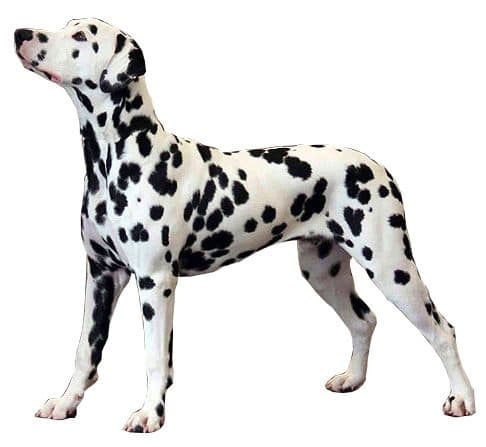
Dálmata
Unmistakable for its spots. Athletic, loyal, playful. Extremely high energy: it needs intense exercise or it wrecks the house. Deafness is common. The fame of 101 Dalmatians made them fashionable and then abandoned.
Foto: Wikipedia Commons · CC BY-SA
Ideal for
- ✓Very active families
- ✓Anyone who runs or cycles
- ✓Homes with a garden
Reconsider if
- ×Sedentary families
- ×Flats without exercise
- ×Anyone wanting a submissive dog
Notify me when a Dálmata is up for adoption
We'll only email you when a verified rescue posts one available. No spam, unsubscribe in 1 click.
We'll only use your email for this alert. More info in our privacy policy.
Is the Dálmata a good match for you?
Indicative rating from 1 (low) to 5 (high).
💶 Estimated cost of ownership
60-110 €/month
Food: 30-50 € · Preventive vet care: 18-35 € · Grooming and accessories: 10-20 € · Insurance and extras: 5-20 €
History and origin
Disputed origin (Dalmatia, Egypt, India). Known for centuries as a carriage dog: it trotted alongside horse-drawn carriages, protecting them. American firefighters adopted it for its courage.
Recognised by the FCI within Group 9 (companion dogs). Its small size makes flat living easy, but "small" is not the same as "needs no training": small dog syndrome (excessive barking, fear, reactivity) is common when it isn't given the same routine as a large dog.
Temperament and character
Energetic, playful, sociable. Intelligent and stubborn. Excellent memory (grudges included). Independent: needs firm but gentle training. Needs daily mental stimulation — scent games, food-stuffed Kongs and short trick sessions channel its energy better than physical exercise alone. Responds best to positive reinforcement: physical punishment breeds fear, anxiety and reactivity — coercive methods are NOT recommended by veterinary behaviourists. Sensitive to its family's mood: it picks up on tension and catches it.
Living together
Children: good with older ones (rough play). Other dogs: variable. Horses: historical affinity.
Life stages of the Dálmata
Each stage has its own care priorities. Life expectancy: 11-13 años.
Puppy
0-11 months
Hearing test (BAER) for deafness risk; plenty of water and a low-purine diet from the start; socialisation and exercise.
Junior
11 months-2 years
Channel its high energy with exercise; maintain hydration and a controlled diet to prevent urate stones.
Adult
2-8 years
Management of uric acid metabolism (urinary stones), constant hydration and care of sensitive skin.
Senior
8+ years
Urinary and renal monitoring, dermatological control and joint check-ups; adapted exercise.
Care
Exercise: 60-90 min/day split into at least 2 sessions. Off-lead time in a safe area is essential for high-energy breeds.
Brushing: 2-3 times a week; intensive during the moulting seasons (spring and autumn).
Feeding: quality food suited to life stage (puppy/adult/senior) and size. Weight control: obesity is the leading preventable cause of joint problems.
Vet: annual check-up with preventive blood work from age 5 (7 in giant breeds); twice a year from age 8.
Exercise 1.5-2 h/day. Weekly brushing (sheds A LOT all year round). BAER test for deafness. Low-purine diet (urinary stones).
Care in detail
🍽️ Nutrition
Quality, low-purine food (avoid excess offal and purine-rich proteins) with water always available to prevent the urate stones typical of the breed.
✂️ Grooming
Short coat but sheds A LOT all year round; brush 2-3 times a week to keep hair around the house under control. Tends to repel water and dirt well.
🎓 Training
Intelligent and with a great memory, but stubborn. Firm, gentle, positive-based training from puppyhood; deafness, which is common, means working with visual signals.
🏃 Exercise
1.5-2 hours of intense exercise daily. It's an endurance athlete (carriage dog): ideal to accompany you running or cycling.
Breed-specific health
Congenital deafness (~12% unilateral, ~5% bilateral). Urinary stones (genetic). Dysplasia. Life expectancy 11-13 years. Life expectancy 11-13 years with appropriate care. Pre-breeding tests are recommended at responsible breeders (hip dysplasia + cardiac + ophthalmology depending on the breed's conditions). When adopting, ask the rescue for a vet report on the current state of health.
🩺 Health predispositions of this breed
Conditions this breed is more predisposed to. Knowing about them helps with prevention and early detection. A predisposition does not mean the animal will develop them.
Common diseases in dogs
Learn the symptoms, prevention and when to see the vet. Reviewed indicative information that does not replace a veterinary consultation.
Screening and prevention for the Dálmata
Recommended tests and screenings
- ✓BAER hearing test (congenital deafness)
- ✓Urinalysis for urate stones
- ✓Hip dysplasia radiograph
- ✓Genetic screening for hyperuricosuria
Prevention
A low-purine diet and plenty of hydration to prevent urinary stones; BAER testing in puppies and adapted handling if there is deafness.
Check-up schedule
Annual check-up with periodic urinalysis; early hearing assessment.
Warning signs
- !Difficulty or blood when urinating (stones)
- !Unproductive straining to urinate (emergency)
- !No response to sounds (deafness)
- !Lameness or joint stiffness
Dálmata gallery

Frequently asked questions about the Dálmata
- How long does a Dálmata live? ▾
- The life expectancy of the Dálmata is 11-13 años. A good diet, adequate exercise, annual veterinary check-ups and preventive care can help reach the upper end of that range.
- How much does a Dálmata weigh? ▾
- An adult Dálmata weighs between 20-32 kg, depending on its sex, genetics and condition. It is mediano-grande.
- Where does the Dálmata breed come from? ▾
- The Dálmata originates from Croacia (Dalmacia). Disputed origin (Dalmatia, Egypt, India). Known for centuries as a carriage dog: it trotted alongside horse-drawn carriages, protecting them. American firefighters adopted it for its courage.
- How much exercise does a Dálmata need? ▾
- The Dálmata has alta energy. **Exercise:** 60-90 min/day split into at least 2 sessions. Off-lead time in a safe area is essential for high-energy breeds.
- Is the Dálmata good with children? ▾
- Children: good with older ones (rough play). Other dogs: variable. Horses: historical affinity.
- Who is the Dálmata NOT recommended for? ▾
- It isn't the right breed for: Sedentary families. Flats without exercise. Anyone wanting a submissive dog. It's important to choose a breed that's compatible with your lifestyle.
- What health problems does the Dálmata have? ▾
- Congenital deafness (~12% unilateral, ~5% bilateral). Urinary stones (genetic). Dysplasia. Life expectancy 11-13 years. Life expectancy 11-13 years with appropriate care. Pre-breeding tests are recommended at responsible breeders (hip dysplasia + cardiac + ophthalmology depending on the breed's conditions). When adopting, ask the rescue for a vet report on the current state of health.
- Is it true that many Dalmatians are deaf? ▾
- Yes, congenital deafness is common (around 12% unilateral and 5% bilateral). The BAER test in puppies detects it, and a unilaterally deaf dog can lead a normal life with appropriate handling.
- Why does it need a special diet? ▾
- Because of its unique uric acid metabolism, it's prone to forming urate stones. A low-purine diet and plenty of water reduce the risk.
- Is it suitable for sedentary families? ▾
- No. Its energy is very high and, without enough exercise, it becomes destructive. It needs active owners who take it running every day.
- Does it leave a lot of hair around the house? ▾
- Quite a bit: despite having short hair, it sheds constantly all year round. Frequent brushing is essential.
- Is it good with children? ▾
- Yes, especially with older children, since its play can be rough given its size and energy. Always with supervision.
Related and similar breeds
Learn more about dogs
Practical veterinary guides to support your Dálmata.
Sources and references
Content compiled from official breed standards and leading veterinary sources.
Want to adopt a dálmata?
There are dálmatas in rescue shelters looking for a family. Filter by breed in the catalogue.