

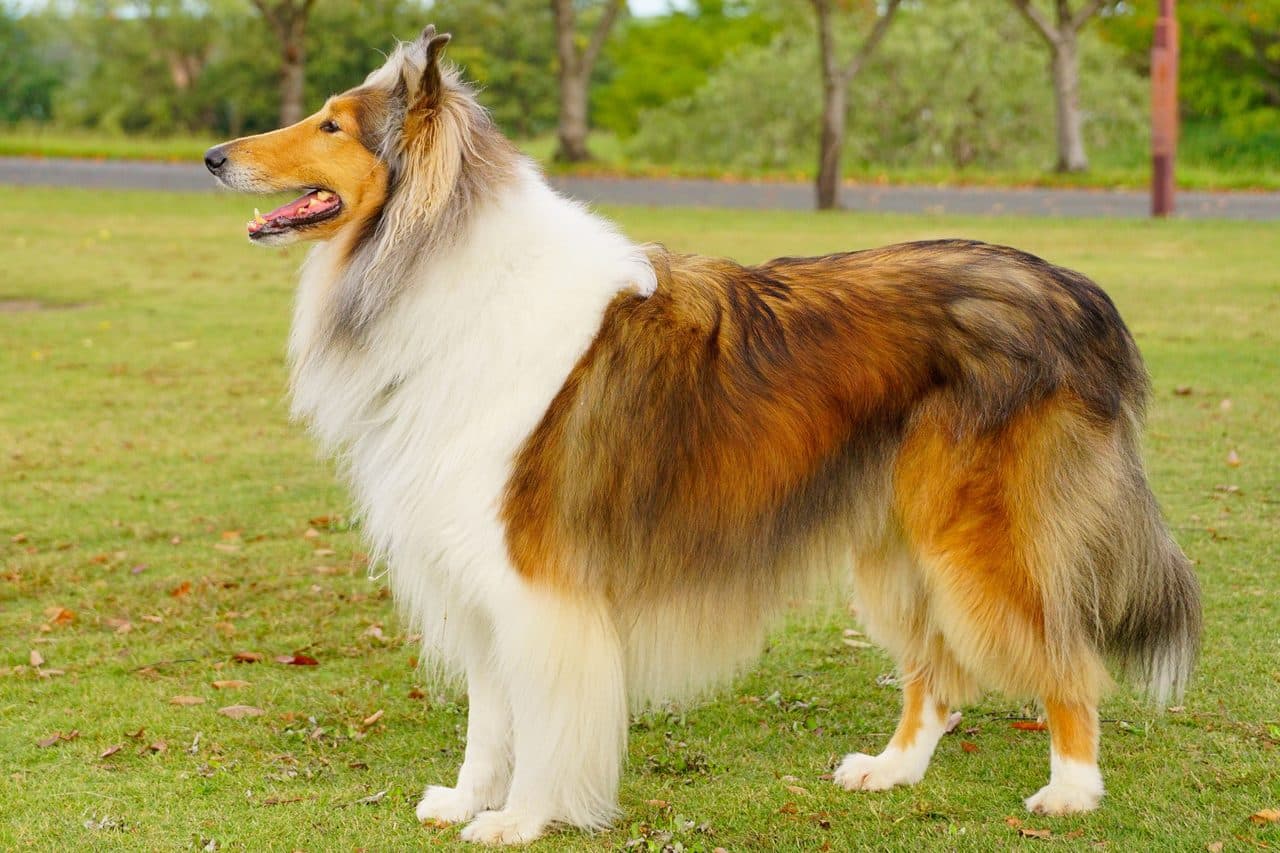
Collie (Rough Collie)
Elegant long coat, fine muzzle. Immortalised by Lassie. Sensitive, loyal, intelligent character. Excellent with children. Needs mental exercise and regular brushing.
Foto: Wikipedia Commons · CC BY-SA
Ideal for
- ✓Families with children
- ✓Homes with a garden
- ✓Anyone looking for an intelligent, gentle dog
Reconsider if
- ×Anyone unable to brush regularly
- ×Very warm climates
Notify me when a Collie (Rough Collie) is up for adoption
We'll only email you when a verified rescue posts one available. No spam, unsubscribe in 1 click.
We'll only use your email for this alert. More info in our privacy policy.
Is the Collie (Rough Collie) a good match for you?
Indicative rating from 1 (low) to 5 (high).
💶 Estimated cost of ownership
60-110 €/month
Quality food for a large breed (35-60 €), vet and prevention spread out (15-30 €), insurance and antiparasitics (10-20 €), grooming/brushing and accessories (5-15 €). You can brush at home and save on grooming.
History and origin
Historic Scottish herding dog. Popularised by Queen Victoria. Lassie (1943) made it world-famous. Two varieties: rough (long) and smooth (short).
Recognised by the FCI within Group 1 (sheepdogs). In the UK it still keeps its herding role in rural areas as well as being an urban companion dog. It learns complex tasks quickly — a benchmark in canine sport (agility, obedience, mondioring).
Temperament and character
Sensitive, loyal, intelligent. Affectionate with the family. Somewhat reserved with strangers. A good watchdog. A barker. Needs daily mental stimulation — scent games, food kongs and short trick sessions channel its energy better than physical exercise alone. Responds best to positive reinforcement: physical punishment breeds fear, anxiety and reactivity — coercive methods are NOT recommended by veterinary behaviourists. Sensitive to its family's mood: it picks up on tension and takes it on.
Living together
Children: excellent. Other dogs: sociable. Cats: good.
Life stages of the Collie (Rough Collie)
Each stage has its own care priorities. Life expectancy: 12-14 años.
Puppy
0-1 year
Early ophthalmological examination (Collie eye anomaly); MDR1 genetic test before medicating; socialisation.
Young
1-2 years
Mental and physical exercise; sun protection of the nasal bridge (solar dermatitis/'Collie nose'); ocular baseline.
Adult
2-8 years
Caution with MDR1-sensitive drugs; hip monitoring; retinal and skin surveillance.
Senior
8+ years
Review of vision and mobility; management of autoimmune skin lesions; adjustment of activity.
Care
Exercise: 45-60 min/day split into at least 2 sessions. Calm walks + mental play.
Brushing: daily; intensive during the moults (spring and autumn).
Feeding: quality food suited to life stage (puppy/adult/senior) and size. Weight control: obesity is the leading preventable cause of joint problems.
Vet: annual check-up with preventive blood work from age 5 (7 in giant breeds); twice a year from age 8.
Exercise 1 h/day. Brushing 3-4 times/week, daily during the moult. Cleaning of eye folds. Positive training.
Care in detail
🍽️ Nutrition
Quality food matched to the life stage and large size, split into 2 meals. Watch the weight: obesity is the leading preventable cause of joint problems. Treats deducted from the daily ration.
✂️ Grooming
Long double coat (rough variety): thorough brushing 3-4 times a week and daily during the spring and autumn moults to prevent matting in the feathering, ruff and trousers. No clipping required; bathe only when dirty.
🎓 Training
Very intelligent and sensitive: learns quickly with positive reinforcement and short sessions. Punishment shuts it down and breeds fear. Prone to alarm barking; it helps to teach a "quiet" cue early. Excels in obedience and agility.
🏃 Exercise
45-60 minutes daily in 2 sessions, combining a calm walk with mental work (scent games, tricks). Puppy: gentle exercise without jumping. Senior: keep the mind active even as intensity drops.
Breed-specific health
Retinal atrophy (CEA). MDR1 (drug sensitivity: test). Dysplasia. Dermatomyositis. Life expectancy 12-14 years. Life expectancy of 12-14 years with proper care. Pre-breeding screening recommended in responsible kennels (hips + cardio + ophthalmology according to the breed's conditions). When adopting, ask the rescue for a vet report on the current state of health.
🩺 Health predispositions of this breed
Conditions this breed is more predisposed to. Knowing about them helps with prevention and early detection. A predisposition does not mean the animal will develop them.
Common diseases in dogs
Learn the symptoms, prevention and when to see the vet. Reviewed indicative information that does not replace a veterinary consultation.
Screening and prevention for the Collie (Rough Collie)
Recommended tests and screenings
- ✓MDR1/ABCB1 genetic test (sensitivity to ivermectin, loperamide and other drugs) — essential in the breed
- ✓CEA (Collie Eye Anomaly) DNA genetic test
- ✓PRA-rcd2 genetic test (progressive retinal atrophy)
- ✓Official hip dysplasia radiograph (from 12 months of age)
- ✓Formal ophthalmological assessment by a veterinary ophthalmologist
- ✓Dermatomyositis screening in puppies presenting skin lesions
Prevention
ALWAYS confirm the MDR1 status before giving antiparasitics containing ivermectin/milbemycin or certain anti-diarrhoeals: a mutant/mutant Collie can suffer severe neurotoxicity. Buy from breeders whose parent dogs are tested for CEA, MDR1 and hips. Protect the eyes and skin from the sun and check the coat after walks in the countryside.
Check-up schedule
Ophthalmological examination at 6-8 weeks and annually thereafter. Hip radiograph at one year. Annual general check-up with preventive blood work from age 5 and every six months from age 8.
Warning signs
- !Abnormal reaction (tremors, ataxia, salivation) after an antiparasitic or drug — possible MDR1
- !Stumbling, bumping into things or difficulty seeing in low light (CEA/PRA)
- !Crusting or hair loss on the face and legs in puppies (dermatomyositis)
- !Lameness or stiffness when getting up (dysplasia)
Collie (Rough Collie) gallery

Frequently asked questions about the Collie (Rough Collie)
- How long does a Collie (Rough Collie) live? ▾
- The life expectancy of the Collie (Rough Collie) is 12-14 años. A good diet, adequate exercise, annual veterinary check-ups and preventive care can help reach the upper end of that range.
- How much does a Collie (Rough Collie) weigh? ▾
- An adult Collie (Rough Collie) weighs between 20-30 kg, depending on its sex, genetics and condition. It is grande.
- Where does the Collie (Rough Collie) breed come from? ▾
- The Collie (Rough Collie) originates from Escocia. Historic Scottish herding dog. Popularised by Queen Victoria. Lassie (1943) made it world-famous. Two varieties: rough (long) and smooth (short).
- How much exercise does a Collie (Rough Collie) need? ▾
- The Collie (Rough Collie) has media energy. **Exercise:** 45-60 min/day split into at least 2 sessions. Calm walks + mental play.
- Is the Collie (Rough Collie) good with children? ▾
- Children: excellent. Other dogs: sociable. Cats: good.
- Who is the Collie (Rough Collie) NOT recommended for? ▾
- It isn't the right breed for: Anyone unable to brush regularly. Very warm climates. It's important to choose a breed that's compatible with your lifestyle.
- What health problems does the Collie (Rough Collie) have? ▾
- Retinal atrophy (CEA). MDR1 (drug sensitivity: test). Dysplasia. Dermatomyositis. Life expectancy 12-14 years. Life expectancy of 12-14 years with proper care. Pre-breeding screening recommended in responsible kennels (hips + cardio + ophthalmology according to the breed's conditions). When adopting, ask the rescue for a vet report on the current state of health.
- Why is the MDR1 test so important in the Collie? ▾
- Many Collies carry the MDR1 mutation, which prevents them from properly clearing certain drugs (ivermectin, loperamide, some chemotherapy agents). Without care, normal doses can cause severe neurological poisoning. A DNA test removes the risk.
- Is it good with children? ▾
- Excellent: it is one of the gentlest, most patient dogs with children, a true reflection of Lassie. Sensitive to its surroundings, it prefers calm homes.
- Does it bark a lot? ▾
- Yes, it is an alarm barker owing to its herding past. With early training and enough mental stimulation this is manageable, but it is worth bearing in mind in flats.
- How much brushing does its coat need? ▾
- Quite a lot: 3-4 times a week and daily during the two annual moults. The long coat mats easily around the neck and hind legs.
- Does it adapt to a flat? ▾
- Yes, it is calm indoors if it gets its daily walks and mental work. It tolerates heat poorly because of its dense coat: take care in summer.
Related and similar breeds
Learn more about dogs
Practical veterinary guides to support your Collie (Rough Collie).
Sources and references
Content compiled from official breed standards and leading veterinary sources.
Want to adopt a collie (rough collie)?
There are collie (rough collie)s in rescue shelters looking for a family. Filter by breed in the catalogue.