

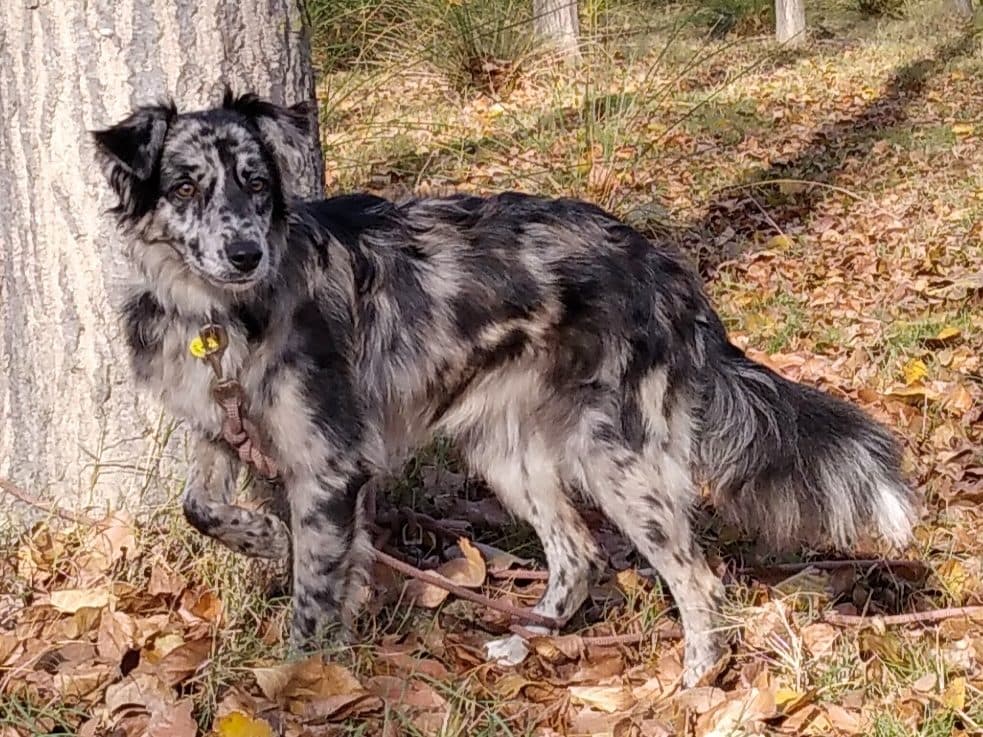
Carea Leonés
A native herding dog of the Leonese plateau. A transhumant working dog. Characteristic heterochromia (eyes of different colours are common). Recent official recognition (2008).
Foto: Wikipedia Commons · CC BY-SA
Ideal for
- ✓Very active families
- ✓Homes with a garden
- ✓Dog sports (agility, obedience)
Reconsider if
- ×Sedentary families
- ×Flats without daily exercise
- ×Homes where it is left alone for long hours (it suffers)
Notify me when a Carea Leonés is up for adoption
We'll only email you when a verified rescue posts one available. No spam, unsubscribe in 1 click.
We'll only use your email for this alert. More info in our privacy policy.
Is the Carea Leonés a good match for you?
Indicative rating from 1 (low) to 5 (high).
💶 Estimated cost of ownership
55-90 €/month
Food 28-45 €, antiparasitics 10-15 €, veterinary provision 15-25 €, accessories 5-10 €. A rustic breed with an easy coat: contained costs; consider the MDR1 test once (≈40-70 €).
History and origin
Recognised by the FCI. Originating in Spain (León). A native herding dog of the Leonese plateau.
Temperament and character
Intelligent, hard-working and loyal to its family. Needs mental AND physical stimulation — boredom is the main cause of behavioural problems. Excellent with positive training.
Living together
Children: good with its own family. **Other dogs:** sociable with socialisation. **Other animals:** with early socialisation.
Life stages of the Carea Leonés
Each stage has its own care priorities. Life expectancy: 12-14 años.
Puppy
0-12 months
Socialisation of this rustic, nervous herding dog; early channelling of its strong herding and guarding instinct.
Young
1-3 years
Plenty of exercise and mental work (herding dog); training consistent with its sensitivity.
Adult
3-8 years
Maintaining physical condition, weight control and joint health; general check-ups.
Senior
8+ years
Joint support and regular check-ups; adapting exercise.
Care
Exercise: 90-120 min/day split into sessions. Off-lead time in a safe area is essential.
Brushing: 2-3 times/week; daily during moulting.
Feeding: quality food matched to its physical work.
Vet: annual check-up + blood work from age 5.
Care in detail
🍽️ Nutrition
Quality food for a medium-sized working dog, adjusted to its high energy expenditure and without allowing it to become overweight.
✂️ Grooming
A rustic, easy-to-maintain coat: brushing 1-2 times a week, more during moults. Adapted to the harsh weather of the plateau.
🎓 Training
A highly intelligent, hard-working Leonese herding dog, often with heterochromia: positive reinforcement, dog sports and socialisation. It needs a daily job.
🏃 Exercise
90-120 minutes daily of physical and mental exercise; an energetic country dog, unsuited to a sedentary or flat-bound life without activity.
Breed-specific health
Hip/elbow dysplasia. Progressive retinal atrophy (genetic test recommended). Life expectancy 12-14 years with proper care.
Common diseases in dogs
Learn the symptoms, prevention and when to see the vet. Reviewed indicative information that does not replace a veterinary consultation.
Screening and prevention for the Carea Leonés
Recommended tests and screenings
- ✓MDR1 genetic test (drug sensitivity, common in herding dogs)
- ✓BAER hearing test and ophthalmological examination in merle-coated dogs (risk of deafness and ocular anomalies)
- ✓Official hip X-ray (dysplasia)
- ✓General examination by a vet; a rustic and robust breed
Prevention
Plenty of exercise and mental stimulation, weight management and, in dogs with heterochromia/merle coat, attention to eyes and hearing. Know the MDR1 status before medicating. Vaccination and deworming kept up to date.
Check-up schedule
Annual check-up with blood work from age 6; two visits a year from age 8. A long-lived native breed (12-14 years).
Warning signs
- !Abnormal reactions to a drug/antiparasitic (possible MDR1)
- !No response to sounds on one or both sides (deafness, more likely in merles)
- !Lameness or hip stiffness
- !Destructiveness or obsessive behaviours from lack of exercise/work
Carea Leonés gallery

Frequently asked questions about the Carea Leonés
- How long does a Carea Leonés live? ▾
- The life expectancy of the Carea Leonés is 12-14 años. A good diet, adequate exercise, annual veterinary check-ups and preventive care can help reach the upper end of that range.
- How much does a Carea Leonés weigh? ▾
- An adult Carea Leonés weighs between 15-25 kg, depending on its sex, genetics and condition. It is mediano.
- Where does the Carea Leonés breed come from? ▾
- The Carea Leonés originates from España (León). Recognised by the FCI. Originating in Spain (León). A native herding dog of the Leonese plateau.
- How much exercise does a Carea Leonés need? ▾
- The Carea Leonés has alta energy. **Exercise:** 90-120 min/day split into sessions. Off-lead time in a safe area is essential.
- Is the Carea Leonés good with children? ▾
- **Children:** good with its own family. **Other dogs:** sociable with socialisation. **Other animals:** with early socialisation.
- Who is the Carea Leonés NOT recommended for? ▾
- It isn't the right breed for: Sedentary families. Flats without daily exercise. Homes where it is left alone for long hours (it suffers). It's important to choose a breed that's compatible with your lifestyle.
- What health problems does the Carea Leonés have? ▾
- Hip/elbow dysplasia. Progressive retinal atrophy (genetic test recommended). Life expectancy 12-14 years with proper care.
- Why do many of them have eyes of different colours? ▾
- Heterochromia (differently coloured eyes) is common in the breed, associated with its merle coat. It is cosmetic and normal, but in heavily merle dogs it is worth checking hearing and vision, since that pattern can be linked to deafness or ocular anomalies.
- Is it recognised as a breed? ▾
- The Leonese Sheepdog holds regional recognition (2008) as a native Spanish breed, without being internationally recognised by the FCI. It is a transhumant herding dog of the Leonese plateau.
- Is it a good companion dog? ▾
- Only for very active families. It is a high-energy working dog that needs 1.5-2 hours of daily exercise and mental work; in sedentary homes it develops problem behaviours.
- What is MDR1 sensitivity? ▾
- It is a mutation common in herding dogs that alters the response to certain drugs and can cause serious reactions. A genetic test detects it; always inform the vet before medicating or sedating.
- Is it a healthy breed? ▾
- Yes, it is rustic, robust and long-lived (12-14 years), with few hereditary problems. The main precautions are hip dysplasia, MDR1 and, in merles, sensory health.
Learn more about dogs
Practical veterinary guides to support your Carea Leonés.
Sources and references
Content compiled from official breed standards and leading veterinary sources.
- WikipediaLeonese Sheepdog ↗
- RSCERoyal Canine Society of Spain ↗
Want to adopt a carea leonés?
There are carea leonéss in rescue shelters looking for a family. Filter by breed in the catalogue.