

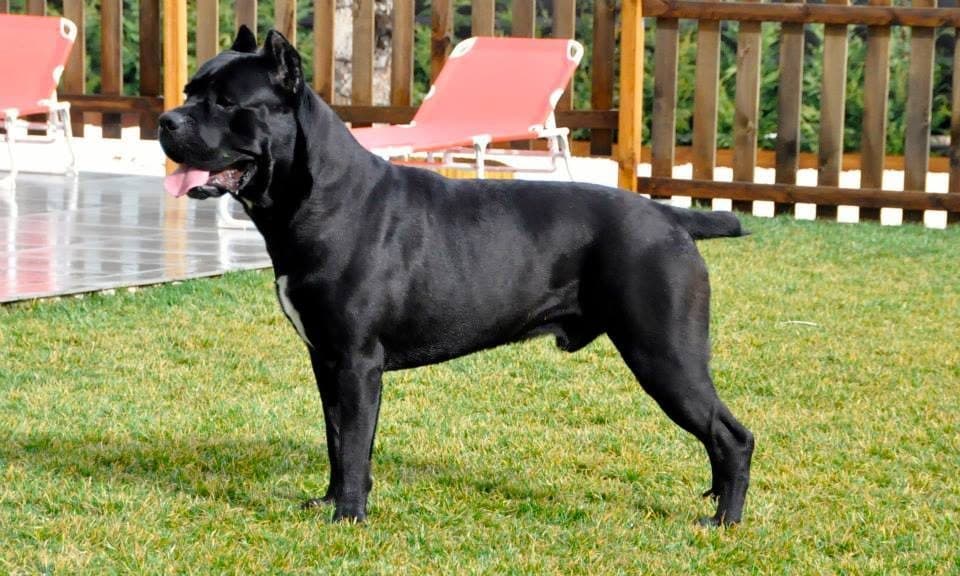
Cane Corso
An elegant Italian mastiff. A historic guardian. Intelligent, loyal and balanced when well trained. A dominant character: needs a clear leader. Classed as a dangerous breed in the UK.
Foto: Wikipedia Commons · CC BY-SA
Ideal for
- ✓Experienced, available families
- ✓Homes with a garden
- ✓Those who will socialise
Reconsider if
- ×Beginners
- ×Flats
- ×Those wanting a permissive dog
Notify me when a Cane Corso is up for adoption
We'll only email you when a verified rescue posts one available. No spam, unsubscribe in 1 click.
We'll only use your email for this alert. More info in our privacy policy.
Is the Cane Corso a good match for you?
Indicative rating from 1 (low) to 5 (high).
💶 Estimated cost of ownership
80-140 €/month
Food: 45-70 € · Preventive vet care: 20-40 € · Hygiene and accessories: 10-20 € · Insurance and extras: 10-25 €
History and origin
Ancient Italy (the Roman molossus). Worked as a farm dog, guardian and big-game hunter. Almost extinct after WWII; revived in the 1970s.
Recognised by the FCI within Group 2 (mastiffs). In the UK it is found on farms and smallholdings as a guardian, as well as in homes with plenty of space. Adults live up to 9-12 years: the short average lifespan is a consequence of the breed's extreme size and calls for specific care.
Temperament and character
Balanced, watchful and loyal. Devoted to its family. Reserved with strangers. Intelligent and hard-working. Needs daily mental stimulation — scent games, food Kongs and short trick sessions channel its energy better than physical exercise alone. Responds best to positive reinforcement: physical punishment breeds fear, anxiety and reactivity — coercive methods are NOT recommended by veterinary behaviourists. Sensitive to its family's mood: it picks up on tension and takes it on.
Living together
Dangerous-breed status in the UK: legal requirements apply. Children: good with its own. Other dogs: dominant. Cats: with socialisation.
Life stages of the Cane Corso
Each stage has its own care priorities. Life expectancy: 9-12 años.
Puppy
0-15 months
Firm early socialisation, controlled growth and training.
Junior
15 months-2 years
Obedience, moderate exercise and eye monitoring (entropion).
Adult
2-6 years
Gastric torsion prevention, dysplasia and skin control.
Senior
6+ years
Regular joint, cardiac and dermatological follow-up.
Care
Exercise: 45-60 min/day split into at least 2 sessions. Calm walks + mental play.
Brushing: 2-3 times/week; intensive during the moults (spring and autumn).
Feeding: quality food suited to its life stage (puppy/adult/senior) and size. Weight control: obesity is the leading preventable cause of joint problems.
Vet: annual check-up with preventive blood work from age 5 (7 years in giant breeds); twice a year from age 8.
Exercise 1.5 h/day. Firm, consistent training from puppyhood. Extensive socialisation. Weekly brushing.
Care in detail
🍽️ Nutrition
Quality large-breed food in 2 meals with rest afterwards; strict weight control to avoid overloading joints and heart.
✂️ Grooming
Weekly brushing of its short coat; check folds and eyes. Easy upkeep.
🎓 Training
Intelligent and hard-working, very trainable, but with a dominant character: requires an expert owner, a clear leader, firm positive-based training and, above all, extensive socialisation from puppyhood.
🏃 Exercise
Around 1.5 hours daily of physical and mental exercise. Not hyperactive, but needs an outlet and work that channels its guarding instinct.
Breed-specific health
Dysplasia. Heart disease. Entropion/ectropion. Bloat. Demodicosis. Lifespan 9-12 years. Life expectancy 9-12 years with proper care. Pre-breeding testing is recommended in responsible kennels (dysplasia + cardiac + ophthalmology according to the breed's conditions). When adopting, ask the shelter for a vet report on the current condition.
🩺 Health predispositions of this breed
Conditions this breed is more predisposed to. Knowing about them helps with prevention and early detection. A predisposition does not mean the animal will develop them.
Common diseases in dogs
Learn the symptoms, prevention and when to see the vet. Reviewed indicative information that does not replace a veterinary consultation.
Screening and prevention for the Cane Corso
Recommended tests and screenings
- ✓Hip and elbow dysplasia radiography
- ✓Echocardiography (heart disease)
- ✓Ophthalmic examination (entropion/ectropion)
- ✓Assessment for preventive gastropexy (torsion)
Prevention
Split meals with rest afterwards to prevent gastric torsion, weight control, intensive socialisation and firm training from puppyhood.
Check-up schedule
Annual check-up with joint and cardiac assessment.
Warning signs
- !Abdominal distension with unproductive retching (torsion, EMERGENCY)
- !Lameness or stiffness
- !Irritated eyes or a turned-in eyelid (entropion)
- !Skin lesions and hair loss (demodicosis)
Cane Corso gallery

Frequently asked questions about the Cane Corso
- How long does a Cane Corso live? ▾
- The life expectancy of the Cane Corso is 9-12 años. A good diet, adequate exercise, annual veterinary check-ups and preventive care can help reach the upper end of that range.
- How much does a Cane Corso weigh? ▾
- An adult Cane Corso weighs between 40-50 kg, depending on its sex, genetics and condition. It is grande.
- Where does the Cane Corso breed come from? ▾
- The Cane Corso originates from Italia. Ancient Italy (the Roman molossus). Worked as a farm dog, guardian and big-game hunter. Almost extinct after WWII; revived in the 1970s.
- How much exercise does a Cane Corso need? ▾
- The Cane Corso has media energy. **Exercise:** 45-60 min/day split into at least 2 sessions. Calm walks + mental play.
- Is the Cane Corso good with children? ▾
- Dangerous-breed status in the UK: legal requirements apply. Children: good with its own. Other dogs: dominant. Cats: with socialisation.
- Who is the Cane Corso NOT recommended for? ▾
- It isn't the right breed for: Beginners. Flats. Those wanting a permissive dog. It's important to choose a breed that's compatible with your lifestyle.
- What health problems does the Cane Corso have? ▾
- Dysplasia. Heart disease. Entropion/ectropion. Bloat. Demodicosis. Lifespan 9-12 years. Life expectancy 9-12 years with proper care. Pre-breeding testing is recommended in responsible kennels (dysplasia + cardiac + ophthalmology according to the breed's conditions). When adopting, ask the shelter for a vet report on the current condition.
- Is the Cane Corso a dangerous breed in the UK? ▾
- In many cases yes, it is considered potentially dangerous. You should check your national and local legislation: it usually requires a licence, third-party liability insurance and a muzzle in public.
- Is it suitable for beginners? ▾
- No. Its size, strength and dominant character require an experienced owner, able to provide clear leadership, firm training and constant socialisation.
- Is it good with the family and children? ▾
- Very loyal and balanced with its own, good with the children of the household. It is reserved with strangers, so early socialisation is essential.
- Does it get on well with other dogs? ▾
- It tends to be dominant, especially with dogs of the same sex. It improves with early socialisation, but requires supervision and careful handling.
- What health emergency should I know about? ▾
- Gastric torsion: a bloated abdomen with attempts to vomit that produce nothing is a life-threatening emergency. Splitting meals and avoiding exercise right afterwards reduces the risk.
Related and similar breeds
Learn more about dogs
Practical veterinary guides to support your Cane Corso.
Sources and references
Content compiled from official breed standards and leading veterinary sources.
Want to adopt a cane corso?
There are cane corsos in rescue shelters looking for a family. Filter by breed in the catalogue.