

Bulldog Inglés
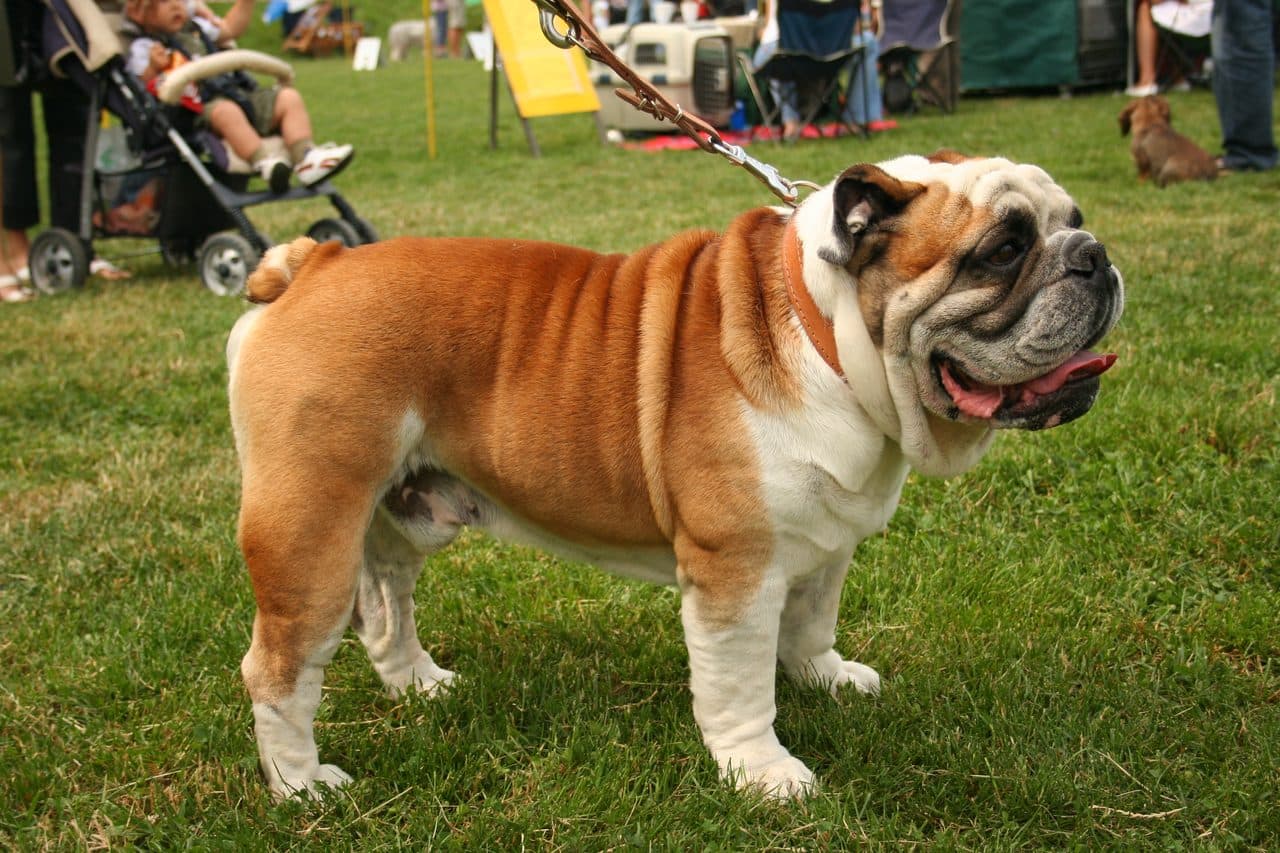
A distinctive wrinkled face, low, sturdy body. A sweet, patient character. A British national symbol. Sadly: extremely brachycephalic with MANY health problems due to cosmetic selection.
Foto: Wikipedia Commons · CC BY-SA
Ideal for
- ✓Quiet families
- ✓Flats
- ✓Anyone looking for a calm dog
Reconsider if
- ×Warm climates
- ×Anyone who cannot take on high vet costs
- ×Very active families
Notify me when a Bulldog Inglés is up for adoption
We'll only email you when a verified rescue posts one available. No spam, unsubscribe in 1 click.
We'll only use your email for this alert. More info in our privacy policy.
Is the Bulldog Inglés a good match for you?
Indicative rating from 1 (low) to 5 (high).
💶 Estimated cost of ownership
50-90 €/month
Food: 20-30 € · Vet (respiratory/skin): 20-40 € · Hygiene and accessories: 10-20 €
History and origin
It arose for "bull-baiting" in medieval England. After the practice was banned in 1835, it was re-selected as a friendly companion dog.
Adults reach 8-10 years in good conditions. Recognised by the FCI (Fédération Cynologique Internationale).
Temperament and character
Sweet, patient and calm. Attached to its family. Somewhat stubborn. Copes very poorly with heat. It snores and drools. It needs daily mental stimulation — scent games, food-stuffed Kongs and short trick sessions channel its energy better than physical exercise alone. It responds best to positive reinforcement: physical punishment breeds fear, anxiety and reactivity — coercive methods are NOT recommended by veterinary behaviourists. Sensitive to its family's mood: it picks up on tension and takes it on.
Living together
Children: excellent. Other dogs: sociable. Cats: good.
Life stages of the Bulldog Inglés
Each stage has its own care priorities. Life expectancy: 8-10 años.
Puppy
0-12 months
Socialisation, hygiene of facial folds and avoiding respiratory overexertion.
Junior
1-2 years
Weight control, management of brachycephalic syndrome and eye monitoring.
Adult
2-6 years
Heatstroke prevention, fold dermatitis and joint support.
Senior
6+ years
Frequent respiratory, cardiac and joint follow-up.
Care
Exercise: 30-45 min/day split into at least 2 sessions. Calm walks + mental play.
Brushing: 2-3 times a week; intensive during the moulting seasons (spring and autumn).
Feeding: quality food matched to life stage (puppy/adult/senior) and size. Weight control: obesity is the leading preventable cause of joint problems.
Vet: annual check-up with preventive blood work from age 5 (7 in giant breeds); twice a year from age 8.
SHORT exercise (15-30 min/day, NEVER in the heat). Daily cleaning of face and tail folds. Weight control is critical. Air conditioning in summer.
Care in detail
🍽️ Nutrition
Quality food with strict weight control: obesity worsens its respiratory and joint problems.
✂️ Grooming
Short, low-maintenance coat, but daily cleaning of the face and tail folds to avoid infections.
🎓 Training
Somewhat stubborn but docile and calm; it learns slowly with patience and positive reinforcement in short sessions.
🏃 Exercise
Short, gentle exercise (15-30 minutes a day), never in the heat or with intense exertion given its respiratory limitation.
Breed-specific health
Severe brachycephalic syndrome. Dysplasia. Eye problems (entropion, ectropion). Skin problems. Caesarean section for birth. Life expectancy 8-10 years (very short). Life expectancy 8-10 years with proper care. Pre-breeding testing is recommended at responsible kennels (dysplasia + cardiac + ophthalmology depending on the breed's conditions). When adopting, ask the rescue for a vet report on the dog's current condition.
🩺 Health predispositions of this breed
Conditions this breed is more predisposed to. Knowing about them helps with prevention and early detection. A predisposition does not mean the animal will develop them.
Common diseases in dogs
Learn the symptoms, prevention and when to see the vet. Reviewed indicative information that does not replace a veterinary consultation.
Screening and prevention for the Bulldog Inglés
Recommended tests and screenings
- ✓Respiratory assessment of brachycephalic syndrome (BOAS)
- ✓Hip and elbow dysplasia radiography
- ✓Ophthalmological examination (entropion/ectropion)
- ✓Dermatological review of the folds
Prevention
Avoid exercise and heat (high risk of heatstroke), air conditioning in summer, daily cleaning of the facial and tail folds, and strict weight control.
Check-up schedule
Annual check-up with respiratory assessment; continuous dermatological monitoring of the folds.
Warning signs
- !Noisy breathing, choking or intolerance to exercise and heat
- !Redness, bad smell or moisture in the folds (dermatitis)
- !Red eyes or watering (entropion/ectropion)
- !Lameness or difficulty moving
Bulldog Inglés gallery

Frequently asked questions about the Bulldog Inglés
- How long does a Bulldog Inglés live? ▾
- The life expectancy of the Bulldog Inglés is 8-10 años. A good diet, adequate exercise, annual veterinary check-ups and preventive care can help reach the upper end of that range.
- How much does a Bulldog Inglés weigh? ▾
- An adult Bulldog Inglés weighs between 23-25 kg, depending on its sex, genetics and condition. It is mediano.
- Where does the Bulldog Inglés breed come from? ▾
- The Bulldog Inglés originates from Inglaterra. It arose for "bull-baiting" in medieval England. After the practice was banned in 1835, it was re-selected as a friendly companion dog.
- How much exercise does a Bulldog Inglés need? ▾
- The Bulldog Inglés has baja energy. **Exercise:** 30-45 min/day split into at least 2 sessions. Calm walks + mental play.
- Is the Bulldog Inglés good with children? ▾
- Children: excellent. Other dogs: sociable. Cats: good.
- Who is the Bulldog Inglés NOT recommended for? ▾
- It isn't the right breed for: Warm climates. Anyone who cannot take on high vet costs. Very active families. It's important to choose a breed that's compatible with your lifestyle.
- What health problems does the Bulldog Inglés have? ▾
- Severe brachycephalic syndrome. Dysplasia. Eye problems (entropion, ectropion). Skin problems. Caesarean section for birth. Life expectancy 8-10 years (very short). Life expectancy 8-10 years with proper care. Pre-breeding testing is recommended at responsible kennels (dysplasia + cardiac + ophthalmology depending on the breed's conditions). When adopting, ask the rescue for a vet report on the dog's current condition.
- Why does the English Bulldog breathe so noisily? ▾
- Because of brachycephalic syndrome: its flattened face narrows the airways. Some cases require surgery; it is best to avoid heat and overexertion.
- Does it cope well with heat? ▾
- Very badly. It is one of the breeds at greatest risk of heatstroke; in summer it needs shade, water, air conditioning and no exercise during the hot hours.
- Does it need a lot of exercise? ▾
- No. It is low-energy and only tolerates short, gentle walks; intense exercise is dangerous for it.
- Is it a good dog with children? ▾
- Excellent. It is sweet, patient and calm, one of its best qualities as a family dog.
- Why does it have such a short life expectancy? ▾
- Extreme cosmetic selection brings respiratory, dermatological and joint problems that cut its life to 8-10 years. It entails high veterinary costs.
Related and similar breeds
Learn more about dogs
Practical veterinary guides to support your Bulldog Inglés.
Sources and references
Content compiled from official breed standards and leading veterinary sources.
Want to adopt a bulldog inglés?
There are bulldog ingléss in rescue shelters looking for a family. Filter by breed in the catalogue.