

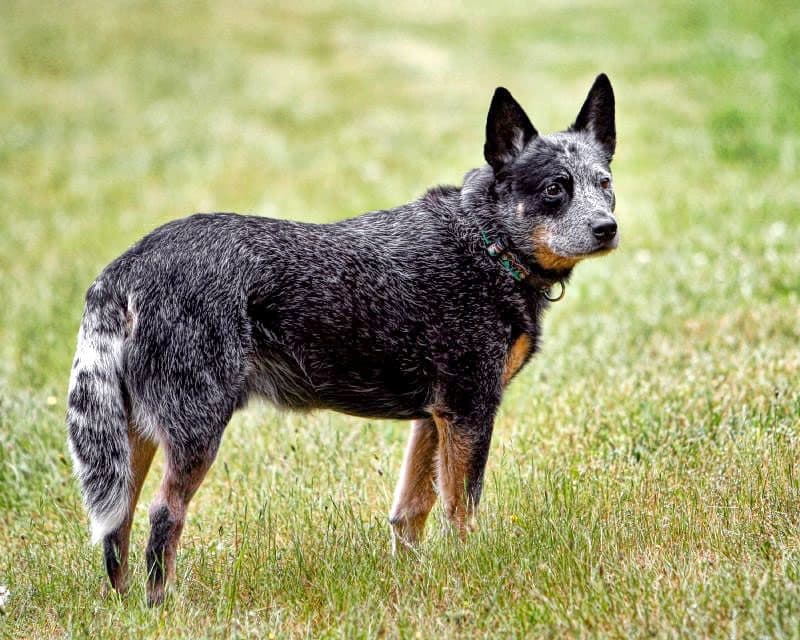
Boyero Australiano (Australian Cattle Dog)
Herds cattle by nipping at their heels. Extremely high intelligence (top 10). Extreme endurance. Distinctive blue mottled coat (Blue Heeler). NOT a flat-dweller's dog.
Foto: Wikipedia Commons · CC BY-SA
Ideal for
- ✓Very active families
- ✓Homes with a garden
- ✓Dog sports
Reconsider if
- ×Sedentary families
- ×Homes where it would be left alone for many hours
Notify me when a Boyero Australiano (Australian Cattle Dog) is up for adoption
We'll only email you when a verified rescue posts one available. No spam, unsubscribe in 1 click.
We'll only use your email for this alert. More info in our privacy policy.
Is the Boyero Australiano (Australian Cattle Dog) a good match for you?
Indicative rating from 1 (low) to 5 (high).
💶 Estimated cost of ownership
55-90 €/month
Food 30-45 €, antiparasitics 10-15 €, vet provision 15-25 €, sport/hard-wearing toys 5-10 €. Easy coat = savings on grooming; the biggest 'cost' is exercise time.
History and origin
Recognised by the FCI. Originating in Australia. Herds cattle by nipping at their heels.
Temperament and character
Intelligent, loyal and balanced when well socialised and trained. Needs daily mental stimulation. Responds best to positive reinforcement. Physical punishment breeds fear and reactivity.
Living together
Children: good with its own. **Other dogs:** sociable with socialisation. **Cats:** with early socialisation.
Life stages of the Boyero Australiano (Australian Cattle Dog)
Each stage has its own care priorities. Life expectancy: 12-16 años.
Puppy
0-15 months
Socialisation with people and other animals to temper its herding instinct and heel-nipping; plenty of mental stimulation.
Young adult
1-4 years
Intense daily physical and mental exercise; dog sports; managing its very high energy and independence.
Adult
4-8 years
Maintaining work and physical condition; eye and hip check-ups.
Senior
8+ years
Adapt exercise intensity, monitor vision (PRA) and joints; senior diet.
Care
Exercise: 90-120 min/day, split up. Off-lead time in a safe area is essential.
Brushing: 2-3 times/week; daily during shedding.
Feeding: quality kibble matched to its physical workload.
Vet: annual check-up + blood work from 5 years old.
Care in detail
🍽️ Nutrition
Quality kibble for a very active working breed, adjusting the portion to its very high energy expenditure; keep an athletic weight without excess pounds.
✂️ Grooming
Short, dense coat that is very easy to care for: brushing 1-2 times a week, more during shedding. Weatherproof.
🎓 Training
Elite intelligence (top 10) and enormous working capacity: it needs a 'job'. Positive reinforcement, dog sports and plenty of socialisation to channel its herding instinct (it tends to nip at heels).
🏃 Exercise
A minimum of 90-120 min daily of intense exercise and mental work; it is NOT a flat dog or one for a sedentary family — it gets frustrated and develops destructive behaviours.
Breed-specific health
Conditions common in the breed according to its FCI group. Life expectancy 12-16 years with proper care. Annual vet check-up + blood work from 5 years old.
🩺 Health predispositions of this breed
Conditions this breed is more predisposed to. Knowing about them helps with prevention and early detection. A predisposition does not mean the animal will develop them.
Common diseases in dogs
Learn the symptoms, prevention and when to see the vet. Reviewed indicative information that does not replace a veterinary consultation.
Screening and prevention for the Boyero Australiano (Australian Cattle Dog)
Recommended tests and screenings
- ✓BAER hearing test (congenital deafness linked to the mottled pattern)
- ✓Genetic test/ophthalmological exam for progressive retinal atrophy (prcd-PRA)
- ✓Official hip and elbow radiograph (dysplasia)
- ✓Assessment for lens luxation
Prevention
It needs a huge amount of physical and mental exercise to prevent problem behaviours; weight control and regular eye exams. Keep vaccinations and deworming up to date.
Check-up schedule
Annual check-up with eye monitoring; blood work from 6-7 years old. It is a very long-lived (12-16 years) and robust breed.
Warning signs
- !Doesn't respond to sounds or startles when touched (possible deafness)
- !Stumbling, bumping into things or reduced vision in low light (PRA)
- !Lameness or stiffness in the hips/elbows
- !Heel-nipping, destructiveness or hyperactivity (lack of exercise/stimulation)
Boyero Australiano (Australian Cattle Dog) gallery

Frequently asked questions about the Boyero Australiano (Australian Cattle Dog)
- How long does a Boyero Australiano (Australian Cattle Dog) live? ▾
- The life expectancy of the Boyero Australiano (Australian Cattle Dog) is 12-16 años. A good diet, adequate exercise, annual veterinary check-ups and preventive care can help reach the upper end of that range.
- How much does a Boyero Australiano (Australian Cattle Dog) weigh? ▾
- An adult Boyero Australiano (Australian Cattle Dog) weighs between 15-23 kg, depending on its sex, genetics and condition. It is mediano.
- Where does the Boyero Australiano (Australian Cattle Dog) breed come from? ▾
- The Boyero Australiano (Australian Cattle Dog) originates from Australia. Recognised by the FCI. Originating in Australia. Herds cattle by nipping at their heels.
- How much exercise does a Boyero Australiano (Australian Cattle Dog) need? ▾
- The Boyero Australiano (Australian Cattle Dog) has muy alta energy. **Exercise:** 90-120 min/day, split up. Off-lead time in a safe area is essential.
- Is the Boyero Australiano (Australian Cattle Dog) good with children? ▾
- **Children:** good with its own. **Other dogs:** sociable with socialisation. **Cats:** with early socialisation.
- Who is the Boyero Australiano (Australian Cattle Dog) NOT recommended for? ▾
- It isn't the right breed for: Sedentary families. Homes where it would be left alone for many hours. It's important to choose a breed that's compatible with your lifestyle.
- What health problems does the Boyero Australiano (Australian Cattle Dog) have? ▾
- Conditions common in the breed according to its FCI group. Life expectancy 12-16 years with proper care. Annual vet check-up + blood work from 5 years old.
- Can it live in a flat? ▾
- Not recommended. It is one of the most energetic and intelligent dogs there is, bred to work cattle all day. Without 1.5-2 hours of intense exercise and mental tasks, it develops anxiety and destructive behaviours.
- Why does it nip at heels? ▾
- It is its inherited technique for herding cattle (hence 'Blue Heeler'). It may direct it at people, children or moving cars. It can be managed with early socialisation and redirection, but it is worth knowing about beforehand.
- Is it prone to deafness? ▾
- Yes, it has a predisposition to congenital deafness linked to its mottled pattern. A responsible breeder carries out the BAER test on puppies. A deaf dog can live well, but it is worth knowing.
- Is it good with children? ▾
- With those in its family and when well socialised it can be, but its herding instinct (heel-nipping) and its intensity make it better suited to homes with older, active children, always under supervision.
- How long does it live? ▾
- It is an extraordinarily long-lived breed, frequently 14-16 years, and very healthy. Keep its weight, eye health and activity level in check to enjoy it for many years.
Learn more about dogs
Practical veterinary guides to support your Boyero Australiano (Australian Cattle Dog).
Sources and references
Content compiled from official breed standards and leading veterinary sources.
Want to adopt a boyero australiano (australian cattle dog)?
There are boyero australiano (australian cattle dog)s in rescue shelters looking for a family. Filter by breed in the catalogue.