

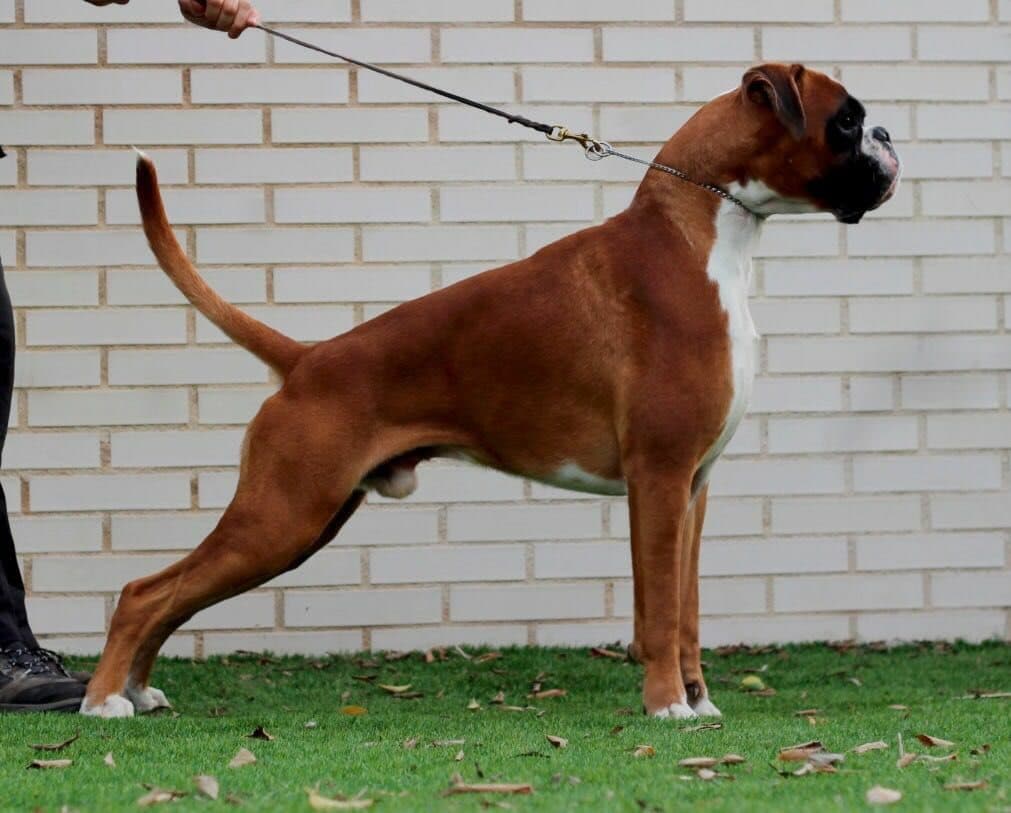
Boxer
The "Peter Pan dog" — a perpetual puppy. Affectionate with the family, protective without being aggressive, playful into old age. Cancer and heart problems limit its life expectancy.
Foto: Wikipedia Commons · CC BY-SA
Ideal for
- ✓Families with children
- ✓Active people
- ✓Homes with a garden
Reconsider if
- ×Very hot climates (brachycephalic)
- ×Those who value peace and quiet
- ×Homes without time to spare
Notify me when a Boxer is up for adoption
We'll only email you when a verified rescue posts one available. No spam, unsubscribe in 1 click.
We'll only use your email for this alert. More info in our privacy policy.
Is the Boxer a good match for you?
Indicative rating from 1 (low) to 5 (high).
💶 Estimated cost of ownership
70-130 €/month
Food: 35-55 € · Preventive vet care: 20-40 € · Grooming and accessories: 10-20 € · Insurance and extras: 5-20 €
History and origin
It emerged in Germany in the late 19th century by crossing the Brabant Bullenbeisser with the English Bulldog. Used in war (both World Wars) as a messenger and police dog. Today a popular family pet.
Temperament and character
Playful, affectionate, loyal. Protective of the family. Tolerant with children. Needs intense daily exercise. Drools (not excessively). Vocal, with personality.
Living together
Children: excellent. Other dogs: sociable. Cats: with early socialisation.
Life stages of the Boxer
Each stage has its own care priorities. Life expectancy: 10-12 años.
Puppy
0-12 months
Plenty of socialisation given its playful nature; avoid heat (somewhat brachycephalic) and keep growth controlled.
Junior
1-2 years
Exercise and obedience; thyroid function; first cardiac check-up (Holter) given the risk of Boxer cardiomyopathy.
Adult
2-7 years
Active cancer surveillance (mast cell tumours, skin palpation), annual cardiac monitoring and hip management.
Senior
7+ years
Screening for cancer and arrhythmias/Boxer DCM is a priority; frequent blood work and adapted exercise.
Care
Exercise: 2-3 hours daily. AVOID extreme heat (respiratory problems). Grooming: low. Feeding: high-performance large-breed kibble.
Care in detail
🍽️ Nutrition
High-performance large-breed kibble, split into 2 meals. Avoid excess weight, which worsens its heart and joint problems.
✂️ Grooming
Very low maintenance: a short coat that only needs weekly brushing. Clean the lip folds if drool builds up.
🎓 Training
Intelligent and highly motivated by its family, but playful and "immature" for years. Positive, consistent training from puppyhood; channel its energy so it doesn't jump up on people.
🏃 Exercise
2-3 hours of exercise daily, always avoiding the hottest hours because of its short muzzle and risk of heatstroke.
Breed-specific health
Cancer (high incidence). Boxer dilated cardiomyopathy (Boxer DCM). Hip dysplasia. Brachycephalic syndrome (mild). Hypothyroidism. Life expectancy 10-12 years.
🩺 Health predispositions of this breed
Conditions this breed is more predisposed to. Knowing about them helps with prevention and early detection. A predisposition does not mean the animal will develop them.
Common diseases in dogs
Learn the symptoms, prevention and when to see the vet. Reviewed indicative information that does not replace a veterinary consultation.
Screening and prevention for the Boxer
Recommended tests and screenings
- ✓Echocardiography and Holter monitor (Boxer cardiomyopathy)
- ✓Hip dysplasia radiograph
- ✓Thyroid panel
- ✓Palpation and cytology of skin lumps (mast cell tumour)
Prevention
Temperature control (avoid exercise in heat given its mildly brachycephalic build), regular skin checks looking for lumps, and cardiac screening in adults.
Check-up schedule
Annual check-up with cardiological monitoring from adulthood onwards.
Warning signs
- !Lumps or masses on the skin
- !Fainting or exercise intolerance (arrhythmia)
- !Excessive panting and heatstroke
- !Lameness or stiffness (dysplasia)
Frequently asked questions about the Boxer
- How long does a Boxer live? ▾
- The life expectancy of the Boxer is 10-12 años. A good diet, adequate exercise, annual veterinary check-ups and preventive care can help reach the upper end of that range.
- How much does a Boxer weigh? ▾
- An adult Boxer weighs between 25-32 kg, depending on its sex, genetics and condition. It is grande.
- Where does the Boxer breed come from? ▾
- The Boxer originates from Alemania. It emerged in Germany in the late 19th century by crossing the Brabant Bullenbeisser with the English Bulldog. Used in war (both World Wars) as a messenger and police dog. Today a popular family pet.
- How much exercise does a Boxer need? ▾
- The Boxer has alta energy. Exercise: 2-3 hours daily. AVOID extreme heat (respiratory problems). Grooming: low. Feeding: high-performance large-breed kibble.
- Is the Boxer good with children? ▾
- Children: excellent. Other dogs: sociable. Cats: with early socialisation.
- Who is the Boxer NOT recommended for? ▾
- It isn't the right breed for: Very hot climates (brachycephalic). Those who value peace and quiet. Homes without time to spare. It's important to choose a breed that's compatible with your lifestyle.
- What health problems does the Boxer have? ▾
- Cancer (high incidence). Boxer dilated cardiomyopathy (Boxer DCM). Hip dysplasia. Brachycephalic syndrome (mild). Hypothyroidism. Life expectancy 10-12 years.
- Is the Boxer good with children? ▾
- Excellent: it is playful, patient and very attached to its family. Because of its size and energy, it is best to supervise play with very young children to avoid knocks.
- Does it tolerate heat well? ▾
- Not entirely. It is slightly brachycephalic, so it struggles with heat and intense exercise in summer; walk it during the cooler hours and always provide water and shade.
- Why is it called the Peter Pan dog? ▾
- Because it keeps a playful, puppy-like character well into old age, maturing physically long before it does mentally.
- Which health problems are the most serious? ▾
- Cancer and Boxer dilated cardiomyopathy are the causes that most shorten its life. Cardiological monitoring and checking skin lumps are essential.
- Does it need a lot of exercise? ▾
- Yes, it is an athletic dog that needs 2-3 hours daily. Without an outlet it becomes restless and can be destructive.
Related and similar breeds
Learn more about dogs
Practical veterinary guides to support your Boxer.
Sources and references
Content compiled from official breed standards and leading veterinary sources.
- WikipediaBoxer (dog) ↗
- AKCBoxer Breed ↗
- FCIFCI Standard No. 144 (Boxer) ↗
Want to adopt a boxer?
There are boxers in rescue shelters looking for a family. Filter by breed in the catalogue.