

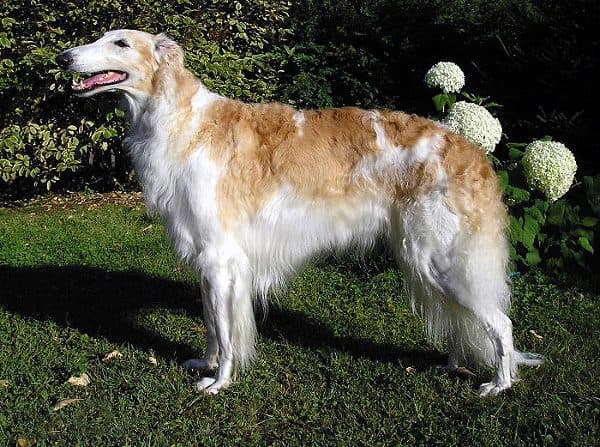
Borzoi (Galgo Ruso)
Aristocratic Russian sighthound. A wolf hunter on the steppes. Long silky coat. Dignified, silent character. Excellent in a flat (yes, surprisingly) if it is walked well every day.
Foto: Wikipedia Commons · CC BY-SA
Ideal for
- ✓Calm families
- ✓Flats with daily walks + sprints
- ✓Households without small animals
Reconsider if
- ×Households with rabbits/cats
- ×Extreme climates without a coat
Notify me when a Borzoi (Galgo Ruso) is up for adoption
We'll only email you when a verified rescue posts one available. No spam, unsubscribe in 1 click.
We'll only use your email for this alert. More info in our privacy policy.
Is the Borzoi (Galgo Ruso) a good match for you?
Indicative rating from 1 (low) to 5 (high).
💶 Estimated cost of ownership
70-110 €/month
Feeding 40-60 €, brushing/occasional grooming 8-15 €, antiparasitics 10-15 €, veterinary provision 18-30 €. Budget for a winter coat and bear in mind the extra cost of monitored anaesthesia.
History and origin
Recognised by the FCI. Originating from Russia. An aristocratic Russian sighthound.
Temperament and character
Calm at home but an athlete outdoors. Reserved with strangers. Very high prey drive. Affectionate and sensitive with its family.
Living together
Children: good with respectful ones. **Other dogs:** sociable with its own type. **Cats/rodents:** high prey drive, NO.
Life stages of the Borzoi (Galgo Ruso)
Each stage has its own care priorities. Life expectancy: 9-14 años.
Puppy
0-15 months
Controlled growth of the large sighthound; exercise in safe areas due to its strong chase instinct; socialisation.
Young
1.5-3 years
Controlled gallops; split meals and rest after eating (risk of torsion); anaesthetic caution.
Adult
3-7 years
Weight control, cardiac health and protection from the cold; general check-ups.
Senior
7+ years
Cardiological and oncological monitoring (osteosarcoma); joint support.
Care
Exercise: long walks + off-lead sprints in a safe area.
Brushing: brief, weekly.
Coat in winter: yes, little fur and little body fat.
Vet: annual check-up + watch for anaesthetic sensitivity.
Care in detail
🍽️ Nutrition
Quality large-breed food split into several meals (bloat prevention). It is naturally slender: do not mistake its lean figure for being underweight.
✂️ Grooming
Long, silky coat that needs brushing 2-3 times a week to prevent knots in the feathering, ears and tail; seasonal moult.
🎓 Training
Independent, sensitive and dignified: no harsh methods. Positive reinforcement and patience. Its prey drive is extreme, so never off-lead outside a fenced area.
🏃 Exercise
Daily walks plus sprints in a safe, fenced area; calm and almost sedentary at home, but it needs to run at full gallop regularly.
Breed-specific health
Documented anaesthetic sensitivity. Mild heart conditions. Life expectancy 9-14 years.
🩺 Health predispositions of this breed
Conditions this breed is more predisposed to. Knowing about them helps with prevention and early detection. A predisposition does not mean the animal will develop them.
Common diseases in dogs
Learn the symptoms, prevention and when to see the vet. Reviewed indicative information that does not replace a veterinary consultation.
Screening and prevention for the Borzoi (Galgo Ruso)
Recommended tests and screenings
- ✓Anaesthetic protocol for sighthounds (documented sensitivity to anaesthetics)
- ✓Cardiological assessment/echocardiography (heart conditions, arrhythmias)
- ✓Monitoring for gastric dilatation-volvulus (bloat)
- ✓Orthopaedic assessment for lameness (risk of osteosarcoma in large breeds)
Prevention
Always flag the sighthound before any anaesthesia, split meals to prevent bloat and protect it from extreme cold due to its low body fat. Keep vaccination and deworming up to date.
Check-up schedule
Annual check-up with cardiac monitoring; two visits a year from the age of 7. Discuss the anaesthetic protocol before any surgery.
Warning signs
- !Swollen abdomen with unproductive retching (bloat: EMERGENCY)
- !Fainting, coughing or exercise intolerance (heart)
- !Persistent lameness or swelling in a limb
- !Exaggerated reactions or slow recovery after sedation/anaesthesia
Borzoi (Galgo Ruso) gallery

Frequently asked questions about the Borzoi (Galgo Ruso)
- How long does a Borzoi (Galgo Ruso) live? ▾
- The life expectancy of the Borzoi (Galgo Ruso) is 9-14 años. A good diet, adequate exercise, annual veterinary check-ups and preventive care can help reach the upper end of that range.
- How much does a Borzoi (Galgo Ruso) weigh? ▾
- An adult Borzoi (Galgo Ruso) weighs between 25-48 kg, depending on its sex, genetics and condition. It is grande.
- Where does the Borzoi (Galgo Ruso) breed come from? ▾
- The Borzoi (Galgo Ruso) originates from Rusia. Recognised by the FCI. Originating from Russia. An aristocratic Russian sighthound.
- How much exercise does a Borzoi (Galgo Ruso) need? ▾
- The Borzoi (Galgo Ruso) has media energy. **Exercise:** long walks + off-lead sprints in a safe area.
- Is the Borzoi (Galgo Ruso) good with children? ▾
- **Children:** good with respectful ones. **Other dogs:** sociable with its own type. **Cats/rodents:** high prey drive, NO.
- Who is the Borzoi (Galgo Ruso) NOT recommended for? ▾
- It isn't the right breed for: Households with rabbits/cats. Extreme climates without a coat. It's important to choose a breed that's compatible with your lifestyle.
- What health problems does the Borzoi (Galgo Ruso) have? ▾
- Documented anaesthetic sensitivity. Mild heart conditions. Life expectancy 9-14 years.
- Can it live in a flat, being so large? ▾
- Surprisingly, yes. At home it is calm, clean and almost sedentary (a 'couch athlete'). The condition is giving it daily walks and, above all, opportunities to run at full gallop off-lead in a fenced area.
- Can it live with cats or rabbits? ▾
- It is very risky. It was bred to hunt wolves and its prey drive is extremely high. With small animals at home it is not advisable, and it must never be off-lead where it could give chase.
- Why must you flag that it is a sighthound before anaesthesia? ▾
- Greyhounds and sighthounds have little body fat and metabolise certain anaesthetics differently, with greater sensitivity. Always state the breed so the team uses an adapted protocol.
- Does it get cold? ▾
- Yes. Despite its long coat, its lean body with barely any fat makes it sensitive to intense cold and damp. A coat in winter and a warm shelter are advisable.
- Is it easy to train? ▾
- It is intelligent but independent and sensitive, more like a cat than an obedient dog. It learns with positive reinforcement and respect, but do not expect blind obedience or a reliable recall with a hunting stimulus in front of it.
Learn more about dogs
Practical veterinary guides to support your Borzoi (Galgo Ruso).
Sources and references
Content compiled from official breed standards and leading veterinary sources.
- WikipediaBorzoi ↗
- AKCBorzoi ↗
- FCIFCI Standard No. 193 ↗
Want to adopt a borzoi (galgo ruso)?
There are borzoi (galgo ruso)s in rescue shelters looking for a family. Filter by breed in the catalogue.