

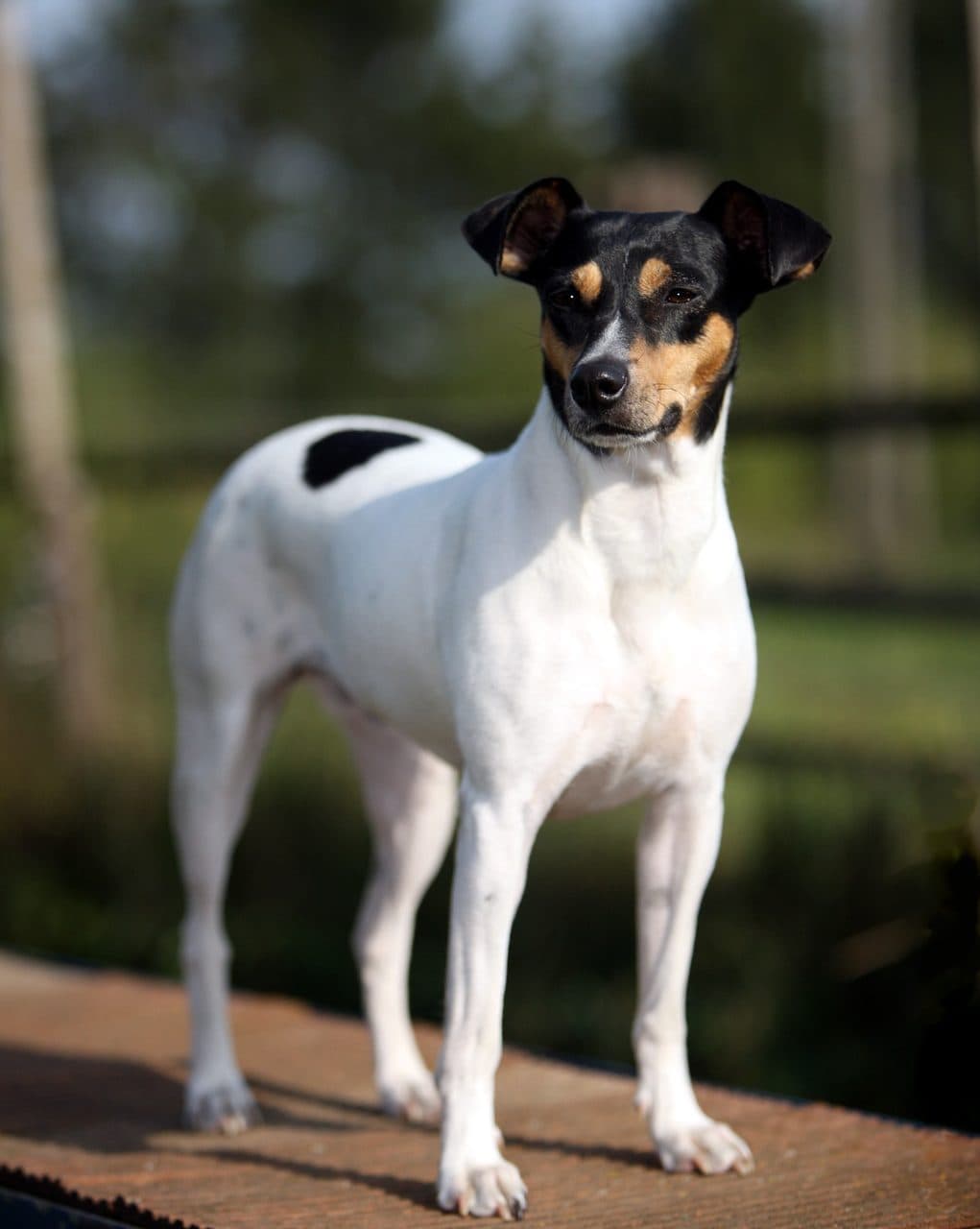
Bodeguero Andaluz (Ratonero)
A small traditional rat-hunter from Andalusian wine cellars (bodegas). Intelligent, lively, brave. An excellent urban family dog. A native breed little known outside Spain.
Foto: Wikipedia Commons · CC BY-SA
Ideal for
- ✓Active families
- ✓Flats with regular walks
- ✓Anyone seeking an intelligent, loyal dog
Reconsider if
- ×Homes with pet rodents (prey drive)
Notify me when a Bodeguero Andaluz (Ratonero) is up for adoption
We'll only email you when a verified rescue posts one available. No spam, unsubscribe in 1 click.
We'll only use your email for this alert. More info in our privacy policy.
Is the Bodeguero Andaluz (Ratonero) a good match for you?
Indicative rating from 1 (low) to 5 (high).
💶 Estimated cost of ownership
50-90 €/month
Range food for a small active breed (15-25 €), pro-rated vaccinations and annual check-up (15-25 €), internal and external antiparasitics (10-15 €) and optional liability/health insurance (10-20 €). It does not need professional grooming, which lowers its upkeep.
History and origin
Originated in the Andalusian wine cellars of Jerez/Sanlúcar in the 18th century. It hunted the rats that damaged the barrels. A cross of imported British fox terriers with local dogs.
Recognised by the FCI within Group 9 (companion dogs). Its small size makes flat living easy, but "small" is not a synonym for "needs no training": small dog syndrome (excessive barking, fear, reactivity) is common when it is not given the same routine as a large dog.
Temperament and character
Lively, alert, brave. Attached to the family. Intelligent. A born hunter. A good watchdog for its size. Needs daily mental stimulation — scent games, food kongs and short trick sessions channel its energy better than physical exercise alone. Responds best to positive reinforcement: physical punishment creates fear, anxiety and reactivity — coercive methods are NOT recommended by veterinary behaviourists. Sensitive to the family's mood: it detects tension and picks up on it.
Living together
Children: good. Other dogs: sociable. Cats: coexists if socialised.
Life stages of the Bodeguero Andaluz (Ratonero)
Each stage has its own care priorities. Life expectancy: 13-15 años.
Puppy
0-10 months
Socialisation, vaccination and channelling of the strong hunting instinct.
Junior
10 months-2 years
Plenty of exercise, training and mental stimulation.
Adult
2-9 years
Weight maintenance, dental health and daily physical activity.
Senior
9+ years
Joint check-ups and sensory monitoring (sight/hearing).
Care
Exercise: 60-90 min/day split into at least 2 sessions. Off-lead time in a safe area is essential for high-energy breeds.
Brushing: 2-3 times/week; intensive during moulting (spring and autumn).
Feeding: quality food suited to life stage (puppy/adult/senior) and size. Weight control: obesity is the leading preventable cause of joint problems.
Veterinary care: annual check-up with preventive blood work from 5 years of age (7 years in giant breeds); twice a year from 8.
Exercise 1 h/day. Short coat, easy to maintain. Ear cleaning. Firm, positive training.
Care in detail
🍽️ Nutrition
Quality food for a small active breed, adapted to life stage. Its high activity level makes weight easy to maintain, but the portion should be adjusted to its real energy expenditure.
✂️ Grooming
Very simple maintenance: a short coat that only needs brushing 2-3 times a week, stepped up during moulting. Ear checks and occasional baths.
🎓 Training
Very intelligent and willing to work with positive methods. Channel its hunting instinct with scent and search games. It should be socialised and worked on impulse control and barking.
🏃 Exercise
60-90 min daily in 2 sessions, ideally with some off-lead time in a safe area. It is a high-energy dog that needs to run and sniff; without enough exercise it becomes nervous and prone to barking.
Breed-specific health
Few hereditary problems (a native breed with little inbreeding). Patellar luxation. Life expectancy 13-15 years. Life expectancy 13-15 years with proper care. Pre-breeding tests recommended in responsible kennels (hip dysplasia + cardiac + ophthalmology according to the breed's pathologies). When adopting, ask the shelter for a vet report on the current condition.
Common diseases in dogs
Learn the symptoms, prevention and when to see the vet. Reviewed indicative information that does not replace a veterinary consultation.
Screening and prevention for the Bodeguero Andaluz (Ratonero)
Recommended tests and screenings
- ✓Patellar luxation examination (the breed's main orthopaedic problem)
- ✓Basic ophthalmological assessment
- ✓Regular dental check-up
- ✓BAER hearing test advisable in specimens with a very white coat (predisposition to deafness)
Prevention
As a native breed with little inbreeding it has few hereditary problems. The key is meeting its high need for exercise and mental stimulation to prevent behavioural problems, together with weight control and regular deworming.
Check-up schedule
Annual veterinary check-up; preventive blood work from 5-7 years of age and two visits a year from 8.
Warning signs
- !Lameness or intermittent skipping in a hind leg (patellar luxation)
- !Destructive behaviour or excessive barking (lack of exercise/stimulation)
- !Not responding to sounds or startling when touched (possible deafness)
- !Bad breath or tartar (dental disease)
Bodeguero Andaluz (Ratonero) gallery

Frequently asked questions about the Bodeguero Andaluz (Ratonero)
- How long does a Bodeguero Andaluz (Ratonero) live? ▾
- The life expectancy of the Bodeguero Andaluz (Ratonero) is 13-15 años. A good diet, adequate exercise, annual veterinary check-ups and preventive care can help reach the upper end of that range.
- How much does a Bodeguero Andaluz (Ratonero) weigh? ▾
- An adult Bodeguero Andaluz (Ratonero) weighs between 6-8 kg, depending on its sex, genetics and condition. It is pequeño.
- Where does the Bodeguero Andaluz (Ratonero) breed come from? ▾
- The Bodeguero Andaluz (Ratonero) originates from España (Andalucía). Originated in the Andalusian wine cellars of Jerez/Sanlúcar in the 18th century. It hunted the rats that damaged the barrels. A cross of imported British fox terriers with local dogs.
- How much exercise does a Bodeguero Andaluz (Ratonero) need? ▾
- The Bodeguero Andaluz (Ratonero) has alta energy. **Exercise:** 60-90 min/day split into at least 2 sessions. Off-lead time in a safe area is essential for high-energy breeds.
- Is the Bodeguero Andaluz (Ratonero) good with children? ▾
- Children: good. Other dogs: sociable. Cats: coexists if socialised.
- Who is the Bodeguero Andaluz (Ratonero) NOT recommended for? ▾
- It isn't the right breed for: Homes with pet rodents (prey drive). It's important to choose a breed that's compatible with your lifestyle.
- What health problems does the Bodeguero Andaluz (Ratonero) have? ▾
- Few hereditary problems (a native breed with little inbreeding). Patellar luxation. Life expectancy 13-15 years. Life expectancy 13-15 years with proper care. Pre-breeding tests recommended in responsible kennels (hip dysplasia + cardiac + ophthalmology according to the breed's pathologies). When adopting, ask the shelter for a vet report on the current condition.
- Does the Andalusian Ratter adapt to a flat? ▾
- Yes, its small size fits in a flat, but it is a high-energy dog: it needs 60-90 min of daily exercise and stimulation. Without that activity it can become nervous, barky and destructive.
- Can it live with cats or other small animals? ▾
- It is a ratter with a strong prey drive. It can live with a cat if socialised from a puppy, but it is not recommended with rodents, rabbits or caged birds.
- Is it a healthy breed? ▾
- Yes, being native and little inbred it has few hereditary problems. The most common is patellar luxation; in very white specimens it is worth ruling out congenital deafness.
- Does it bark a lot? ▾
- It is lively and a good watchdog for its size, with a tendency to alert. With training, socialisation and enough exercise the barking stays under control.
- Is it hard to train? ▾
- It is very intelligent and learns fast with positive reinforcement. The challenge is not intelligence but channelling its energy and hunting instinct with mental work and exercise.
Related and similar breeds
Learn more about dogs
Practical veterinary guides to support your Bodeguero Andaluz (Ratonero).
Sources and references
Content compiled from official breed standards and leading veterinary sources.
Want to adopt a bodeguero andaluz (ratonero)?
There are bodeguero andaluz (ratonero)s in rescue shelters looking for a family. Filter by breed in the catalogue.