

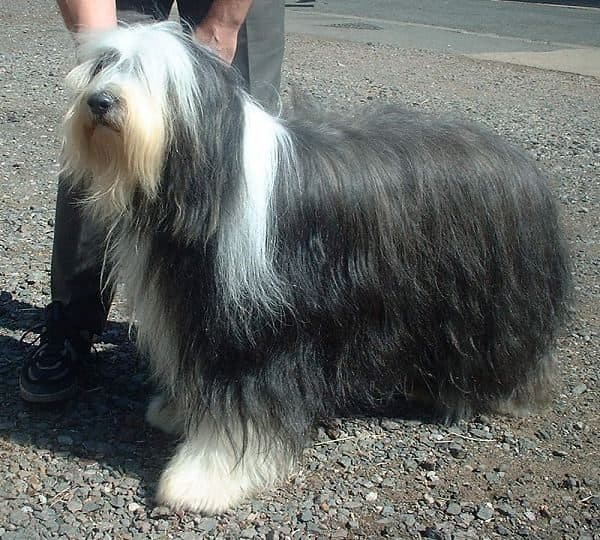
Bearded Collie
Shaggy Scottish herding dog with a characteristic beard. Cheerful, sociable and in good spirits almost all day long. An excellent, very active family dog. Needs intensive brushing.
Foto: Wikipedia Commons · CC BY-SA
Ideal for
- ✓Very active families
- ✓Anyone looking for a cheerful, charismatic dog
Reconsider if
- ×Sedentary families
- ×Anyone unwilling to spend time brushing
Notify me when a Bearded Collie is up for adoption
We'll only email you when a verified rescue posts one available. No spam, unsubscribe in 1 click.
We'll only use your email for this alert. More info in our privacy policy.
Is the Bearded Collie a good match for you?
Indicative rating from 1 (low) to 5 (high).
💶 Estimated cost of ownership
60-100 €/month
Food 35-55 €, grooming/brushing kit 10-20 €, parasite control 10-15 €, veterinary fund 15-25 €. Frequent brushing can be done at home to save on grooming costs.
History and origin
A Scottish herding dog from the 16th century, originally worked sheep in the mountains. Nearly extinct by the end of the 19th century, it was revived by the breeder Olive Willison.
Recognised by the FCI within Group 1 (herding dogs). In the UK it retains its herding role in rural areas as well as being an urban companion dog. It quickly learns complex tasks — a benchmark in canine sport (agility, obedience, mondioring).
Temperament and character
Cheerful, playful and sociable. The "bearded bounce": a characteristic joyful little jump. Affectionate, intelligent and somewhat stubborn. Needs daily mental stimulation — scent games, food-stuffed Kongs and short trick sessions channel its energy better than physical exercise alone. Responds best to positive reinforcement: physical punishment causes fear, anxiety and reactivity — coercive methods are NOT recommended by veterinary behaviourists. Sensitive to its family's mood: it picks up on tension and catches it.
Living together
Children: excellent. Other dogs: sociable. Cats: good.
Life stages of the Bearded Collie
Each stage has its own care priorities. Life expectancy: 12-14 años.
Puppy
0-1 year
Socialisation and handling of the long coat from an early age; progressive exercise; baseline ophthalmological examination.
Young
1-2 years
Plenty of physical and mental exercise; hip radiographs; intensive brushing of the coat.
Adult
2-8 years
Monitoring for Addison's disease (non-specific signs); hip control; retinal examination.
Senior
8+ years
Endocrine and joint monitoring; eye examinations; adapted exercise while maintaining stimulation.
Care
Exercise: 60-90 min/day split into at least 2 sessions. Off-lead time in a safe area is essential for high-energy breeds.
Brushing: daily; intensive during moulting (spring and autumn).
Feeding: quality food appropriate to life stage (puppy/adult/senior) and size. Weight control: obesity is the main preventable cause of joint problems.
Veterinary care: annual check-up with preventive blood work from age 5 (7 in giant breeds); twice a year from age 8.
Exercise 1.5 h/day. Brushing 3-4 times/week. Daily beard cleaning. Patient training. Mental stimulation.
Care in detail
🍽️ Nutrition
Quality food for an active medium-sized breed, adjusting the ration to its high energy expenditure without allowing excess weight that would strain the hips.
✂️ Grooming
Thorough brushing almost daily to prevent mats in its long double coat; it is intensive during moulting. Check the beard and legs after being in the countryside.
🎓 Training
Very intelligent, cheerful and somewhat stubborn: responds wonderfully to positive reinforcement and canine sport (agility, obedience). When bored, it barks and gets into mischief.
🏃 Exercise
90 minutes or more a day of varied exercise with off-lead running and mental work; it is a tireless herder, not suited to a sedentary life.
Breed-specific health
Hip dysplasia. Retinal atrophy (CEA). Addison's disease. Hypothyroidism. Life expectancy 12-14 years. Life expectancy 12-14 years with appropriate care. Pre-breeding tests recommended in responsible breeding programmes (hip dysplasia + cardiac + ophthalmological screening according to the breed's conditions). When adopting, ask the rescue for a vet report on the current condition.
🩺 Health predispositions of this breed
Conditions this breed is more predisposed to. Knowing about them helps with prevention and early detection. A predisposition does not mean the animal will develop them.
Common diseases in dogs
Learn the symptoms, prevention and when to see the vet. Reviewed indicative information that does not replace a veterinary consultation.
Screening and prevention for the Bearded Collie
Recommended tests and screenings
- ✓Official hip radiograph (dysplasia)
- ✓Genetic test / ophthalmological examination for Collie Eye Anomaly (CEA) and retinal atrophy
- ✓Blood work with a thyroid profile (hypothyroidism)
- ✓Cortisol/ACTH assessment where Addison's disease is suspected
Prevention
Plenty of daily exercise and mental stimulation, weight control to protect the hips, and frequent brushing to prevent mats that can hide skin problems. Keep vaccinations and deworming up to date.
Check-up schedule
Annual check-up up to age 7 with a periodic thyroid profile; two visits a year from age 8.
Warning signs
- !Lethargy, vomiting, weakness or collapse under stress (possible Addison's disease, potentially serious)
- !Weight gain, dull coat or cold intolerance (hypothyroidism)
- !Stumbling or loss of vision at dusk
- !Lameness or stiffness in the hips
Frequently asked questions about the Bearded Collie
- How long does a Bearded Collie live? ▾
- The life expectancy of the Bearded Collie is 12-14 años. A good diet, adequate exercise, annual veterinary check-ups and preventive care can help reach the upper end of that range.
- How much does a Bearded Collie weigh? ▾
- An adult Bearded Collie weighs between 18-27 kg, depending on its sex, genetics and condition. It is mediano.
- Where does the Bearded Collie breed come from? ▾
- The Bearded Collie originates from Escocia. A Scottish herding dog from the 16th century, originally worked sheep in the mountains. Nearly extinct by the end of the 19th century, it was revived by the breeder Olive Willison.
- How much exercise does a Bearded Collie need? ▾
- The Bearded Collie has alta energy. **Exercise:** 60-90 min/day split into at least 2 sessions. Off-lead time in a safe area is essential for high-energy breeds.
- Is the Bearded Collie good with children? ▾
- Children: excellent. Other dogs: sociable. Cats: good.
- Who is the Bearded Collie NOT recommended for? ▾
- It isn't the right breed for: Sedentary families. Anyone unwilling to spend time brushing. It's important to choose a breed that's compatible with your lifestyle.
- What health problems does the Bearded Collie have? ▾
- Hip dysplasia. Retinal atrophy (CEA). Addison's disease. Hypothyroidism. Life expectancy 12-14 years. Life expectancy 12-14 years with appropriate care. Pre-breeding tests recommended in responsible breeding programmes (hip dysplasia + cardiac + ophthalmological screening according to the breed's conditions). When adopting, ask the rescue for a vet report on the current condition.
- How much brushing does it really need? ▾
- A lot. Its long coat mats easily, so it needs thorough brushing almost daily and especially intensive brushing during moulting. Without that routine, painful mats and skin problems appear.
- Is it a good dog for families with children? ▾
- Excellent. It is cheerful, patient and very sociable, with its characteristic joyful 'bearded bounce'. That said, its very high energy demands an active family that takes it out every day.
- What is Addison's disease and why does it matter? ▾
- It is a failure of the adrenal glands to which the breed is predisposed. It causes lethargy, vomiting and collapse under stress. It is treatable for life, but early diagnosis is vital, so see your vet if there are recurring vague symptoms.
- Does it adapt to a flat? ▾
- It is not ideal. It can live in a flat if it gets its 1.5-2 hours of daily exercise and mental stimulation, but its energy and tendency to bark make it difficult in less active homes.
- Does it tolerate heat well? ▾
- Fairly. Its dense double coat is designed for the Scottish cold; in summer you must avoid exercise during the hottest hours, provide shade and water, and never shave it to the skin (this damages the coat's protective function).
Related and similar breeds
Learn more about dogs
Practical veterinary guides to support your Bearded Collie.
Sources and references
Content compiled from official breed standards and leading veterinary sources.
Want to adopt a bearded collie?
There are bearded collies in rescue shelters looking for a family. Filter by breed in the catalogue.