

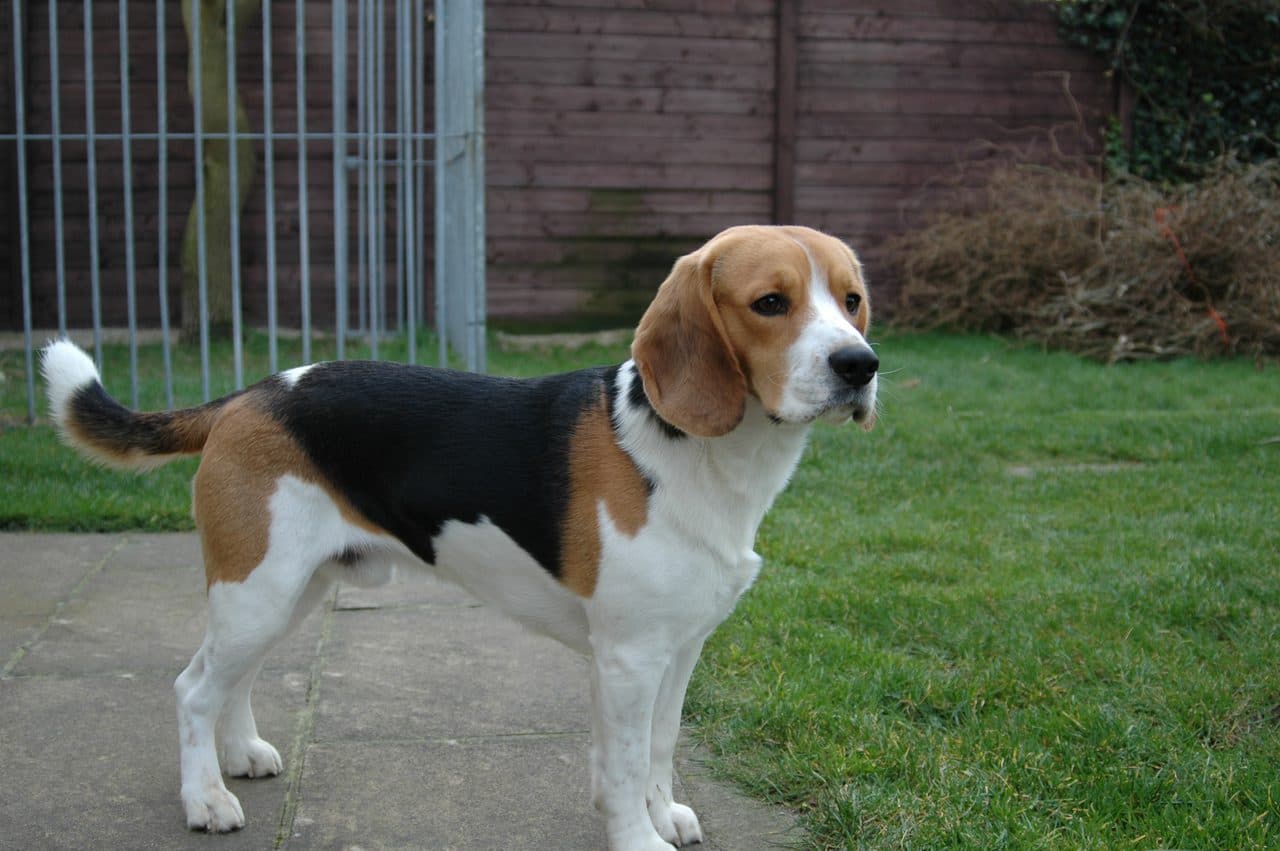
Beagle
A legendary scent hunter. Cheerful, sociable character, without aggression. But its nose controls everything: if it picks up an interesting scent, it ignores the rest of the world. Vocalises with characteristic baying.
Foto: Wikipedia Commons · CC BY-SA
Ideal for
- ✓Active families
- ✓Homes with an enclosed garden
- ✓People who value sociable dogs
- ✓Those who do not need top obedience
Reconsider if
- ×Flats with noise-sensitive neighbours (baying)
- ×Those who expect a perfect recall (it ignores you when sniffing)
- ×Homes with no time for long walks
Notify me when a Beagle is up for adoption
We'll only email you when a verified rescue posts one available. No spam, unsubscribe in 1 click.
We'll only use your email for this alert. More info in our privacy policy.
Is the Beagle a good match for you?
Indicative rating from 1 (low) to 5 (high).
💶 Estimated cost of ownership
45-80 €/month
Food for a medium-sized dog (20-35 €), prorated vaccinations and annual check-up (12-20 €), internal and external antiparasitics (10-15 €), optional health insurance (8-18 €). Minimal grooming, but keep a margin for ear cleaning and treatments.
History and origin
Medieval English origin, perfected in the 19th century for small game hunting (hare). Compact size, stamina, top-tier sense of smell. Snoopy is a beagle.
Temperament and character
Cheerful, playful, sociable. Dominant sense of smell. Vocal (baying when it smells something interesting). A tendency to escape following scents. A compulsive eater.
Living together
Children: excellent. Other dogs: very sociable (they hunted in packs). Cats: variable.
Life stages of the Beagle
Each stage has its own care priorities. Life expectancy: 12-15 años.
Puppy
0-10 months
Food control from the start (big appetite), socialisation and training of the nose/scent tracking.
Junior
10 months-2 years
Plenty of exercise and scent work; strict weight control and cleaning of the drooping ears.
Adult
2-8 years
Prevention of obesity (its greatest risk), management of otitis, thyroid function and possible epileptic seizures.
Senior
8+ years
Maintaining ideal weight, watching for hypothyroidism and osteoarthritis, and continuing to stimulate the sense of smell.
Care
Exercise: 2-3 hours daily. ENCLOSED garden (ground level + height, they are climbers). Feeding: strict portion control (prone to obesity). Grooming: low.
Care in detail
🍽️ Nutrition
A strictly measured ration: the beagle eats anything it finds and puts on weight with enormous ease. Quality maintenance food, counted treats and completely blocked access to rubbish/food.
✂️ Grooming
Short, low-maintenance coat. Weekly brushing (a little more during moulting) and frequent cleaning of the long, drooping ears, where moisture and dirt build up and cause otitis.
🎓 Training
Intelligent but very independent: once it catches a scent, it stops paying attention. Training requires patience, short sessions, plenty of positive reinforcement with food, and working the recall in a safe area, because its nose drags it along.
🏃 Exercise
It needs 2-3 hours of activity daily, ideally with scent work (tracking, search games) that taps into its instinct. A well-enclosed garden at ground level and in height: it is an escape artist and digger following scents.
Breed-specific health
Obesity. Epilepsy. Hypothyroidism. Otitis (drooping ears). Hip dysplasia. Life expectancy 12-15 years.
🩺 Health predispositions of this breed
Conditions this breed is more predisposed to. Knowing about them helps with prevention and early detection. A predisposition does not mean the animal will develop them.
Common diseases in dogs
Learn the symptoms, prevention and when to see the vet. Reviewed indicative information that does not replace a veterinary consultation.
Screening and prevention for the Beagle
Recommended tests and screenings
- ✓Official hip dysplasia X-ray
- ✓Genetic test for Beagle Pain Syndrome (MLS / Musladin-Lueke Syndrome)
- ✓Genetic test for pyruvate kinase (PK) deficiency
- ✓NCCD genetic test (neonatal cerebellar cortical degeneration)
- ✓Thyroid panel (T4/TSH) if hypothyroidism is suspected
- ✓Ophthalmological examination (glaucoma, retinal dysplasia)
Prevention
Strict portion control (it is a compulsive eater with a strong tendency to obesity), regular cleaning of its drooping ears to prevent otitis, and plenty of daily exercise. Watch for seizures given the predisposition to epilepsy.
Check-up schedule
Annual check-up with weight control and thyroid palpation; blood work with a thyroid panel from age 5-6 and six-monthly check-ups in the senior years.
Warning signs
- !Weight gain, lethargy and poor coat (hypothyroidism)
- !Episodes of seizures or absences (epilepsy)
- !Head shaking, scratching and bad ear odour (otitis)
- !Excessive appetite and progressive overweight
- !Persistent baying or escape behaviours (stress/boredom)
Beagle gallery

Frequently asked questions about the Beagle
- How long does a Beagle live? ▾
- The life expectancy of the Beagle is 12-15 años. A good diet, adequate exercise, annual veterinary check-ups and preventive care can help reach the upper end of that range.
- How much does a Beagle weigh? ▾
- An adult Beagle weighs between 9-14 kg, depending on its sex, genetics and condition. It is mediano.
- Where does the Beagle breed come from? ▾
- The Beagle originates from Inglaterra. Medieval English origin, perfected in the 19th century for small game hunting (hare). Compact size, stamina, top-tier sense of smell. Snoopy is a beagle.
- How much exercise does a Beagle need? ▾
- The Beagle has alta energy. Exercise: 2-3 hours daily. ENCLOSED garden (ground level + height, they are climbers). Feeding: strict portion control (prone to obesity). Grooming: low.
- Is the Beagle good with children? ▾
- Children: excellent. Other dogs: very sociable (they hunted in packs). Cats: variable.
- Who is the Beagle NOT recommended for? ▾
- It isn't the right breed for: Flats with noise-sensitive neighbours (baying). Those who expect a perfect recall (it ignores you when sniffing). Homes with no time for long walks. It's important to choose a breed that's compatible with your lifestyle.
- What health problems does the Beagle have? ▾
- Obesity. Epilepsy. Hypothyroidism. Otitis (drooping ears). Hip dysplasia. Life expectancy 12-15 years.
- Why do beagles bay so much? ▾
- Baying is a vocalisation rooted in their past as pack hunting dogs, used to signal the prey. They produce it when they get excited, bored or detect an interesting scent. That is why they can be problematic in flats with sensitive neighbours.
- Can a beagle be let off the lead? ▾
- With great caution and only in fenced areas. Its sense of smell dominates its behaviour: if it picks up an interesting trail, it ignores the recall and can roam for miles. A perfect recall is very hard to achieve in this breed.
- Is it a good breed for families with children? ▾
- Excellent. It is cheerful, playful, sociable and non-aggressive, and its medium size makes it robust for play. That said, it needs plenty of exercise and company, so it fits best with active families who spend time at home.
- How do I stop my beagle putting on weight? ▾
- Always measure the ration, don't leave food available freely and count treats within the daily total. Block access to rubbish and other pets' food. Obesity is its most common and preventable health problem.
- Can they be left alone for many hours? ▾
- It is not ideal. They are pack dogs, very sociable, that cope poorly with prolonged loneliness and may respond with baying, destruction or escape attempts. If it spends many hours alone, the company of another dog or a carer is advisable.
Related and similar breeds
Learn more about dogs
Practical veterinary guides to support your Beagle.
Sources and references
Content compiled from official breed standards and leading veterinary sources.
- WikipediaBeagle ↗
- AKCBeagle Breed ↗
- FCIFCI Standard no. 161 (Beagle) ↗
Want to adopt a beagle?
There are beagles in rescue shelters looking for a family. Filter by breed in the catalogue.