

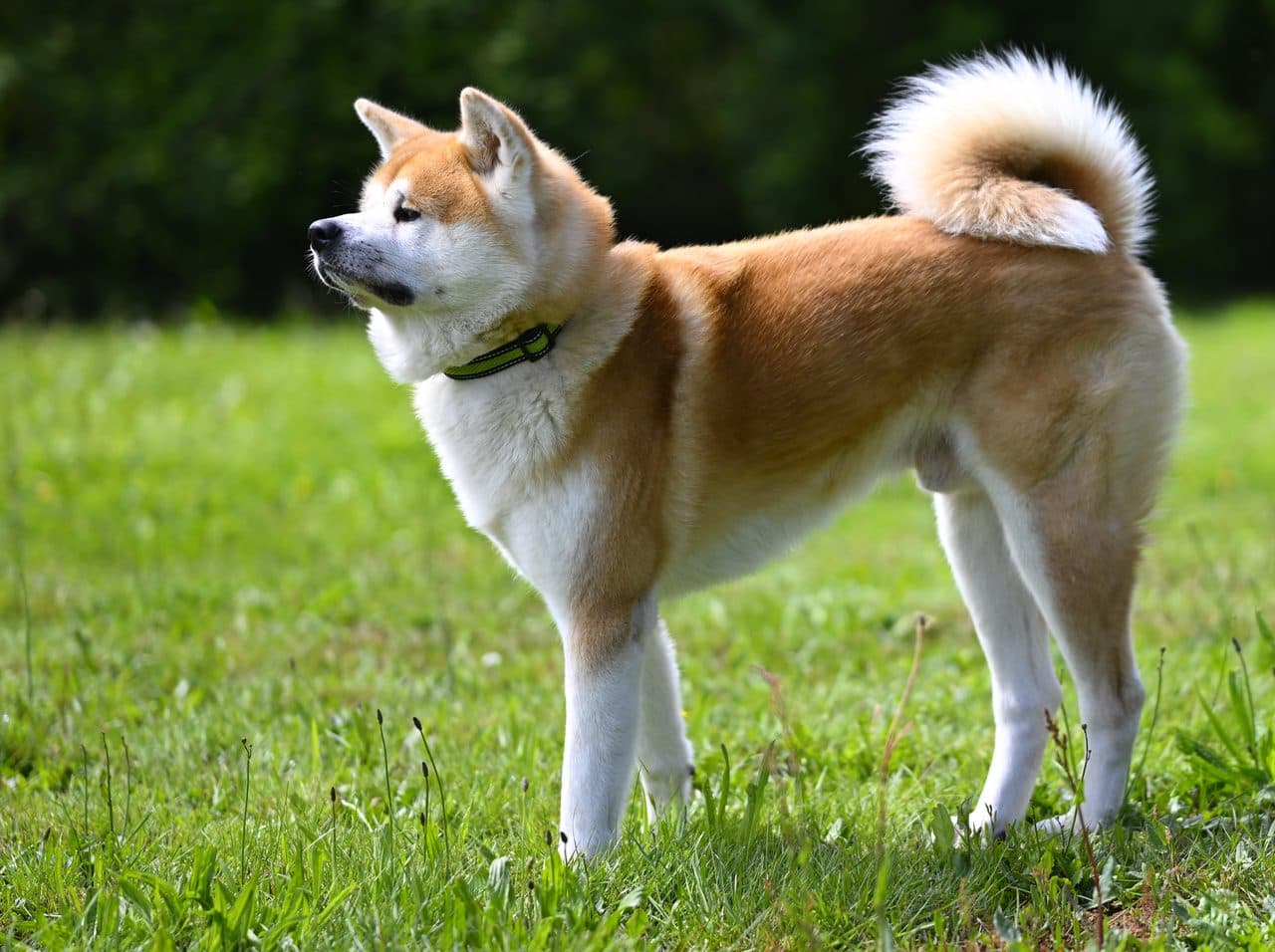
Akita Inu
Large, dignified and loyal Japanese spitz. Hachiko was of this breed. Independent character, a deep bond with a single owner. NOT for beginners: dominant with other dogs, reserved with strangers.
Foto: Wikipedia Commons · CC BY-SA
Ideal for
- ✓Experienced homes
- ✓Families without other dogs
- ✓Those who value deep loyalty
Reconsider if
- ×Beginners
- ×Homes with other dogs of the same sex
- ×Families with many visitors
Notify me when a Akita Inu is up for adoption
We'll only email you when a verified rescue posts one available. No spam, unsubscribe in 1 click.
We'll only use your email for this alert. More info in our privacy policy.
Is the Akita Inu a good match for you?
Indicative rating from 1 (low) to 5 (high).
💶 Estimated cost of ownership
75-130 €/month
Food: 40-65 € · Preventive vet care: 20-40 € · Hygiene and accessories: 10-20 € · Insurance extras: 5-20 €
History and origin
Ancient Japanese breed, originally used for bear hunting in the Akita mountains. Almost extinct in the Second World War. Hachiko (1923-1935) made it internationally famous by waiting 9 years for his deceased owner.
Recognised by the FCI. In some countries the Akita may fall under dangerous/potentially dangerous dog regulations in certain cases (check local and regional legislation). Its historical selection for guarding demands early training and broad socialisation so that its character is channelled positively.
Temperament and character
Dignified, loyal, reserved. An intense bond with its family. Cat-like independence. High prey drive. Intelligent and stubborn. Needs daily mental stimulation — scent games, food-stuffed Kongs and short tricks channel its energy better than physical exercise alone. Responds best to positive reinforcement: physical punishment breeds fear, anxiety and reactivity — coercive methods are NOT recommended by veterinary behaviourists. Sensitive to its family's mood: it detects tension and catches it.
Living together
Children: with its own, respectful ones. Other dogs: reactive. Cats: prey.
Life stages of the Akita Inu
Each stage has its own care priorities. Life expectancy: 10-13 años.
Puppy
0-15 months
Intensive early socialisation and controlled growth.
Junior
15 months-2 years
Firm training, moult management and thyroid monitoring.
Adult
2-6 years
Monitoring of thyroid function, dysplasia and autoimmune/ocular disorders.
Senior
6+ years
Periodic joint, ophthalmological and metabolic follow-up.
Care
Exercise: 45-60 min/day split into at least 2 sessions. Calm walks + mental play.
Brushing: daily; intensive during the moults (spring and autumn).
Feeding: quality food appropriate to its life stage (puppy/adult/senior) and size. Weight control: obesity is the leading preventable cause of joint problems.
Vet: annual review with preventive blood work from the age of 5 (7 years in giant breeds); twice a year from the age of 8.
Exercise 1 h/day. Intensive brushing during the moults (twice a year). Firm and respectful training. Early socialisation is CRITICAL.
Care in detail
🍽️ Nutrition
Quality large-breed food in 2 meals, keeping an eye on weight. Some lines are sensitive to certain proteins: watch the skin and digestion.
✂️ Grooming
Sheds a great deal, with two explosive annual moults; near-daily brushing during the moult and 2-3 times a week the rest of the year. Needs no clipping.
🎓 Training
Dignified, independent and stubborn, almost feline. Not for beginners: it demands firm, respectful training, without coercion, and intense early socialisation given its reserved and dominant character.
🏃 Exercise
Around 1 hour of exercise daily. It is not hyperactive, but it needs its routine and mental stimulation; in high temperatures, avoid exertion because of its dense coat.
Breed-specific health
Dysplasia. Hypothyroidism. Retinal atrophy. Sebaceous adenitis. Life expectancy 10-13 years. Life expectancy 10-13 years with proper care. Pre-breeding tests recommended in responsible kennels (dysplasia + cardio + ophthalmology according to the breed's conditions). When adopting, ask the shelter for a vet report on the current state of health.
🩺 Health predispositions of this breed
Conditions this breed is more predisposed to. Knowing about them helps with prevention and early detection. A predisposition does not mean the animal will develop them.
Common diseases in dogs
Learn the symptoms, prevention and when to see the vet. Reviewed indicative information that does not replace a veterinary consultation.
Screening and prevention for the Akita Inu
Recommended tests and screenings
- ✓Hip dysplasia radiography
- ✓Thyroid profile (T4)
- ✓Ophthalmological examination (progressive retinal atrophy)
- ✓Dermatological assessment where sebaceous adenitis is suspected
Prevention
Balanced diet, intensive brushing during moults, periodic thyroid monitoring and early socialisation, which is critical given its reserved character.
Check-up schedule
Annual review with ophthalmological and thyroid monitoring.
Warning signs
- !Weight gain, lethargy and poor coat (hypothyroidism)
- !Loss of night vision (retinal atrophy)
- !Dandruff, crusting and hair loss (sebaceous adenitis)
- !Lameness or stiffness (dysplasia)
Frequently asked questions about the Akita Inu
- How long does a Akita Inu live? ▾
- The life expectancy of the Akita Inu is 10-13 años. A good diet, adequate exercise, annual veterinary check-ups and preventive care can help reach the upper end of that range.
- How much does a Akita Inu weigh? ▾
- An adult Akita Inu weighs between 32-50 kg, depending on its sex, genetics and condition. It is grande.
- Where does the Akita Inu breed come from? ▾
- The Akita Inu originates from Japón (Akita). Ancient Japanese breed, originally used for bear hunting in the Akita mountains. Almost extinct in the Second World War. Hachiko (1923-1935) made it internationally famous by waiting 9 years for his deceased owner.
- How much exercise does a Akita Inu need? ▾
- The Akita Inu has media energy. **Exercise:** 45-60 min/day split into at least 2 sessions. Calm walks + mental play.
- Is the Akita Inu good with children? ▾
- Children: with its own, respectful ones. Other dogs: reactive. Cats: prey.
- Who is the Akita Inu NOT recommended for? ▾
- It isn't the right breed for: Beginners. Homes with other dogs of the same sex. Families with many visitors. It's important to choose a breed that's compatible with your lifestyle.
- What health problems does the Akita Inu have? ▾
- Dysplasia. Hypothyroidism. Retinal atrophy. Sebaceous adenitis. Life expectancy 10-13 years. Life expectancy 10-13 years with proper care. Pre-breeding tests recommended in responsible kennels (dysplasia + cardio + ophthalmology according to the breed's conditions). When adopting, ask the shelter for a vet report on the current state of health.
- Is the Akita good with other dogs? ▾
- It tends to be poorly tolerant, especially with dogs of the same sex, because of its dominant character. Early socialisation helps, but it requires careful management and supervision.
- Can it live with cats? ▾
- It is risky: it has a high prey drive. Cohabitation is more viable if it grows up with the cat from a puppy, but it is never guaranteed.
- Does it shed a lot? ▾
- A huge amount. It has a double coat and two very intense annual moults in which it loses hair in large quantities; it needs near-daily brushing during those periods.
- Is it a good breed for beginners? ▾
- No. Its independence, stubbornness and reserve with strangers demand an experienced owner who knows how to train with firmness and respect, without coercive methods.
- Is it a big barker? ▾
- Not particularly; it is a fairly quiet and reserved dog. It vocalises little, but it makes a good watchdog thanks to its alert nature.
Related and similar breeds
Learn more about dogs
Practical veterinary guides to support your Akita Inu.
Sources and references
Content compiled from official breed standards and leading veterinary sources.
- WikipediaAkita Inu ↗
- AKCAkita ↗
- FCIFCI Nomenclature - Akita (no. 255) ↗
Want to adopt a akita inu?
There are akita inus in rescue shelters looking for a family. Filter by breed in the catalogue.