

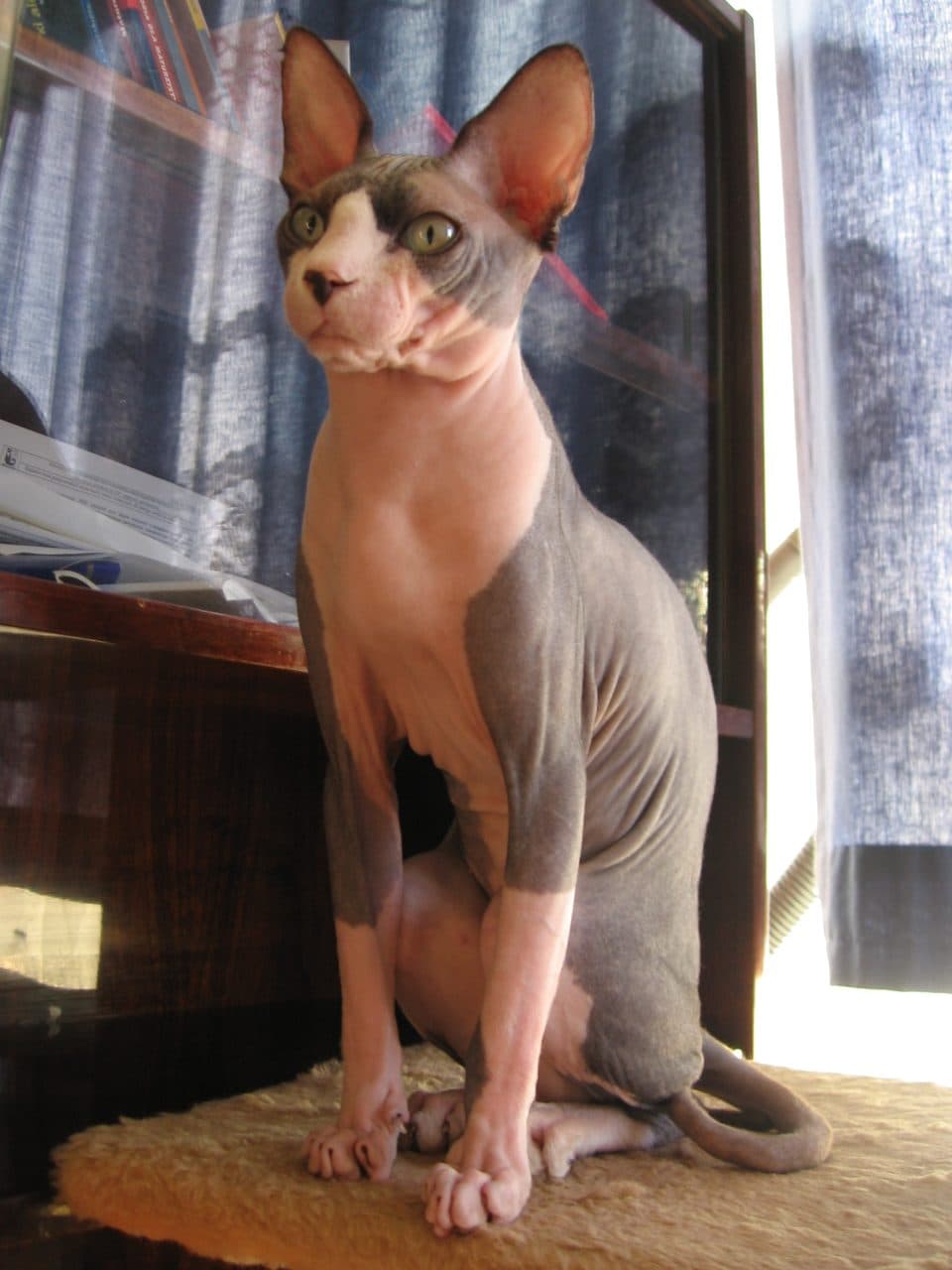
Sphynx (Esfinge)
Famous for its apparent lack of hair (it actually has a fine down). Needs regular bathing to remove skin oils. Affectionate, sociable, "dog-like".
Foto: Wikipedia Commons · CC BY-SA
Ideal for
- ✓Families with time to give affection
- ✓Flats
- ✓Those looking for a sociable cat
Reconsider if
- ×Households where it is left alone many hours
Notify me when a Sphynx (Esfinge) is up for adoption
We'll only email you when a verified rescue posts one available. No spam, unsubscribe in 1 click.
We'll only use your email for this alert. More info in our privacy policy.
Is the Sphynx (Esfinge) a good match for you?
Indicative rating from 1 (low) to 5 (high).
💶 Estimated cost of ownership
60-100 €/month
Feeding slightly above average due to its metabolism (35-55 €), skin hygiene products (shampoo, wipes) and health prevention/insurance (25-45 €). Extras: warm clothing and higher home heating costs in winter.
History and origin
A hairless breed originating in Canada from a spontaneous mutation. The absence of a coat and its oily skin predispose it to Malassezia dermatitis, sun damage and, through genetic lineage, to hypertrophic cardiomyopathy.
Temperament and character
Character typical of the breed. Sociable or reserved depending on the individual. Early neutering (4-6 months) is the best preventive measure.
Living together
Children: good with respectful ones. **Other cats:** sociable if raised together from a young age. **Dogs:** possible if calm.
Life stages of the Sphynx (Esfinge)
Each stage has its own care priorities. Life expectancy: 13-15 años.
Kitten
0-6 months
Vaccination, regular baths/skin cleaning, thermal protection and control of seborrhoeic build-up.
Junior
6 months-2 years
Neutering, HCM genetic test, skin and ear hygiene and sun protection.
Adult
2-10 years
Periodic HCM echocardiography, dermatological management, protection from sun and cold, and an adequate calorie diet.
Senior
11+ years
Cardiac follow-up, dermatological and skin oncology monitoring, and thermal comfort.
Care
Brushing: according to coat (short = weekly · semi-long = 2-3 times · long = daily).
Litter tray: N+1 trays (rule of 70).
Feeding: quality wet + dry food.
Vet: annual check-up + blood work from 7 years of age.
Care in detail
🍽️ Nutrition
It needs a higher calorie intake than a coated cat because it expends more energy maintaining body temperature. Quality dry food combined with wet food, slightly more generous portions and monitoring so that the extra food does not lead to being overweight.
✂️ Grooming
Although it barely sheds, it requires high skin maintenance: a bath every 1-2 weeks with a mild shampoo to remove skin oils, thorough drying and frequent cleaning of ears, folds and claws, which accumulate a brownish oily secretion.
🎓 Training
A very sociable cat, demanding of attention and 'dog-like': it needs company and enrichment so as not to get bored or stressed when alone. Early socialisation, daily interactive play and N+1 litter trays. Early neutering (4-6 months) as a preventive measure.
🏃 Exercise
High energy and very playful: it needs several daily sessions of interactive play, scratching posts and climbing areas. Its activity also helps it maintain body heat in a temperate environment.
Breed-specific health
Hypertrophic cardiomyopathy (HCM) common in many breeds — genetic test recommended. PKD in Persian and derived breeds. Life expectancy 13-15 years.
🩺 Health predispositions of this breed
Conditions this breed is more predisposed to. Knowing about them helps with prevention and early detection. A predisposition does not mean the animal will develop them.
Common diseases in cats
Learn the symptoms, prevention and when to see the vet. Reviewed indicative information that does not replace a veterinary consultation.
Screening and prevention for the Sphynx (Esfinge)
Recommended tests and screenings
- ✓Genetic/echocardiographic test for Hypertrophic Cardiomyopathy (HCM)
- ✓Dermatological assessment of the skin (seborrhoea, yeast infections)
- ✓Genetic test for Hereditary Myopathy (CMS)
- ✓Ophthalmological examination (no eyelashes, risk of eye irritation)
- ✓Dental control (predisposition to dental problems)
Prevention
Regular bathing (every 1-2 weeks) to remove the skin oils it secretes, since there is no coat to absorb them; cleaning of folds, ears and nail beds. Protection from the cold with jumpers and a warm environment, and avoidance of direct sun exposure due to the risk of burns. Adequate calorie intake: its metabolism is high.
Check-up schedule
Annual veterinary check-up with cardiac screening (HCM); dermatological and dental follow-up. Preventive blood work from 7 years of age.
Warning signs
- !Rapid breathing, lethargy or fainting (HCM)
- !Oily skin, bad odour, spots or scabs (skin problems)
- !Dark wax build-up in the ears
- !Shivering, constantly seeking warmth or cold skin (hypothermia)
- !Weight loss despite a good appetite (high metabolism/illness)
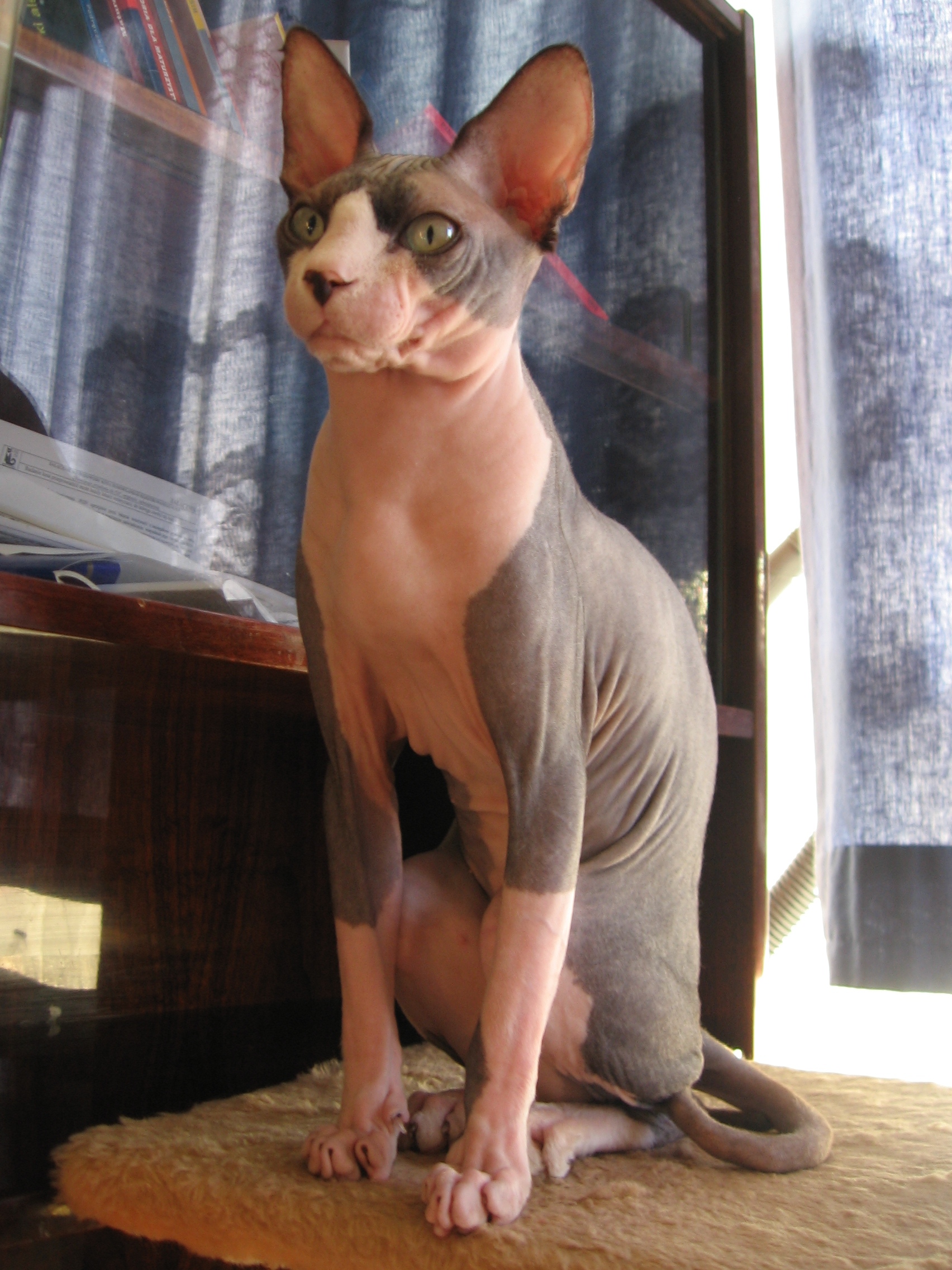
Sphynx (Esfinge) gallery
Frequently asked questions about the Sphynx (Esfinge)
- How long does a Sphynx (Esfinge) live? ▾
- The life expectancy of the Sphynx (Esfinge) is 13-15 años. A good diet, adequate exercise, annual veterinary check-ups and preventive care can help reach the upper end of that range.
- How much does a Sphynx (Esfinge) weigh? ▾
- An adult Sphynx (Esfinge) weighs between 3-5 kg, depending on its sex, genetics and condition. It is mediano.
- Where does the Sphynx (Esfinge) breed come from? ▾
- The Sphynx (Esfinge) originates from Canadá. A hairless breed originating in Canada from a spontaneous mutation. The absence of a coat and its oily skin predispose it to Malassezia dermatitis, sun damage and, through genetic lineage, to hypertrophic cardiomyopathy.
- How much exercise does a Sphynx (Esfinge) need? ▾
- The Sphynx (Esfinge) has alta energy. **Brushing:** according to coat (short = weekly · semi-long = 2-3 times · long = daily).
- Is the Sphynx (Esfinge) good with children? ▾
- **Children:** good with respectful ones. **Other cats:** sociable if raised together from a young age. **Dogs:** possible if calm.
- Who is the Sphynx (Esfinge) NOT recommended for? ▾
- It isn't the right breed for: Households where it is left alone many hours. It's important to choose a breed that's compatible with your lifestyle.
- What health problems does the Sphynx (Esfinge) have? ▾
- Hypertrophic cardiomyopathy (HCM) common in many breeds — genetic test recommended. PKD in Persian and derived breeds. Life expectancy 13-15 years.
- Is it hypoallergenic because it has no hair? ▾
- Not entirely. Cat allergy is mainly caused by the Fel d1 protein in saliva and skin, not the hair. The Sphynx sheds less hair, but still produces Fel d1, so it is not safe for all allergy sufferers.
- Why does it need bathing so often? ▾
- With no hair to absorb the oil its skin secretes, this builds up and stains the skin, the folds and even textiles. It needs baths every 1-2 weeks and ear cleaning to keep the skin healthy.
- Does it get very cold? ▾
- Yes. Without hair it regulates temperature poorly: it constantly seeks warmth, appreciates jumpers and heated beds and needs a temperate home. It should also not be exposed to direct sun because its skin burns.
- Can it be left alone for many hours? ▾
- It is one of the cats that copes worst with loneliness: very sociable and dependent on contact. If it is left alone for many hours, a second companion cat or plenty of enrichment is advisable.
- Which health problem is most closely watched in the breed? ▾
- Hypertrophic cardiomyopathy (HCM), which is why it is recommended to buy from breeders who carry out cardiac screening. It also requires continuous dermatological care due to its unprotected skin.
Learn more about cats
Practical veterinary guides to support your Sphynx (Esfinge).
Sources and references
Content compiled from official breed standards and leading veterinary sources.
Want to adopt a sphynx (esfinge)?
There are sphynx (esfinge)s in rescue shelters looking for a family. Filter by breed in the catalogue.